'The pandemic has changed everything': Covid deaths leave an indelible mark
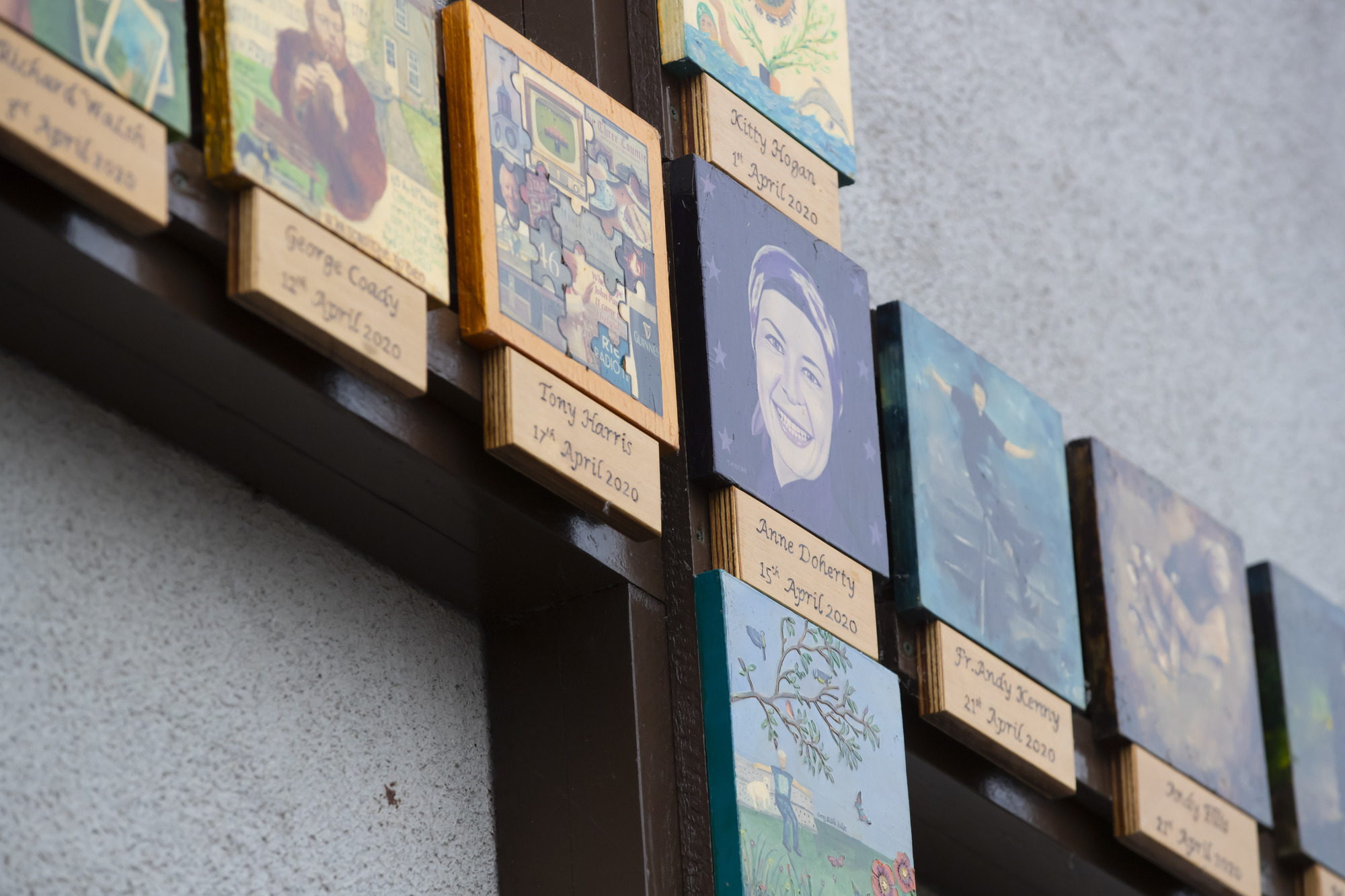
Twenty-two families worked with artist Linda Fahy and her colleagues to create an art memorial for Covid deaths in Carrick-on-Suir, Co Tipperary. Picture: Patrick Browne
Thousands of deaths have been caused directly by Covid-19, and every one of those lives touched a circle of now devastated people.
And they are not the only families who had to grieve alone, isolated and comfortless in the past 16 months.
Funerals for people who died in a car crash or passed from cancer were also bound by the same restrictions and families returned alone to the same empty houses.
They were loved, and they are gone. And now, as vaccination levels rise and the clamour to reopen is heard, some of us are trying to return to normal. But for many families, normal no longer exists.
We stood on the roads and watched the coffins drive past. We sent cards and maybe emails or letters.
We stood guard in hospital car parks and pressed our hands against the window.
So what is normal when the person who walked with you — mother, father, daughter, sister, brother, friend, cousin, son, spouse — is gone?
In the past few weeks we have heard so much about reopening, because it is time to look forward, we hope.
But what of the people who cannot look forward? There are many among us, and their truth must be heard too.
The official Health Protection Surveillance Centres figures show 5,089 deaths from Covid-19 to this week.
While this is a disputed figure among some academics, to each family every stroke of that number is a person who counts, their person who matters as more than a tick on a page.
Data from the Central Statistics Office up to the end of April this year shows the 4,903 Covid-19 deaths registered before then included 44 people aged between 25 and 44, and 340 aged 45 to 64, with the vast majority made up of older people who lost their sunset years.
A study by the University of Limerick and Maynooth University found death postings for April 2020 from Cork and Kerry on Rip.ie were the highest of any April since the sites’ records began in 2006.
The 22 families who worked with artist Linda Fahy and her colleagues in Carrick-on-Suir, Co Tipperary, wanted their loved ones to be remembered.
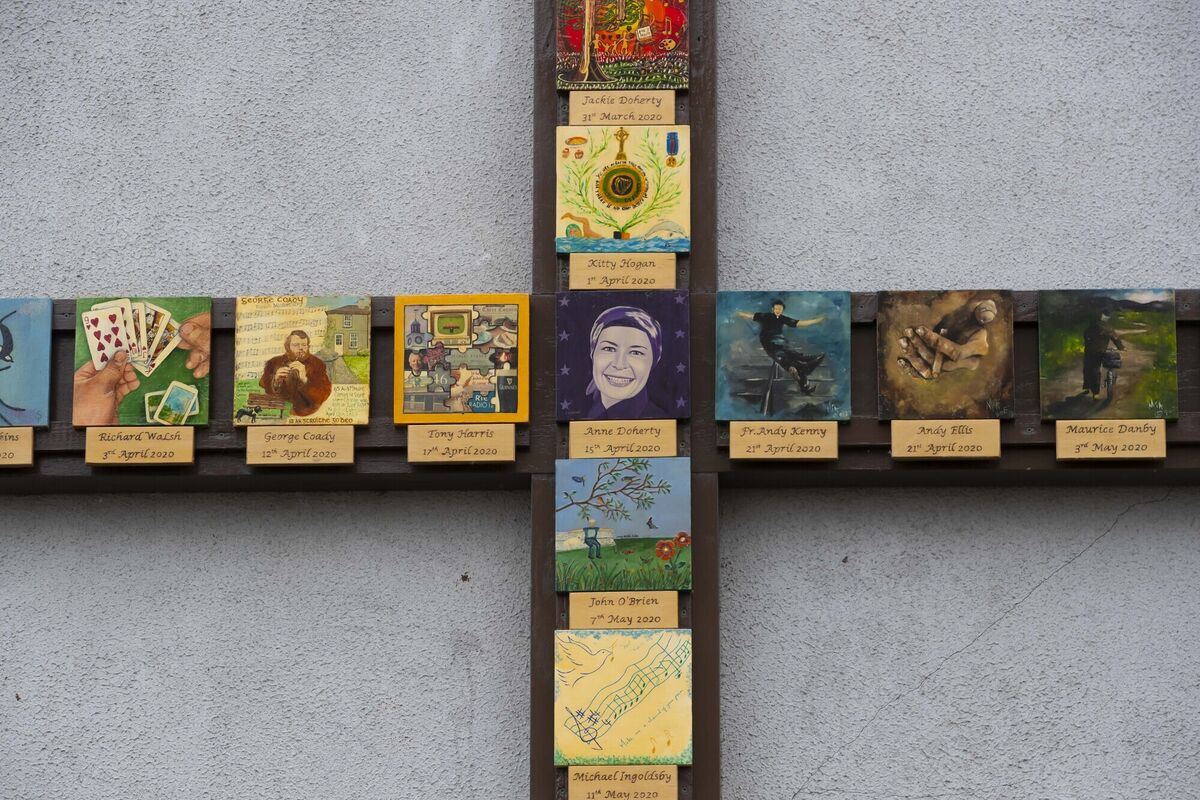
Beautiful pieces of art now stand proudly in the centre of the town, singing of a grief which had been hidden.
She works nearby and sees a steady stream of visitors, people drawn there by the stories and wanting somehow to show their respects, even now months after it was launched.
In Waterford, Jeni Pim’s life in the catering industry was turned upside down by the pandemic. She had thought Covid-19 had done its worst when her business was threatened, but the death of her husband Nigel from the virus changed everything forever.
It is, she said, about “nothing being the same” and not being able to move forward, because her husband is not in that future.
She praises support given to struggling businesses, but wonders what support will be offered to the thousands who are grieving.
John Keogh’s truth is that he lost his sister Amanda ‘Mandy’ Lawless to a disease so horrible he likens it to a mass murderer.
She was just 52 when she passed in Dublin and he says his grieving and that of her young family is just beginning.
His way of coping is to create a memorial forest; a place of peace where families can dedicate a tree to their loved one at no cost.
Why a forest? His sister loved gardening and caring for other people. So this is his way to take something that made her smile and help other people at the same time.
It has turned into a more challenging project than he expected. But he is marching on, because what else can you do with a grief this big?
In Cork Fr Tim Hazelwood is already seeing the impact of the months of silent grief, and would also like to see a public memorial, a national mass or a forest. Something to mark the space where once so many people stood.
“I’d like us to remember the people who have died, and to give grieving people the opportunity to grieve and the community to grieve together,” he said.
“To honour and to be able to grieve together, and to be able to show our support.”
And he would like to see the institutions looking for ways to allow these silenced voices to be heard. Creativity is needed, he said suggesting possibly a memorial, national mass or planting trees.
“It is about honouring the experiences of what has happened. I think the State and Church have a role to play as well,” Fr Hazelwood said.
Funerals were marked as an “essential service” from the first sets of guidelines in March 2020, but numbers advised at “not more than 10”. Last month, this rose to 50.
Fr Hazelwood said ceremonies meant a small number of mourners isolated in empty pews of St John the Baptist church.
“I found it more intimate; when the church is packed sometimes for a funeral it can be nearly too much,” he said.
He sometimes held funeral masses in a funeral home instead.
One particularly distressing funeral was for a person whose family mostly lived outside the area, and just five people could attend.
“It was very sad, very difficult and sad,” he said, adding that the person who died had been active in volunteering and well-loved locally.
“There was a huge loss in the community that we weren’t able to mourn as a community.”
And he said watching vulnerable family members who were unable to hug even their own siblings was “very difficult”.
People missed out on being “able to share stories and comforts”.
He is especially worried about families who lost someone in a hospital or nursing home and says they sometimes did not get to say goodbye properly.
His own ability to visit bereaved people was curtailed too, saying he felt “a sense of helplessness”.
It is only now, he said, many families are able to start talking.
Fr Hazelwood said: “There is a lot of hurt and sadness because of not being able to be with people. It has been very hard; there were people dying alone, that was very difficult.”
His own family lost a UK-based relative recently and he has found the loss compounded by not being able to gather Irish relatives together for a service here.
Like many other priests, he said people used Mass cards to reach out to bereaved families, and he often noticed people standing quietly along the route between the funeral home and cemetery.
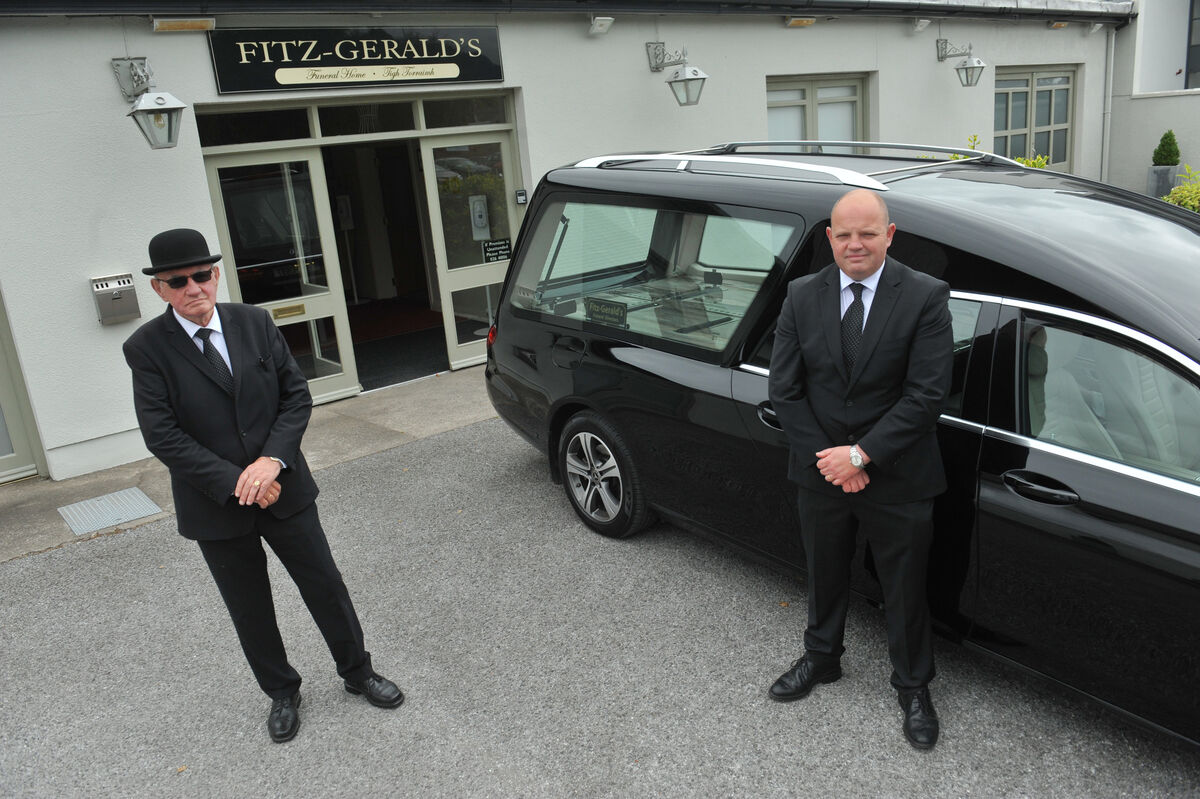
Macroom-based Martin Fitz-Gerald has been a funeral director since 1963, and has never seen bereaved families experience a time like this one.
Martin is the 7th generation to work at Fitz-Gerald’s Funeral Home in Macroom, with his son Bill now working alongside him.
He said this past 16 months saw the biggest “cultural changes” to the rituals of death in Ireland since 1978 when funeral homes were introduced.
In a bleak year, he singles out the new tradition of standing on the roadside as the hearse passes on that final journey as a surviving connection to the big Irish funeral.
“People showed great respect when they stood at their own residence. I thought that showed a great reverence to the deceased,” Mr Fitz-Gerald said.
One thing has remained the same; the family is always at the centre of the funeral no matter what restrictions are in place. But the limited numbers who could attend were difficult for many families.
“Every family is different, there is no rehearsal for that,” he said. “And every member of the family grieves differently.”
For his son Bill, finding a way to give families what they need while maintaining the rules became his focus. It was business as usual, but tailored.
“I would say people were understanding when it was explained to them,” he said, but, “people felt they were being cheated slightly.”
This was a big loss to many families and the Fitz-Geralds fielded many calls through the pandemic from friends and distant family asking about this.
One of the trickier areas to negotiate for the families were the outdoor segments of the ceremony, where people’s natural sympathies pushed the boundaries on social distancing rules.
Describing the cemetery time as “a sensitive situation”, he said this became more challenging during the pandemic.
And like his father he found the lining of the funeral routes very moving, as people tried to reach through the walls of the isolation.
He also noticed people relying more on websites like RIP.ie and virtual messaging to communicate with bereaved families.
“Now, you get lovely messages on there,” he said.
And both he and his father think this will stay, now that people who are far away know they can be part of the rituals.
He returns to this theme as he talks, picking up the small ways the community tried to reach out and keep that thread of connection flowing.
When people phoned they advised them instead where to stand to witness the hearse pass by, or gave them the website links to leave a message.
“People tried to do the right thing in my experience," Bill said.
For priests, undertakers and everyone involved in any way, whether the person who passed had Covid or not, had an underlying condition or not, did not matter.
What mattered is that here, there once was life and now there is not.
This is what families are crying out to have acknowledged.
At McDonagh train station in Kilkenny a list of Irish nurses and Red Cross staff who died during the First World War stands on the wall. Other medical staff who died in wars are commemorated on striking monuments dotted around the country.
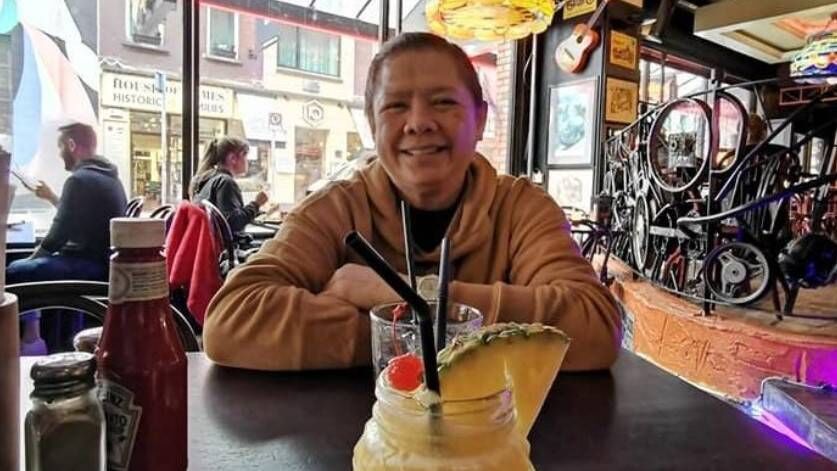
Will we do the same for Dr Syed Waqqar Ali, who left a young family behind him in Dublin, or Bernie McAndrew, the Mayo nurse who died in January or Mariter Tarugo, the healthcare assistant who died on Christmas Eve from Covid-19?
How will we help each other get through these coming times which will be so bright for some and dismal grey for others?
There is no easy solution to help each other to grieve these losses large and small, but perhaps it is a start that we ask the questions.
How can you make memories for a community from something which everyone experienced apart?
A colourful cross carrying more than 20 pieces of art and standing in a quiet part of Carrick-on-Suir, a product of grief and joy, is one answer to that.
At a time when so many people want to look forward, it is a space for those whose hearts are still in the past. And for those who support them.
Fresh flowers decorate the foot of the cross, placed there by local Carrick on Suir Lions Club volunteers.
For owner and founder of the Tudor Artisan Hub Linda Fahy, one of the people who made all of this happen, the project is a way for the community to hold its hands out.
“The ripple effect of it is just tremendous,” she said. She often sees people stopping to pray or just to look.
When she thought of memorialising local people from Carrick-on-Suir, or connected to the Community, who had died during the isolation and loneliness of the first lockdown, she had no idea how many families the project would touch.
Over a year since a community of artists, writers, painters and helpers came together, the wooden cross now holds a frame for 22 unique pieces of art, each piece catching the eye, and the heart, in a different way.
Ms Fahy and others including writer Margaret O’ Brien, who directed the writing element of the project and Mary McGrath, met with bereaved families, and turned their memories into a powerful symbolic representation that honoured the life of the loved ones who are physically no longer with us.
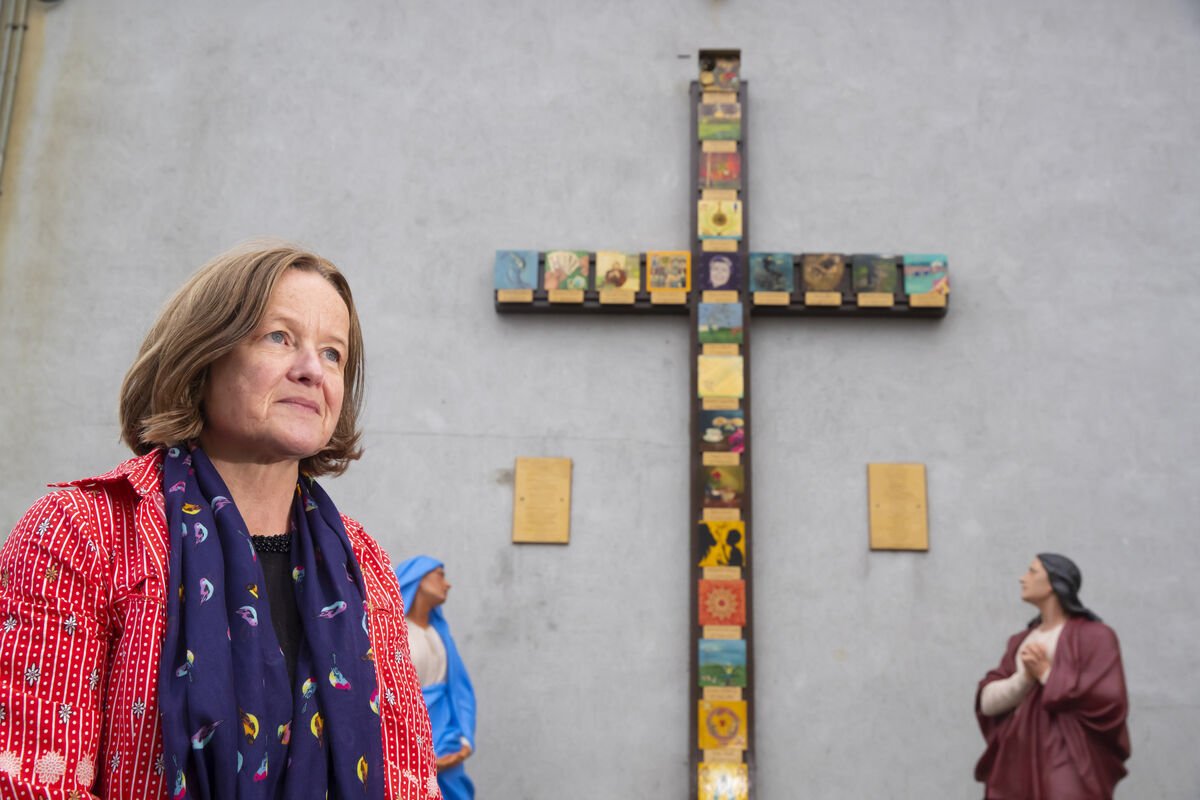
The words expressed by the bereaved families provided the inspiration for the artists.
Yellows and reds jump out of the artwork commemorating Laura Brazel, her youth and love of music clear to all.
One picture shows a man’s hand, in memory of Andrew Ellis, cigarette between his fingers, marked by life but still, it seems, reaching out for more.
Another with candy-bright colours marks the passing of 100-year old Mary Wells who proudly sang ‘From the Candy Store on the Corner’ on video for her birthday before the pandemic.
Ms Fahy said the project was eye-opening for everyone.
“It was very emotional and heart-warming, it left such an impact on everyone,” she said.
The affected families were asked if they wanted to take part in this story, but they felt the images speak for them, she said.
The families placed their trust in the community is how she sees it.
The artworks were displayed individually as a Culture Night project called: ‘In ár gcroíthe go Deo / In our hearts forever, an art project to honour lives lost during the isolation of Covid-19 lockdown one.’
Placing the artworks on the cross came later. “We had a blessing at the cross and all of the families were invited to it,” Ms Fahy said.
She marks each anniversary on the Tudor Artisan Hub’s Facebook page: “It’s just to let them know there is a community there for them, to say people are still thinking about them.
“There are so many other people going through the same thing, during the second and third lockdowns as well. It is lovely for families to have a place to go.”
When John Keogh thought about planting a tree in his sister’s memory, he instantly realised it had to be a forest for everyone because that is how she was — generous and caring to a fault.
Amanda ‘Mandy’ Lawless was just 52 when she died from Covid-19 in February, leaving behind her devastated immediate and extended families.
“What Mandy would want is a legacy for all those people who died,” he said. “We don’t want them to become numbers, we don’t want them to be forgotten about.”
In his memories of her, Mandy is often gardening.
“She loved gardening and trees,” he said.
His plan now is to create a memorial forest where people who lost someone during the pandemic can plant a tree in their name, at no cost.
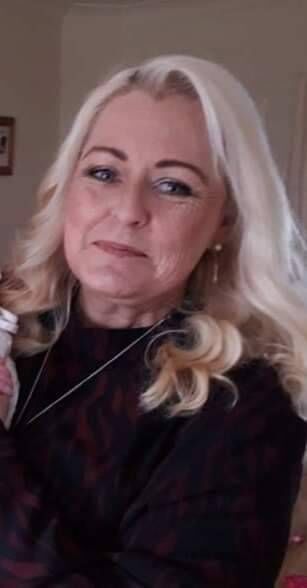
A two-part project is planned, a physical forest and a virtual one. The online platform has already opened up, with over 250 trees virtually planted.
Mr Keogh was saddened to realise what he and his family are going through is not unusual. That so many families are quietly grieving in a world that will never be the same again.
“What’s happened in the media since the ransomware attack, the death figures were not being published and life is returning back to normal,” he said.
“People are forgetting and returning to normal life, but there are people dying every day, even now.”
He cannot forget. His last memory of his sister is talking by video chat when she was in hospital. Even though she was seriously ill by then, her focus was on other people.
He said: “Even at that stage, she was asking me how I was, how my son was.”
Mandy trained as a nurse, and was working as a healthcare assistant when the pandemic hit.
“Healthcare assistants are unseen in the public eye. They are totally invisible but without their work the health system wouldn’t work,” he said.
And it is this aspect of his sister’s life that has pushed him to create the forest, a place for other people like him to remember the pandemic together.
Some of the families who have planted a virtual tree lost people to Covid-19. But others who lost a child or a spouse to accidents and other illnesses still experienced the isolation of a pandemic death.
“We are creating a physical forest but as well we are creating a virtual forest, that will be a digital memory of that person’s life,” he explained.
“It will allow the family members to upload new life events and their story will continue.”
He wrote to President Michael D Higgins of his plans, and was delighted to receive a positive response just weeks ago.
The president’s office wrote that they shared the concept of the forest with the departments working on “a programme of initiatives to capture the experience of Covid-19”.
Dedicate a tree at the National Memorial Forest.
For Jeni Pim, grief is a circle; first it touches those closest to a death and then it spirals into unexpected parts of the community.
Her husband Nigel passed in January this year during the horrific third wave of infections. When she spoke on about her grief, she reached families who thought they were alone.
“For so many people, life is never going to be the same again,” she said.
“It’s not just the people who have lost somebody, it’s a wider circle that just doesn’t have any voice.”
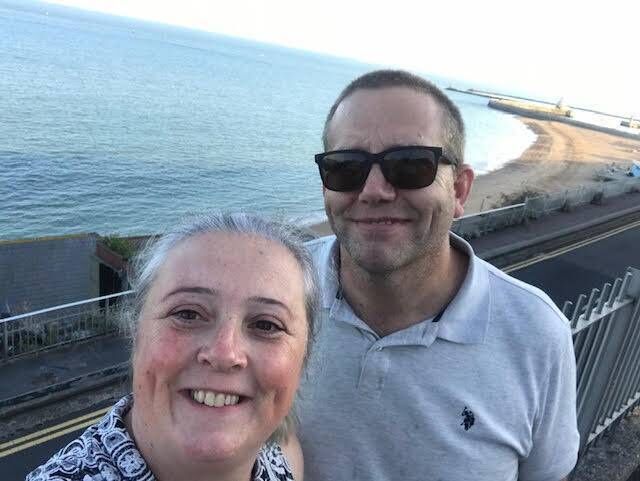
Working in catering and having so many friends in the restaurant business, she feels she should be celebrating the reopening. Instead, she describes herself as being on two tracks.
“I think the opening up has been very hard, it has brought some really really low points to my life,” she said.
“But at the same time, I have this whole thing where I am delighted for everyone else. Everyone is moving on but I am not moving on.” The grief doesn’t stop with her family, Mrs Pim said.
She recently went for medical treatment at a community clinic. All went well until two of the staff realised her connection; they had helped treat Mr Pim when he was in hospital with Covid-19.
They burst into tears; like all of the patients they saw in those terrible times they were unable to forget him.
“They really were affected by it, they were sobbing,” she said, and she felt helpless, unable to comfort them.
For now, she can only concentrate on herself and on her family.
She talks on the phone almost every day to close friends who offer support from a distance.
It is difficult for her, she said, to imagine the usual situation where a bereaved family opens their doors for help. That just is not the situation now.
“I know that Nigel would be delighted that everything is moving on. He was a great believer in mental health, he did so much work with the Samaritans,” she said.
“He was always thinking about other people. I think when people are talking to me, they sometimes forget the mental toll that it has taken on me, as well as being in lockdown.”
The family suspect Mr Pim caught Covid-19 while shopping in a supermarket, which adds stress to even the most careful steps back into society.
She has tentatively started working part-time, teaching a small class at Ballymaloe Cookery School but no more.
And she circles back again and again to the idea that returning to normal is not possible for everyone.
She talks about “survivor's guilt” and the “terrible trauma” of losing someone when no-one could even attend his funeral.
Something as simple as a Sunday outing to a farm or an orienteering trip now without Nigel seems impossible.
“The pandemic has changed everything for us,” she said.


CONNECT WITH US TODAY



Be the first to know the latest news and updates