Ireland's complicated relationship with infant formula

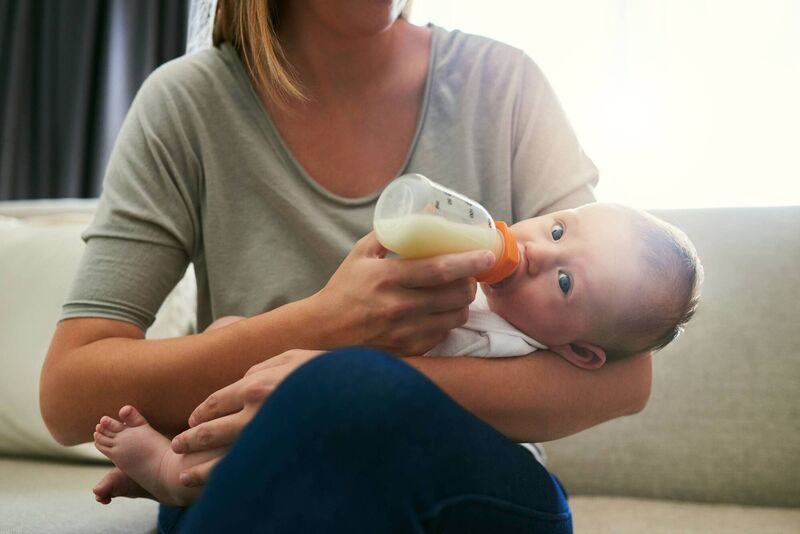
Just 40% of babies worldwide are now exclusively breastfed to six months in line with WHO recommendations. Picture: iStock/PA
Forty years ago, a public health crisis was looming. Breastfeeding rates around the world were plummeting.
Spurred on by a controversial 1974 report called 'The Baby Killer', produced by NGO War on Want, which identified that unethical advertising practices of infant formula companies were contributing to mothers switching from breast to bottle with fatal results, the World Health Organization (WHO) published a 36-page document: the 'International Code of Marketing of Breast-milk Substitutes'.
Designed to curb marketing practices that interfere with the establishment of breastfeeding, The Code, as it’s known, is an international voluntary code of practice signed up to by industry and by 190 countries, with the notable exception of the US.
But 40 years on, breastfeeding rates are still falling; just 40% of babies worldwide are now exclusively breastfed to six months in line with WHO recommendations.
The infant formula market is a €60bn a year industry, and emerging markets include China, where breastfeeding rates have halved, from 60% to 30%, in the course of a decade.
An estimated 800,000 infant deaths and 20,000 maternal deaths would be avoided, according to a 2016 report in , if WHO-recommended breastfeeding practices were universal.
At the same time, Ireland is heavily invested in the production of infant formula; 13% of the global supply of formula comes from Irish dairy farming, an export trade worth more than a billion euro a year.
Now, a new concern is becoming increasingly apparent: far from being only an issue for mothers and babies, infant formula is emerging as an area of considerable environmental concern.
“We’ve talked for a long time about the health impacts on a global population level, but it’s really only been since IBFAN (The International Baby Foods Action Network) published a report in 2015 that we’ve really started noticing the environmental impacts,” Dr Julie Smith says.
Dr Smith is an expert advisor to the WHO on the economic aspects of infant feeding, and she works at the Centre for Economic Research on Health at Australian National University in Canberra.
She published a 2019 report calculating that the global carbon footprint of producing infant formula, from cow to can, is 4kg of greenhouse gases per kilo of formula produced.
Ireland exports 150,000 tonnes of processed formula per year, with six global infant formula manufacturers based here for the quality of our dairy.

Ireland has the second-most efficient dairy production in the world in terms of carbon emissions, after New Zealand, also a global leader in formula production, so we might well perform better than Dr Smith’s 4kg average when it comes to the cow's input.
When it comes to the can, one manufacturer in Ireland, Danone, which produces brands including Cow & Gate and Aptamil, has worked to become Ireland’s first 'carbon neutral' formula factory campus in one of its two Irish factories in Wexford.
They plan on following suit with their Macroom plant, the largest formula factory in the world, where 125,000 tonnes of formula and formula components are made each year.
The full life cycle of formula includes not only the raising of cattle and the transport and processing of milk into powder, but the entire impacts of packaging, shipping, feeding, sterilisation equipment, and power and waste disposal, Dr Smith explains.
Her study only includes dairy production and factory processes: a WHO-sponsored Swedish study calculated a full carbon footprint of 13kg of greenhouse gases per kilo of formula.
So-called 'strand three' impacts (subsequent knock-on indirect impacts) amounted to more than the cow-to-can element.
“Alongside the carbon footprint, there are major environmental impacts from dairy production on the use of water, and fertiliser use, which in New Zealand is causing devastating harms to river systems,” Dr Smith says.
There are other environmental considerations: Formula exported in single-use packaging to developing countries with poor waste infrastructure; global shipping, and vast associated industries in producing and distributing associated products such as bottles, teats, and sterilisers.
Many analyses of formula make comparisons between infant formula and other dairy foods, but newborns don’t eat cheese; a comparison must be drawn between formula and breastfeeding, Dr Smith says.
“Put a baby on the breast, that’s it. The greenhouse gas impacts of breastfeeding are limited to calculating the extra food a woman needs, which depends to an extent on the kind of diet the woman has and which is always lower than the impacts of formula.
“Not only is Ireland a major producer and exporter, with the Irish taxpayer subsidising the development of this industry, but it’s also a major consumer,” she says.
“Breastfeeding rates in Ireland are the worst in the world.
"We won’t talk about the health impacts of that. The consumption impacts, in terms of sterilisation equipment, water use, electricity use, and the production and disposal of packaging wastes, are huge.”
Infant formula provides thousands of jobs in Ireland, both in manufacture and in farming.
Six formula manufacturers are based in Ireland including Danone, Wyeth, which is a subsidiary of Nestlé, Abbott Nutrition, and newcomers in the form of Chinese firm Newbaze.
Through Enterprise Ireland, the Irish taxpayer directly subsidises infant formula companies. €13.2m has been paid out by Enterprise Ireland to six formula companies in Ireland since 2014, an Enterprise Ireland spokesperson confirmed in an emailed statement.
€4.43m of that goes to Danone alone.
The formula companies are also members of Bord Bia’s Origin Green labelling system, which is awarded on the basis of sustainable food production practices in raw materials, manufacture and social sustainability.
Direct CSO figures for formula export show €1.03bn for 2018 and €900m for 2019, but formula components like whey powder are also exported.
China takes 33% of our infant formula; in 2008, the domestic formula industry there was hit by the melamine scandal, where milk powders were doctored with a plastic additive that caused hospitalisation, kidney failure, and even death in some babies.
The resulting Chinese thirst for trusted infant milk imports led to an opening for Irish producers.
“Formula is 75% of total dairy exports to China,” says dairy farmer Stephen Arthur.
“What’s happening now is they’re importing a lot of dairy ingredients to blend their own, but specialised nutrition powders are an evolving area so we can expect to see the dynamics shift — and keep shifting.”
Mr Arthur is the chairman of the IFA’s Dairy Council, and farms in Wicklow.
China’s breastfeeding rates have halved in the past decade. China is not a signatory to the WHO marketing Code and instead has its own regulation, but this is “implemented weakly without real punishment for violations”, a 2014 IBFAN (International Baby Food Action Network) report concluded.
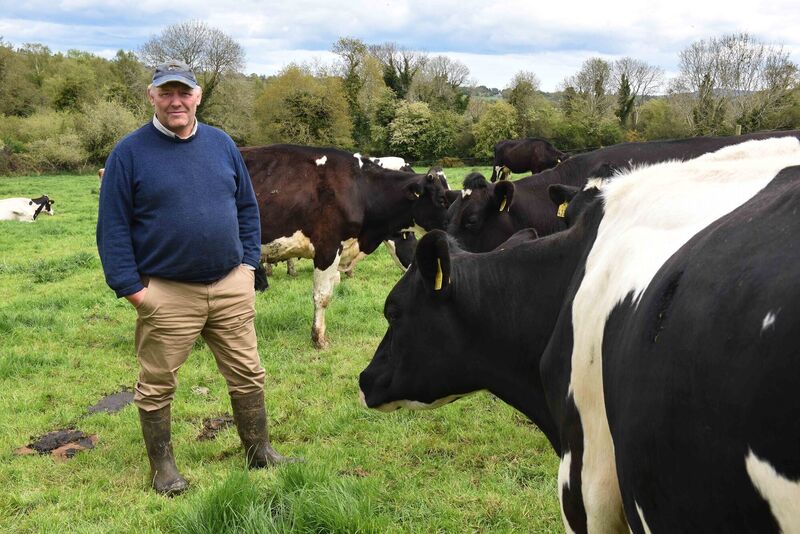
Are Irish dairy farmers concerned about the ethical implications of pursuing expansion into such markets?
“Listen, we just produce milk,” Mr Arthur says. “We don’t get into the ethics of it."
For a farming sector that currently feels beleaguered and misrepresented when it comes to their environmental impacts, Mr Arthur is keen to highlight the pride Irish dairy farmers take in the quality of their internationally sought product.
“There’s a lot of confidence in our product worldwide,” he says.
“There are 17,500 dairy farmers in Ireland and look at their average income and average borrowings.
The average borrowings on a dairy farm is €120,000. That’s a serious amount of money invested in their businesses.”
As far as Mr Arthur is concerned, if the formula isn’t going to be produced in Ireland, it will be produced elsewhere and Ireland’s dairy-producing carbon footprint is one of the best in the world, with farmers investing in improving their carbon footprint all the time.
“Farmers have invested over €2.5bn on their farms in the last five years in all sorts of ways of improving their carbon footprint,” he says.
“We adapt very well: 150,000km of hedging went into farms over the 12 years of the rep schemes, but there’s no mention of those things anywhere."
But to Dr Smith, this point — that formula will be produced in Ireland, or else somewhere else with a worse carbon footprint — rules out the power of marketing to attract new customers: mothers who otherwise would have breastfed.
“There’s some validity to the point about the carbon footprint of Irish dairy from a production point of view, but the weak part of that argument is that the market for formula is not static; it’s created through marketing tactics,” she says.
“There’s a reason why the industry spends $5bn on marketing per year, and that’s to influence women to choose formula over breastmilk.”
So 40 years on, is The Code being enforced enough?
Professor Gerard Hastings, a professor of social marketing at the University of Stirling in Scotland, doesn’t think so.
He says the marketing of infant formula needs to be as heavily regulated as tobacco advertising.
He has grave misgivings about how The Code is being applied: because companies can’t market milks designed for newborns, he says, they push resources into advertising “follow-on” milks, set up online “baby clubs” that provide information to pregnant and lactating women but which promote brand familiarity, and use social media to reach out to mothers.
“The world needs infant formula and it has a role to perform, but it’s being grossly over-used and mis-sold,” he says.
“In those rare situations where there is no breastmilk available, it is a life-saver. But we have to stop the mis-selling of it and for that to happen, we need these companies to do what they signed up to do in 1981, which is stop advertising.
“You should be in a strong position in Ireland, because look who’s Taoiseach: Micheál Martin took on the tobacco companies, and they were also a very powerful lobby in Ireland. He just needs to find his courage and do it again.”
For his paper 'Selling Second Best: how infant formula marketing works', published last August, he conducted anonymous interviews with 20 people employed in marketing in some of the largest infant formula companies. From his research, he says strategies to manipulate and circumvent The Code are common.
Digital marketing tools like social media accounts and online baby clubs are, he believes, in direct contravention of The Code’s stance on education, which states that educational resources should be provided by governments and not by manufacturers.
“Quoting from the marketers in my study, the first people mothers are in contact with, by a long measure, are the brands,” he says.
“Not the health services, or their midwife. All they have to do is to search for folic acid supplements and bang, they’re in. Big data, algorithms, and social media are ripping this stuff up.”
The formula companies say they abide by The Code.
Danone makes Cow & Gate and Aptamil, two brands that are market leaders in the domestic market.
They say their Cow & Gate baby club is a way to “contribute to creating an environment where all parents feel informed and supported on all questions of infant nutrition” according to a company spokesperson in an emailed statement.
“When we engage with parents on social media, we always respect local law relating to marketing and promotion of formula."
“Real choice can only be based on having access to information about the available options.
"We support parents with factual information about all kind of topics relevant to new parents, including the benefits of breastfeeding and combined feeding.”
“I believe every mother should be able to feed her baby however she chooses, but she should be able to make an informed decision without the interference of mixed messaging,” private lactation consultant Maria O’Sullivan says.
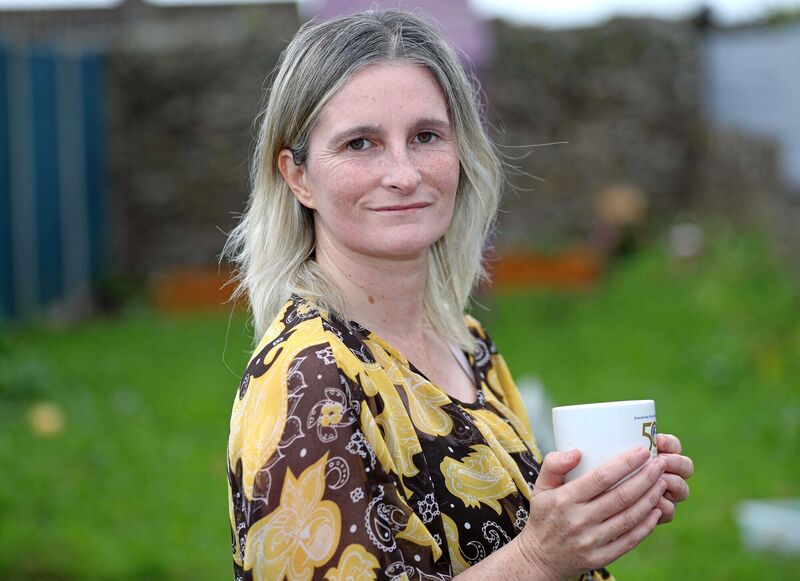
Ms O’Sullivan, based in Cork, helps women to establish breastfeeding in the crucial early days of a baby’s life.
“Yes, it’s a choice,” she says. “But it’s not an equal choice. And mothers need to be able to access that information: your milk and the hormones and the antibodies are unique to your nursing diet and formula can’t replicate that.”
Ms O’Sullivan shares Professor Hastings’ concerns about follow-on milks, which are legal to market, but which are not in line with WHO infant feeding recommendations, she says.
“The WHO recommends babies be breastfed exclusively up to six months, and that they should continue being breastfed up to two years, in combination with solids."
Ensuring that information and education comes from healthcare sources instead of private companies is a battle with chronic under-resourcing, she says:
“Companies have huge amounts of money compared to maternity services, which are completely under-resourced.
"Voluntary breastfeeding groups run by mothers in unpaid roles are plugging the gaps where the HSE isn’t providing resources.”
In May, the HSE announced €1.58mn of funding to provide 24 lactation specialist staff to Irish maternity hospitals following an Oireachtas Committee on Health hearing on breastfeeding supports.
It’s a source of hope for Ms O’Sullivan, but she believes the key to healing Ireland’s fractured relationship with breastfeeding comes with education.
“A really good, strong, governmental educational campaign extending to teenagers and children is needed,” she says.
“We need to ensure they are seeing images of babies being breastfed from a young age, that it’s part of the curriculum. We need education that breast is not only best, but that breast is normal.”
“Will the government really get behind that, and how will they balance that with supporting the dairy industry, and reconciling that with the huge amounts of formula and formula ingredients being exported from this country?”
Governments have the responsibility to provide “objective and consistent” information on infant feeding.
Educational materials should be clear on the superiority of breastmilk, the negative impacts on breastfeeding of introducing partial bottle-feeding, and contain warnings about the health hazards of improper use of infant formula. No images idealising breastmilk substitutes to be used.
Information materials from manufacturers should be made only with the written approval of an appropriate government authority.
No advertising to the general public of infant formulas.
Manufacturers must not provide samples of their products to pregnant women, mothers or family members.
No point-of-sale advertising, special displays, promotions, discount coupons, sales, or handing out of samples of infant formula.
Marketing personnel, in their business capacity, should not seek direct or indirect contact with pregnant women, or the mothers of infants and small children.
Health authorities must promote, encourage and protect breastfeeding.
No facility of a health care system should be used to promote infant formula, including for the display of posters or the distribution of information by manufacturers.
Health systems must not use “mothercraft nurses” or other company reps provided or paid for by manufacturers.
Feeding with infant formula should only be demonstrated to mothers and family members who need to use it, by healthcare workers.
Donations or discounts of infant formula to hospitals can be made by manufacturers, but only for infants who need to be fed on breastmilk substitutes.
Quotas based on sales volumes of infant formula must not be used to calculate bonuses for marketing personnel.
People employed to market infant formula should not perform any educational functions with pregnant women and mothers of infants.
Containers of infant formula must bear a clear label stating: The superiority of breastfeeding; warnings of the health hazards of inappropriate use of the product, and a statement that the product should only be used on the recommendation of a health professional.
No images of babies or images that may idealise formula feeding can be used.
The annual global trade in infant formula
The number of babies who die each year globally who would survive if WHO breastfeeding recommendations were universally followed
Global maternal deaths that would not occur if WHO breastfeeding recommendations were universally followed
Bbabies worldwide exclusively breastfed to six months
Irish babies exclusively breastfed to six months
The number of donor milk banks on the island of Ireland. The Western Trust Milk Bank is located in Northern Ireland and supplies Republic of Ireland neonatal units.
The value of Irish infant formula production exports in 2017 according to CSO; of this goes to China
HSE funding for lactation consultant posts announced in May.
CONNECT WITH US TODAY



Be the first to know the latest news and updates