Gaza's mothers and babies bear the brunt of bombardments

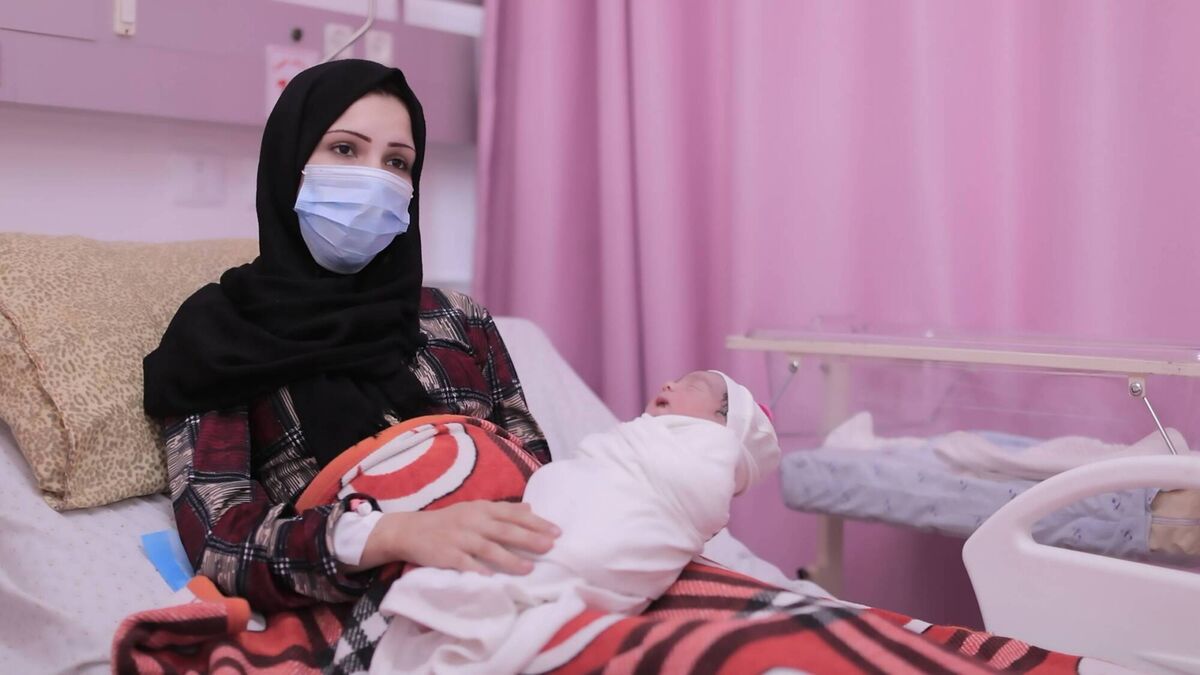
Mervat Al-Buhtaimi with baby Sedra born June 2021 at the Al Awda Hospital Gaza, Palestine, shortly after the Israeli Defence Forces' bombing of Gaza. Picture: via ActionAid Ireland
A baby girl born in Gaza just a few weeks ago was named 'Sedra' or “like a star” in Arabic, because like a star she brings hope to her family after a traumatic year.
Her mother Mervat Al-Buhtaimi is one of many women whose pregnancy was affected by living through heavy bombing of the area by Israeli forces in May.
Airstrikes began on May 10 after rockets were fired from the territory towards Jerusalem by Hamas militants, and continued relentlessly for 11 days.
At least 230 Palestinians were killed, including 65 children and 39 women, with 1,710 people wounded, according to the Gaza Health Ministry, which does not break the numbers down into fighters and civilians.
Twelve people in Israel, including a five-year-old boy and a 16-year-old girl, were also killed.
But behind the deaths and the devastated streets, staff at al-Awda maternity hospital in northern Gaza have witnessed mental and physical trauma harming pregnant women.
They have spoken of how the injuries led to an increase in premature births, and how trauma has left women unable to breastfeed or bond with their baby.
Ms Al-Buhtaimi carried these fears with her throughout her pregnancy, getting worse in May to the point she feared even losing her unborn child to injury, she said.
“While the bombing and shelling were happening, I thought that we were all going to die,” Ms Al-Buhtaimi said.
This was not an idle fear as during the attacks one of her cousins suffered a miscarriage.

“She lost her baby due to the severe fear of the bombing and shelling. I was terrified to lose my baby,” Ms Al-Buhtaimi said.
Her daughter Sedra was born in mid-June at the hospital, just weeks after the 11-day bombardment ended.
Ms Al-Buhtaimi said: “Now I feel better seeing my baby girl in my hands.”
For psychologist Helana Mesleh this mother’s fears are all too common.
She has seen women suffer silently after a traumatic birth, their worries lost under the weight of damage from the conflict.
“Some women were unable to breastfeed their babies, hug them or even accept them because they came during difficult circumstances,” she said.
Working with patients at the hospital, she sees them express: “dissatisfaction, continuous crying and rejection towards their babies.” She said: “Some women had other symptoms such as sleep disorders and eating disorders as a result of the bombing and fear of losing their children, loved ones or homes, especially in the northern area of the Gaza Strip.”
Her team also worries about the increasing rates of postpartum depression as women cope with a newborn baby and possibly also the loss of a family member.
Others were made homeless by the bombings.
Some 58,000 Palestinians fled their homes, many seeking shelter in crowded United Nations schools at a time of a raging coronavirus outbreak.
“Pregnant women would be usually very happy, preparing everything to welcome their newborn babies,” Dr Mesleh said.
“But the war and its consequences have prevented them from enjoying those moments.” Instead, she has treated patients for what she describes as “unexpected psychological grief and pain”.
She sees patients at al-Awda Hospital and through mobile outreach clinics. Her team uses social channels like WhatsApp and Messenger to keep in touch with the women after they give birth.
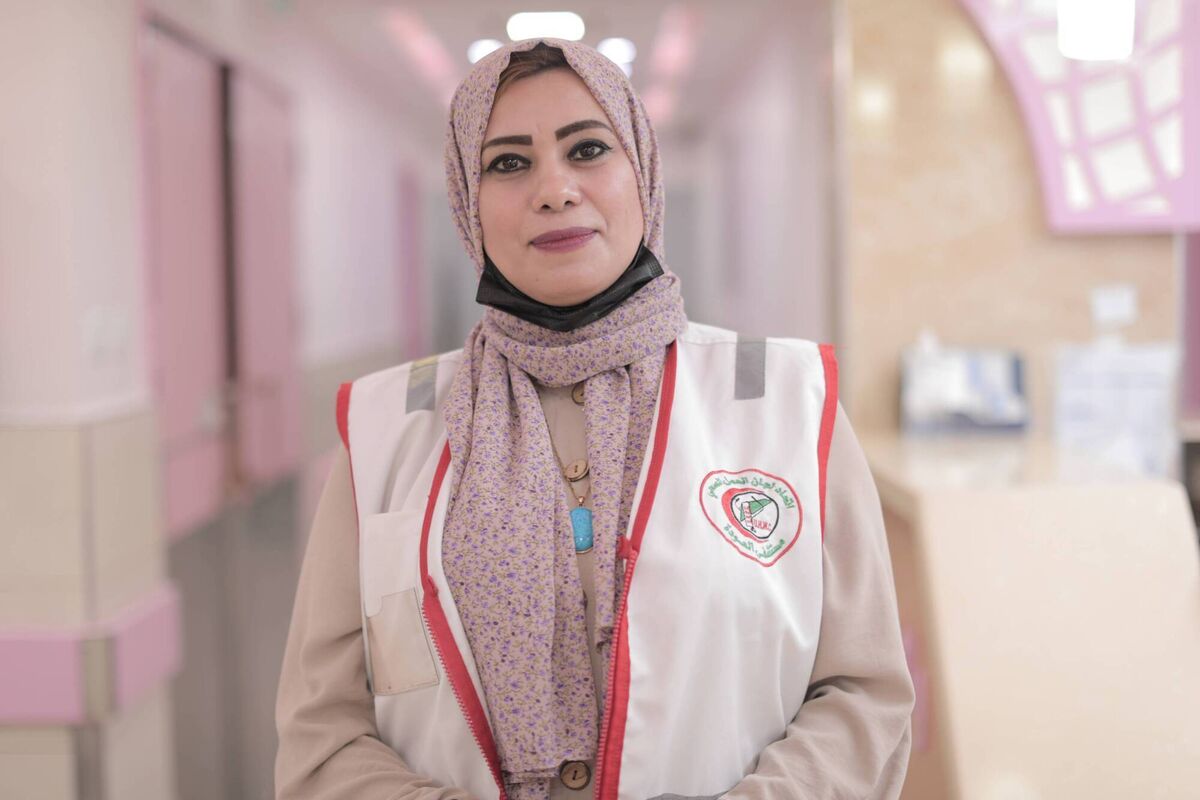
The clinics were first introduced by the hospital when the pandemic hit. They are essentially large ambulances equipped with medical supplies and equipment for various diseases.
They also provide mental health services through psychologists like Dr Mesleh who can visit women near their homes for support.
Dr Mesleh has also worked with children whose mental health was affected by the attacks.
Their behaviour has changed with bed-wetting and aggression replacing normal childhood actions, and they talk about fear, anxiety and social isolation, she said.
Head of the obstetrics and gynaecology department at al-Awda Adnan Radi said many patients had their pregnancies damaged.
“Pregnant women were the most affected category, especially psychologically, as some were unable to reach the hospital to get the services they needed,” he said.
During the bombings and in the weeks since the hospital has treated an increased number of “complicated births, caesareans, early deliveries and miscarriages”.
The number of babies requiring treatment at the neonatal intensive care unit also increased, he said.
Some pregnant women injured themselves while fleeing for their lives and ended up in hospital earlier than planned.
“In some cases, women fell down or crashed indirectly into their children or husbands while escaping from the bombing, “ Dr Radi said.
“As a result, ‘a bleeding’ or ‘a blood pooling’ behind the placenta happened. We had to conduct six urgent caesarean operations, and the results were good.”
No woman or infant died at the hospital during the bombardment, he said. However, in his experience those few days added stress to an already difficult living situation.
He listed four areas where they have seen changes during and after the 11-day attacks.
Premature births increased. This carries extra risks in Gaza, he said as the resources for clinicians and midwives are limited.
They noticed “a sharp increase in bleeding symptoms” as a result of placenta detachment and the occurrence of strokes in the uterus.
“The percentage of antepartum haemorrhage increasing four-fold during the war,” he said.
“And six cases of abruption-placenta arrived at al-Awda Hospital within a very limited period of time.” Streets became impassable due to the risks including “most of the roads leading to the hospitals” he said. The ambulances were in continuous use, but they were not always able to reach the women in a timely manner.
And he said this led to women labouring at home for too long or even having unplanned home-births without medical support.
Finally in the period after giving birth, the team noticed “behavioural changes in women after childbirth as a result of the psychological pressures they were exposed to.” He said: “These cases were transferred to psychological treatment departments.”
At one point the hospital lost power for 20 hours, according to a spokesperson for ActionAid Palestine which supports the hospital through its local partner Union of Health Workers Committee.
“They depended on the generator and their backup storage of diesel and solar panels, which are not enough to cover all needs,” the NGO said.
“There was a threat the hospital’s services could stop at any time.”
Last month Amnesty International raised concerns about an Israeli army raid on the UHWC offices in the West Bank, following allegations of links to the Popular Front for the Liberation of Palestine (PFLP).
ActionAid Palestine is supported from Dublin by ActionAid Ireland.
Ceo Siobhan McGee said: “We’ve seen from the recent bombardment in Gaza that women and children made up almost half the casualties and it has caused untold trauma to babies, children and expectant mothers.”
The NGO is also calling for the government to enact the Occupied Territories Bill.
This bill makes it an offence for a person to import or sell goods or services originating in an occupied territory or to extract resources from an occupied territory in certain circumstances, and to provide for related matters.
Ms McGee said: “Enacting the Occupied Territories Bill would make Ireland the first EU country to ban trade with illegal Israeli settlements in Palestine.”
Women and children “bear the brunt”, she said of the evictions.
“We’re calling on the Irish Government to move to promptly enact the Occupied Territories Bill,” Ms McGee said.
In May Ireland became the first EU country to recognise the Israeli settlement in Palestinian territory as “de facto annexation” following a cross-party Dail vote.
During a debate ahead of the vote, the Government tabled an amendment to include a condemnation of the actions of Hama which was adopted.
- An ActionAid Ireland petition to the Irish Government is available on https://actionaid.ie/occupied-territories-bill/


CONNECT WITH US TODAY



Be the first to know the latest news and updates