Special Report: Public and private sectors making changes to working schedules

If state employees will be allowed to work remotely on a more permanent basis, the future of work will have changed forever. File picture: iStock
Office work has changed forever, because of Covid-19.
From the public sector to the private sector, a hybrid model of work, where employees work both in the office and from home, is the future.
- - CPL has set up an institute specifically to explore, question and design work solutions that go beyond remote working
- - RDI Hub chief executive Liam Cronin divides his time between his workplace and home, and says he is more productive now
- - Research has shown benefits across four major fronts: for workers, women, the environment, and business
- - ICE Jobs CEO: 'Women are likely to be more courageous because we understand that we can balance and deliver within the time available'
Google has advised staff they can work from home until September 2021. Facebook is allowing employees to work from home until July 2021, with grander plans in place for after that.
Vodafone Ireland is currently devising a new strategy, blending working remotely with on-site working, for a post-pandemic world. And Bank of Ireland sees flexible working forming a part of their future strategy too.
However, it is not just in the private sector, the public sector is responding too.
Revenue, with its several thousand employees, is also looking to more flexible working arrangements, as it is part of the Inter-Departmental working group, which is developing general principles to inform a longer term remote working framework for the entire Civil Service.
If state employees will be allowed to work remotely on a more permanent basis, the future of work will have changed forever.
"Revenue is an active participant on the Inter-Departmental working group that is developing general principles to inform a longer term remote working framework for the Civil Service.
"In this context, Revenue is hopeful that such a longer term remote working framework will be rolled out for Revenue staff when appropriate having regard to national public health guidelines," a spokesman told the .
More specifically, their staff was polled in May 2020, with more than three in four people stating they wanted flexible working arrangements.
"A survey of Revenue staff was carried out in May 2020, 96% of staff participated in the survey and some 77% of respondents indicated that they favoured a combination of home and onsite working for the future," the spokesman said.
Vodafone Ireland also surveyed its staff, but they now do it every two months. Greater flexibility came to the fore there too.
"We run a Covid Pulse survey every two months with our leaders and our people, to understand how they are feeling, and whether they have the right resources in place to work effectively during the pandemic.
"They’ve shared that the pandemic has brought both positives and challenges. People are enjoying greater flexibility in managing their day, and obvious advantages, such as, no commute to the office," a spokeswoman said.
Bank of Ireland said flexibility was their future too.
"Post Covid, we do see flexible working playing a greater role in how we work.
"This required a lot of quick adaptation to how we work coupled with investment in technology," a spokesman said.
"As we look to the future of more flexible working, we’ll be building on our experience of 2020 along with the investment and innovations we have been able to make," he said.
Big international employers, with bases here such as Facebook and Google, are moving this way too.
“When Covid-19 hit, we quickly pivoted to a remote work situation, reducing uncertainty for many people who were worried about commuting to or being in an office environment.
"Based on guidance from health and government experts, as well as decisions drawn from our internal discussions, we are allowing employees to continue voluntarily working from home until July 2021," said a Facebook spokesperson.
However, they are taking it further again.
“We’re shifting to remote work on a more long-term basis and many employees can now choose where to do their best work.
"We believe this will help build a more flexible and fair future for all,” the spokesperson said.
Google meanwhile does not have such specific plans.
Almost all of their staff are still working from home, aside from a few essential workers who are going to work — such as data centre engineers.
Staff globally have the option to work from home until September 2021.
However, Google does hope to open the offices on rotation (for example they may target about a 20% capacity per day) at some point in the New Year. They do not have a confirmed date for this as yet.
Workplace location aside, employee wellbeing has come to the fore, because of isolation, loneliness, and increased screen time.
Facebook, Bank of Ireland, and Vodafone all ran wellbeing events throughout 2020 for their staff, which saw huge uptakes.
"We’ve organised virtual social events, promoted mental and physical health activities — including a 'couch to 5K' which 2,500 colleagues participated in — and also have a dedicated wellbeing app which has proved helpful for colleagues as they can access supports anytime and participate in activities," said the BOI spokesman.
In Facebook, virtual events were teamed up with fundraising in 2020.
Staff, themselves, raised €200,000 for Irish charities by running, baking, and sleeping out in their own gardens.
The company also held virtual events and celebrated Pride Month, Mental Wellbeing Week, Latinx and Hispanic Heritage Week, Africa Week, Black History Month, Women’s Leadership Day, and International Day of People with Disabilities, all online.
Vodafone Ireland, based on information from staff, responded to the impact that incessant screen time was having on people, otherwise known as e-presence.
"Insights also highlighted growing feedback over the impact of the volume of online meetings and increasing workload on wellbeing and engagement. Most interactions have gone from being unplanned to planned, scheduled and visible in the calendar.
"For example, a quick ‘water cooler’ chat, informal catch-up and traditional telephone conversation have moved from a five-minute, in-person interaction to a scheduled 30 minutes video conference. Therefore, there was an immediate need to accelerate thinking on how we manage meetings and workload for our leaders and for all of our people," the spokeswoman said.
"In response to this we created an interim flexible working policy to cover the exceptional circumstances during the pandemic, and a critical part of the policy is Employee Wellbeing and the ‘right to disconnect’, where we’ve clear guidelines on the use of meetings, core hours, use of breaks, and a strong focus on well-being and mental health," she said.
In Ireland, pre-Covid, the future of work was being examined in great detail by one organisation — CPL, a talent solutions business.
It had even set up its own Future of Work Institute, headed up by Barry Winkless, the company's chief strategy officer.
What does it do?
"It questions, explores and designs the future of work solutions with clients and candidates. Given CPL’s unique partnerships with many of the world's leading organisations, we have access to best and next practices. It is the only group of its kind in Ireland," says Barry.
They gather data in various ways, such as through questionnaires, workshops, hackathons, the development and testing of models in organisations as well as white paper development.
"The ‘future of work’ refers to the purposeful, integrated design of workplaces, workforces and work tasks across multiple time horizons in the context of business and society," explains Barry.
While so much focus has been on home or remote working over Zoom in 2020, that is not what they look at in terms of the future of work.
"A lot of focus, unduly, is given to workplace — where people work physically or digitally. But that is just one of three important ‘Ws’: workforce (how workforces are designed in terms of type of employment, how people are managed and motivated) along with work task (the tools, methods, technologies and mindsets used to deliver the work) are equally, if not more, important.
"The Future of Work Institute is very strongly against a narrow view relating to workplace hours or level of flexibility. It needs to be a more holistic view including the other perspectives," he says.
In a survey to be published this month, the group found 65% of people saw Covid as equal parts challenging and opportunity filled.
"From our recent American Chamber study on the future of work, 65% of people we spoke to highlighted Covid obviously as challenging but, equally, affords an opportunity to change. In most instances, we have noticed either an increased frequency of flexible working or an initiation of regional pilots to assess impact — pilots on a four-day week etc.
"Equally though, we have found no 'one size fits all' and some organisations value a physical presence," says Barry.
But overall, 2020 did have the "obvious effect" of driving proper conversation on flexibility in the workplace.
He does not believe that the four-day work model will become a widespread reality, but "flexibility" definitely will.
"From our research, flexibility is one element of a more ‘human approach’ to working, but there other elements like trusted leadership, flatter structures, inclusivity and a deeper understanding of the human experience in general," explains Barry.
And when asked what employees really want, it is not just flexibility, home working or a four-day week.
"There is a general desire for organisations that have true meaning behind what they are doing, coupled with a conscious approach to bettering society.
"At a more ground level, it is about being valued, being included, with fair and ethical leadership coupled with flexibility and decent conditions," says Barry.
Liam Cronin is the father of four children and the CEO of RDI (Research Development and Innovation) Hub in Killorglin, Co Kerry.
He has worked both in industry and academia, working for Microsoft for 25 years and in Trinity College Dublin after that.
He lives in Kildare with his family, so he was well used to long commutes.
As CEO of an RDI hub, his role is to help create businesses and jobs outside of major cities, meaning those employees may well be working remotely.
This year, he got a taste of remote working first hand. "From March 16 to August 4, I had 20 weeks working from home,” says Liam.
Working at home for 20 solid weeks meant home-schooling in the evenings and sharing workspace with one child who was doing the Leaving Certificate.
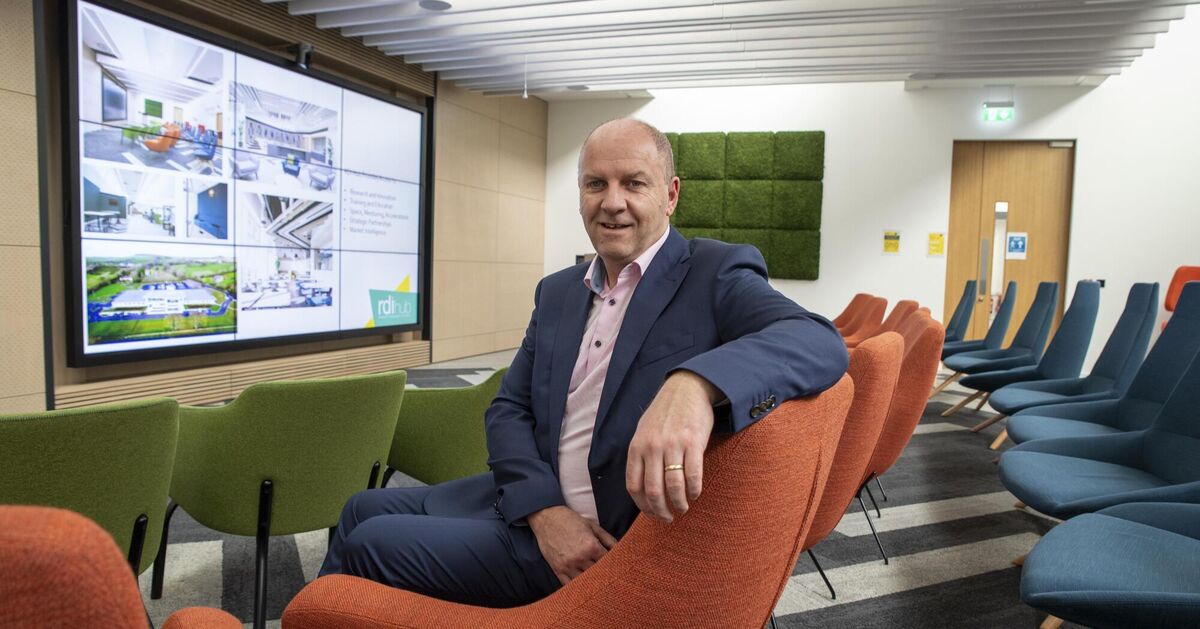
There was also the addition of his wife being a frontline worker; she works as a nurse in Tallaght Hospital. But he has fully embraced the hybrid-working model, something he sees as the future of work.
Liam now works out of the hub in Kerry three days a week and from his home in Kildare two days a week. He splits his work evenly between administrative work and in-person collaborative work.
"When I'm in Killorglin, I fill my day with meetings. From 1pm to 6pm, I make myself available to members for the sake of entrepreneurship. I push myself not to be on email when I'm here. I wouldn't have broken it down like that before," he says.
"I'm challenging myself, I'm pushing myself for my family so I can organise my calendar to work two days at home," he adds.
Liam feels he is more productive using this hybrid-working model.
"At home, I'm task driven. I work off to-do lists and I put items on my to-do list for Thursday and Friday. I also set expectations with people who are expecting something from me, that it's Thursday and Friday they will be getting the work or hearing from me.
"I also block out what I call 'focus time' — two-hour slots in my calendar, where I step back from the day-to-day running of the business to figure out a strategy. It's working on the business, not in the business. I have a bit more time without the commute," says the CEO.
From a business perspective, he has seen trust in productivity rise among employers.
"The level of trust has increased enormously. We all had to go into a big experiment from March 16 and trust each other a lot more. I always had that trust; that it's not when you do it, but how you do it.
"Once the metrics are being hit, I'm really flexible. There are two women on my team who have young kids, so I need to be flexible," says Liam.
But remote working is not all positive and that is why he is in favour of a hybrid-working model.
"It's been tough from an innovation and creativity perspective working remotely. It's a fall down of Zoom meetings — one of the observations I've made is it helped productivity, but not innovation and creativity. The whole collaboration part has suffered," says the CEO.
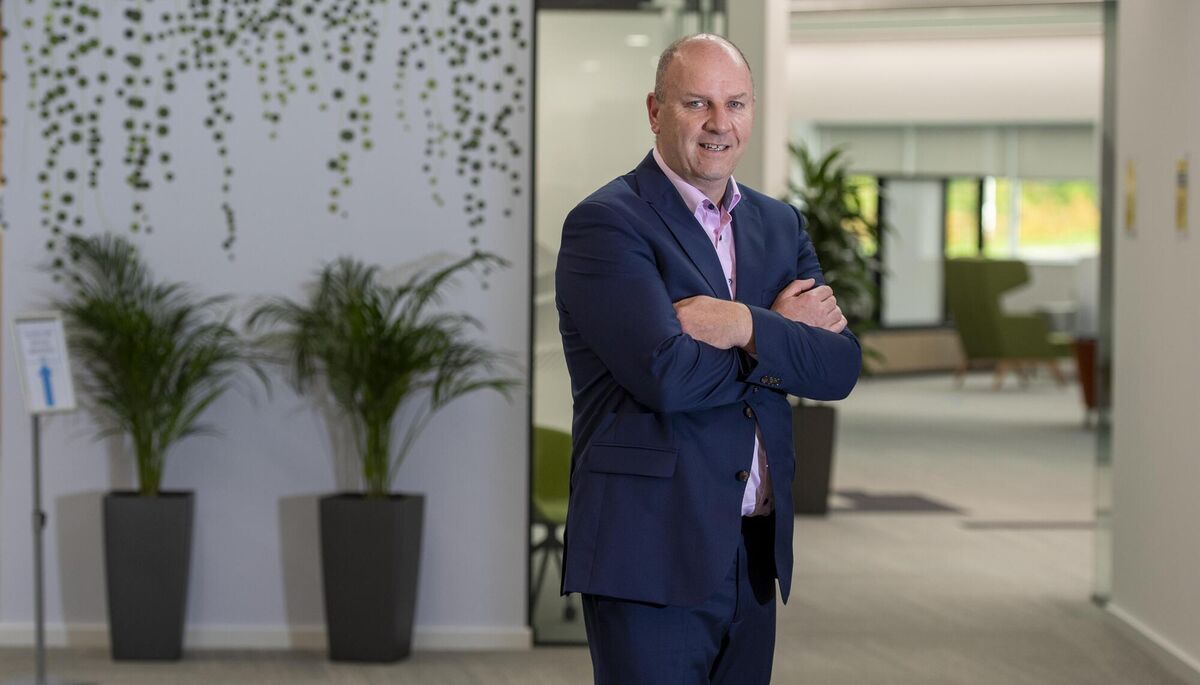
The Killorglin RDI hub works on the idea of in-person collaboration, it is not just a place to fire up a laptop and send out emails.
"We have a mixed-membership model — some people might want to be part of the network and like to go into the centre two days a week and run ideas past people and then go home and work for the other days, do their productivity days," says Liam.
From talking to industry and other CEOs, he asserts that, post-Covid, companies will be happy for their employees to work from home.
"But they are looking at a hybrid model of working from home and in the company's office or working in a rural RDI hub," says Liam.
"This flexible hybrid model is here to stay. Lots of companies are never going to go back to five days a week in the office."
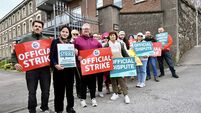
Four Day Week Ireland is a campaign coalition of trade unions, businesses, environmentalists, women’s rights, and civil society organisations, as well as academics.
Members include Fórsa Trade Union, the National Women’s Council of Ireland, Friends of the Earth Ireland, and New Economics Foundation.
They are campaigning for a "gradual, steady, managed transition to a shorter working week for all workers", both in the private and public sectors.
Research has shown benefits across four major fronts: for workers, women, the environment, and business.
It has been shown that workers are more productive when on a shorter working week and women, who carry out the main bulk of care work in the home, see balancing of chores when their partner is on a shorter week.
Demand a four day week pic.twitter.com/zGzub2vd2s
— 4 Day Week Foundation (@4Day_Week) October 15, 2020
The environment also benefits with less commuting and a drop in CO2 emissions.
"We want to start a public conversation in Ireland on the case for reduced working hours. We want to change the false narrative that working long hours is good for productivity and a badge of honour, challenge the worst excesses of the ‘work-first, always-on’ culture, and champion the importance of family time, leisure time, caring work, and community work," says the group.
"Our medium-term objective is to move towards the four-day week being the standard work arrangement across the economy, with no loss of pay," they say.
1 in 4 women are considering leaving their jobs, scaling back work or cutting hours as a result of the pandemic, says a new study.
— Four Day Week Ireland (@4DayWeekIreland) October 10, 2020
A #4dayweek could help address this, allowing for a better distribution of caring responsibilities within the home 👩💻👨👧👦https://t.co/gThwXfLrkw
As with the five-day week today, it will not be the only work arrangement, the idea is just reduced working hours. For some sectors, employments, and workers, different variances of reduced working hours and a shorter working week will need to co-exist alongside the benchmark of the four-day week.
"We do not mean that everyone will have a ‘three day weekend’. Strong management and clever rostering will need to ensure that businesses and public services can function for five or in some cases even seven days, alongside a shorter working week for all workers," says the group.
The campaign is backed by case studies around the world where companies have reduced their staff's working hours, as well as by academic research by economists and economic historians.
In May of 2019, a recruitment company in Galway made national and international headlines.
ICE Jobs had just put its entire staff on a four-day week, with no pay cut, and the business would still operate five days a week. The staff were as shocked as the nation was surprised.
Now, almost two years later, the business is doing better than ever. Productivity is up 27% and business has increased too.
Margaret Cox, CEO of ICE Jobs, explains how the company ended up introducing the novel working model.
"In February 2019, we were doing our annual SMART day review. We were looking at the company and where it's going; we were coming to the end of our 2014-2019 plan and so we were looking at the next five years," says Margaret.
"We simply had a vision to become a world-class organisation and we asked ourselves: 'How do we do that; what's the most important thing in our business? It came back to our people."
Felim McDonnell, director of ICE and Margaret's husband, was the one to table the idea. An engineer by profession, she describes him as the "big picture" person, who reads voraciously. He had researched the four-day week.
"Even going back 15 years, he was talking about 10 days on and 10 days off," says Margaret.
"In training and recruitment, we're changing people's lives, so we asked ourselves: 'What if we change the lives of the people who work for us?'"
Margaret had worked across both business and politics, on Galway County Council and as a senator, and knew first-hand what it was like to juggle work life with family life.
So after much discussion, they decided to tell their staff that they would now have 52 public holiday weekends every year.
"It was frightening to do when we announced it to our staff in May of 2019," says Margaret.
"We made this great announcement and there was absolute silence in the room.
"But some people thought it was a candid-camera moment and some thought they were going to lose money. Nobody in Ireland was talking about it at the time," says Margaret.
ICE Jobs is still on a four-day week, but the company is open for business five days a week. Logistically, some staff work Monday to Thursday and some work Tuesday to Friday, having a Friday to Sunday and Saturday to Monday weekend respectively.
How has it affected business?
"On the last measurement we did, we were comfortable that we had a 27% increase in productivity. We measure it in terms of sales. Our business is very metric-driven, so we measure in metrics. And because we got more business in, we had to deliver that in less time," says Margaret.
However, it was not just a case of announcing a four-day week and letting staff off. Much planning went into the "change management".
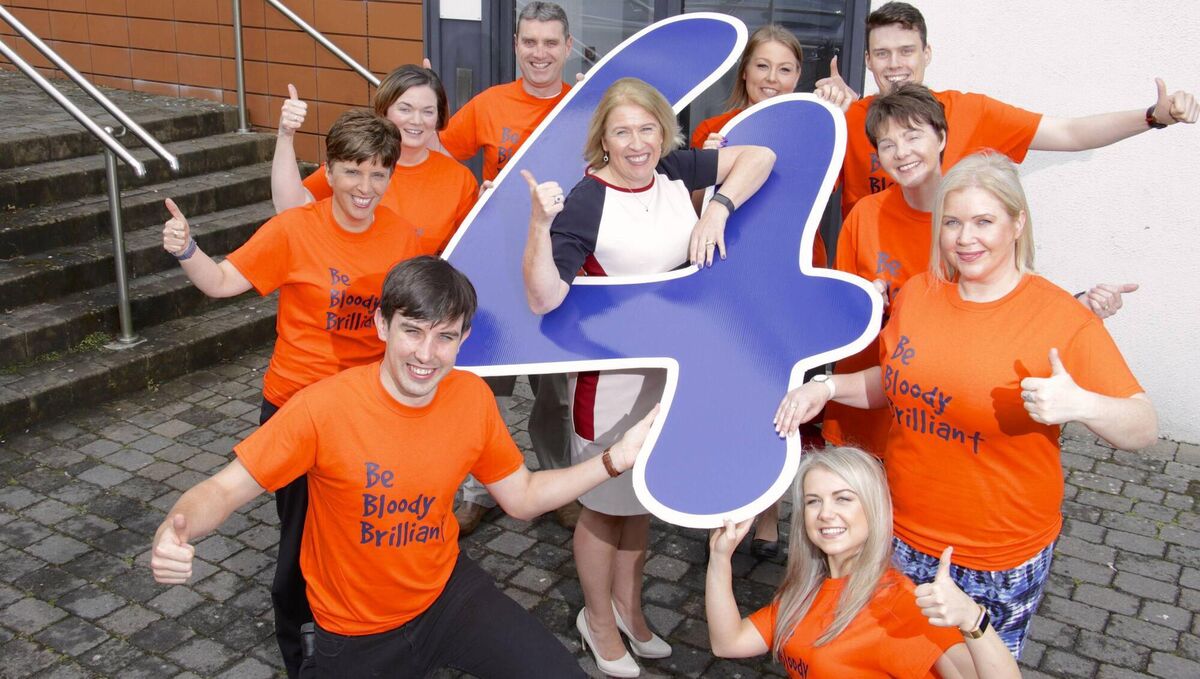
"We had a small committee working to make this work," says Margaret. "They looked at technologies, processes, staff, and that committee worked on every possible problem that might arise, and the solutions to it."
How is it working for staff? Pre-Covid, there was one staff member who had visited eight cities over a 12-week period thanks to her long weekends and proximity to Shannon Airport.
Other people went back to college and some used it to spend quality time with their family.
"And others played more golf," says Margaret.
On a more serious note, people work slightly longer hours, as 36 hours now fit into four days, but after the long weekend they come back more energised and enthusiastic, she says.
Even with remote working, the four-day week has remained.
"We are absolutely staying with the four-day week," says the CEO.
When the company first made the public announcement, it was inundated with calls from other businesses. While ICE Jobs has shown that it is not just possible to move to a shorter week, but also beneficial, Margaret says it takes "courage" to do so.
"It's about courage because you do have to think it through and plan and change. The courage thing is always the initial reaction from other businesses. They'll say: 'Oh I would love to do this but it would never work for us'," says Margaret.
While she agrees that the model will not work for some organisations, there are "a lot it will work for".
The CEO observed that it is female leaders in particular who are likely to be a bit more courageous.
"Women are more likely to be a little bit more courageous because we understand that we can truly balance and deliver within the time available to us," says Margaret. "If we look at women leaders and managers, in particular, if they've experienced balancing care work with a career, be that part-time or full-time paid work, this is true."
In a future where working from home will be a "perk" given by employers across the board, Margaret says companies will need to be far more innovative in order to attract and retain talent.
"It definitely changes people's lives," she says. "The opportunity for Ireland to become the world leader in this area is there. We're a small country; we're very adaptable; and we need to become something different now in terms of attracting and retaining talent.
"With working from home, home could be anywhere, but if we had a four-day work structure, that could attract organisations back into Ireland.
"It needs Government to drive this forward with business."
CONNECT WITH US TODAY



Be the first to know the latest news and updates