Many households exposed to energy poverty not eligible for State payments, report warns

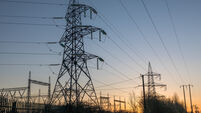
Report noted there was an increasing number of households in arrears, with many more vulnerable to energy price shocks. File picture
There is a “misalignment” between supports available for households and actual energy costs, with many vulnerable households exposed to energy poverty not eligible for existing payments, a new Government report has warned.
However, the National Energy Affordability Report and Action Plan warned there was no mechanism to target energy credits or other supports, and this “limits the Government’s options to respond to increasing energy prices”.
As he published the report, energy minister Darragh O’Brien admitted he could not say when energy prices might begin to fall.
The plan was developed by the cross-Government National Energy Affordability Taskforce (Neat), which “assesses the drivers of energy affordability challenges” and “sets out a comprehensive, coordinated programme of actions to improve energy affordability for households and businesses in the short, medium and longer term”.
It noted there was an increasing number of households in arrears, with many more vulnerable to energy price shocks.
In September 2026, 126,049 electricity customers and 39,683 gas customers were registered as vulnerable.
The value of domestic electricity arrears increased from €77m in January 2022, to €162m in August 2026, a 110% rise. The value of domestic gas arrears has increased from €19.3m in January 2022 to €37.7m in 2026, a 95% increase.
The report noted there was a “misalignment between supports available and the actual energy costs faced by households”, warning “many vulnerable households exposed to energy poverty are not eligible for existing payments”.
It also noted many households in energy poverty rely heavily on other supports, including housing assistance, child-related payments, and disability benefits.
“This highlights the need to better integrate energy poverty policies with wider social protection, energy, and housing strategies,” it said.
The report also said the purchasing power of the fuel allowance had declined in recent years.
It recommended a detailed analysis of the characteristics of domestic electricity and gas arrears.
It also called on the Government to consider the potential merits of introducing a price comparison tool for motor fuels and home heating oil, including the potential consumer benefits, and associated costs.
It noted while the Central Statistics Office found energy consumption from data centres in 2025 accounted for 23% of overall consumption, the “wider economic benefits must also be considered, including tax revenues, employment and digital infrastructure value”.
It did, however, encourage “proactive engagement” with the Commission for Regulation of Utilities Electricity Network Tariff Review, which is “examining how network charges are levied to ensure costs are fairly distributed across different customer groups, including extra-large energy users such as data centres”.
Mr O’Brien said the Government “cannot control the wholesale gas markets” and prices, but “can control accelerating the deployment of renewables at a household and business level to reduce prices permanently”.
The energy minister also received Cabinet approval for the roll-out of plug-in solar panels, which will be available by the middle of next year.
He said this could benefit 500,000 apartment dwellers.

BLACK FRIDAY
Already a subscriber? Sign in

CONNECT WITH US TODAY



Be the first to know the latest news and updates