Bereaved senator Gerard Craughwell calls for reform of power of attorney process
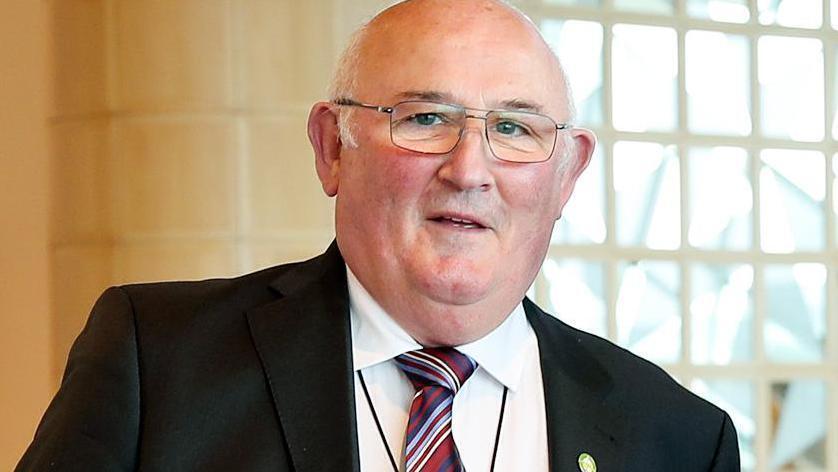
Senator Gerard Craughwell said the process allowed under the Assisted Decision-Making (Capacity) Act 2015 is a 'minefield': 'We need to simplify the process and reduce costs'. File picture: Maxwell's
A bereaved senator is calling for simplification of the enduring power of attorney process following a request made to him by his late wife.
Independent senator Gerard Craughwell’s wife Helen died in August after a short illness. In the weeks before her death, she spoke with her family about putting in place an enduring power of attorney and an advance health declaration form on what her wishes were around her healthcare.
An enduring power of attorney is a legal document letting someone name a trusted person to make decisions for them if they lose the ability to do so, allowed under the Assisted Decision-Making (Capacity) Act 2015.
After the Craughwell family experienced the complexities of the enduring power of attorney process, Helen asked her husband to use his position as a politician to highlight the difficulties and seek changes to it.
He told the : “You can imagine somebody getting a stroke and not having an enduring power of attorney in place — nobody can make decisions for that person.
“If you are in a nursing home and money is needed for you, nobody can touch anything. It is extremely complex and quite expensive to complete an enduring power of attorney.”
Read More
Mr Craughwell said a doctor is required to ensure that the person for whom the enduring power of attorney application is being made is of sound mind at the time of the application. He said the process also involves solicitors, medical assessments, prescribed legal forms, notification requirements, and registration with the Decision Support Service (DSS).
He stressed that safeguards in the process are necessary to ensure the welfare of the person who is the subject of the application for enduring power of attorney.
However, he addd: “We also need to simplify the process and to reduce the costs.”
He estimated that costs could range up to €500 at least, including legal costs, a fee to be payable to the DSS, and medical costs.
He said: “It is a minefield.”
He also accepted that it can be complex for families, as one member has to be chosen to act as enduring power of attorney, which can lead to “bitterness between siblings”, but he said that it is vitally important.
The number of applications for enduring power of attorney in 2024 was 2,588 and increased to 5,030 in 2025, according to information provided by Minister for Children, Disability, and Equality Norma Foley in response to a parliamentary question in July.
“The increasing number of applications demonstrates an increased awareness amongst adults of the importance of advance planning,” said Ms Foley.
Mr Craughwell said the advance healthcare declaration process is much easier and provides relatives of an ill loved one with great security in knowing that that person’s wishes are known in relation to issues including palliative care or surgical interventions.
“It dictates everything once you have it in place,” he said.
He urged people to take the time to sit down with loved ones to discuss the option of filling out such forms.
He added: “We have to face the fact that, like it or lump it, every one of us is going to walk this pathway, and our loved ones will be with us and will want the best for us. But what they think is the best for us might not be what we ourselves think.”


CONNECT WITH US TODAY



Be the first to know the latest news and updates