Donald Trump's Ireland visit: Unity, protests, applause, and golf
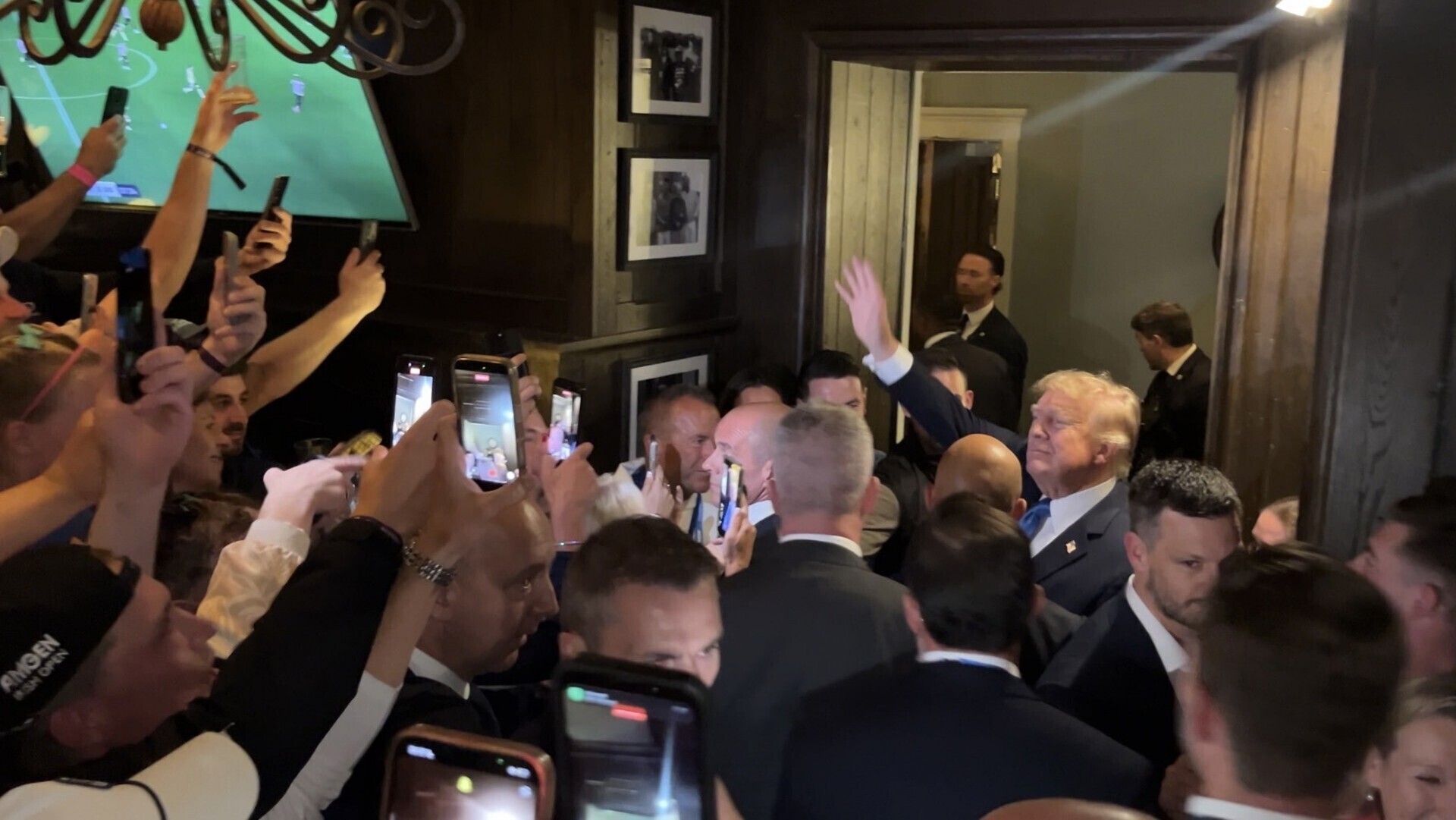
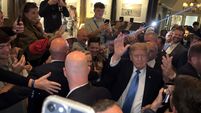
Donald Trump walks through the members' bar of his Doonbeg golf resort on Saturday night. Picture: Claudia Savage/PA Wire
From sparking a diplomatic row over Irish unity in Dublin to receiving chants of "USA" at the members' bar of his Doonbeg golf resort, the first day of Donald Trump's trip to Ireland finished with the US president focusing on the Irish Open.
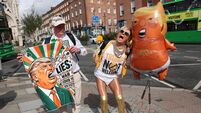
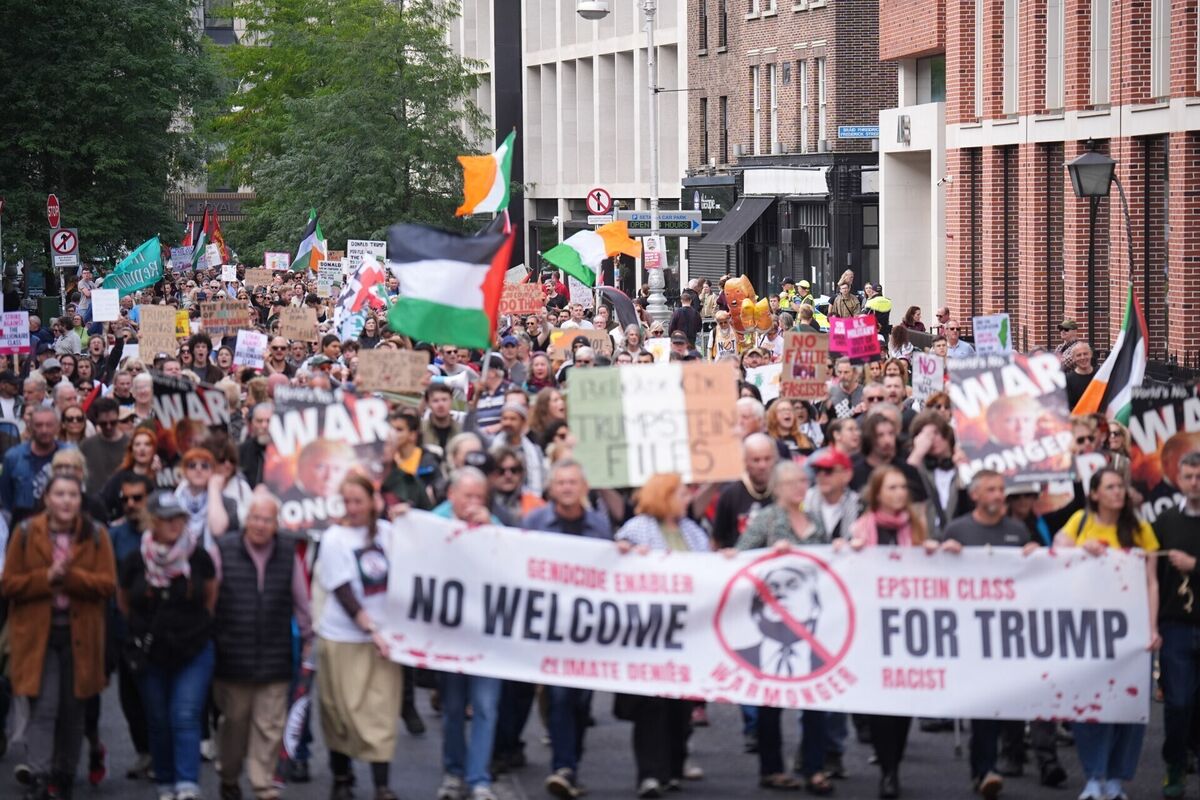
Mr Trump’s visit to Ireland has led to protests in a number of locations, with thousands flooding the streets of Dublin city centre to express their anger.
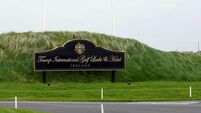
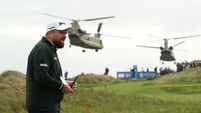
After a series of engagements in Dublin in the morning, Mr Trump travelled to the Doonbeg golf resort he owns in Co Clare where he watched some of the action at the Irish Open with his family on Saturday evening.
He was given a rapturous reception as he made a brief appearance in the members’ bar of the hotel.
Punters cheered, chanted: “USA” and sang songs as Mr Trump filed through the bar on Saturday night.
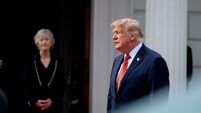
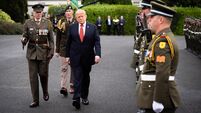
The day began with a visit to President Catherine Connolly at Áras an Uachtaráin amid a huge security operation undertaken by gardaí.
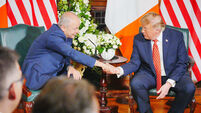
The president then travelled to the nearby Farmleigh House to meet Taoiseach Micheál Martin. It was here that the US president claimed Irish reunification was inevitable, adding it “may as well happen now”.
Read More
Answering a question about Irish unity, Mr Trump said: “I’d love to see it unified. I think it would be a great feather in everybody’s cap if that happened. It’s going to happen eventually.”
Referencing Mr Martin sitting next to him, Mr Trump added: “We’re talking about it and you got the right man over here to get it moving.
“But, yeah, I think it would be a fantastic thing.
“Now the UK will have something to say about it, obviously. But I think it would be a great thing. I mean, how can it be bad?”
During a subsequent engagement at the US ambassador’s residence in Ireland, Mr Trump did not back away from his earlier answer, stating Irish unification would be “a very cool thing”.
After the president left Dublin, thousands of people took part in a protest march which travelled through the city.
Gardaí mounted a massive security operation with officers lining the route and public order units positioned nearby.
The protest led to disruption to traffic and public transport in the city centre.
The demonstration heard angry chants stating that the US president was not welcome and criticism of his Middle East policies.
Smaller protests were also held at Shannon Airport and in Doonbeg.
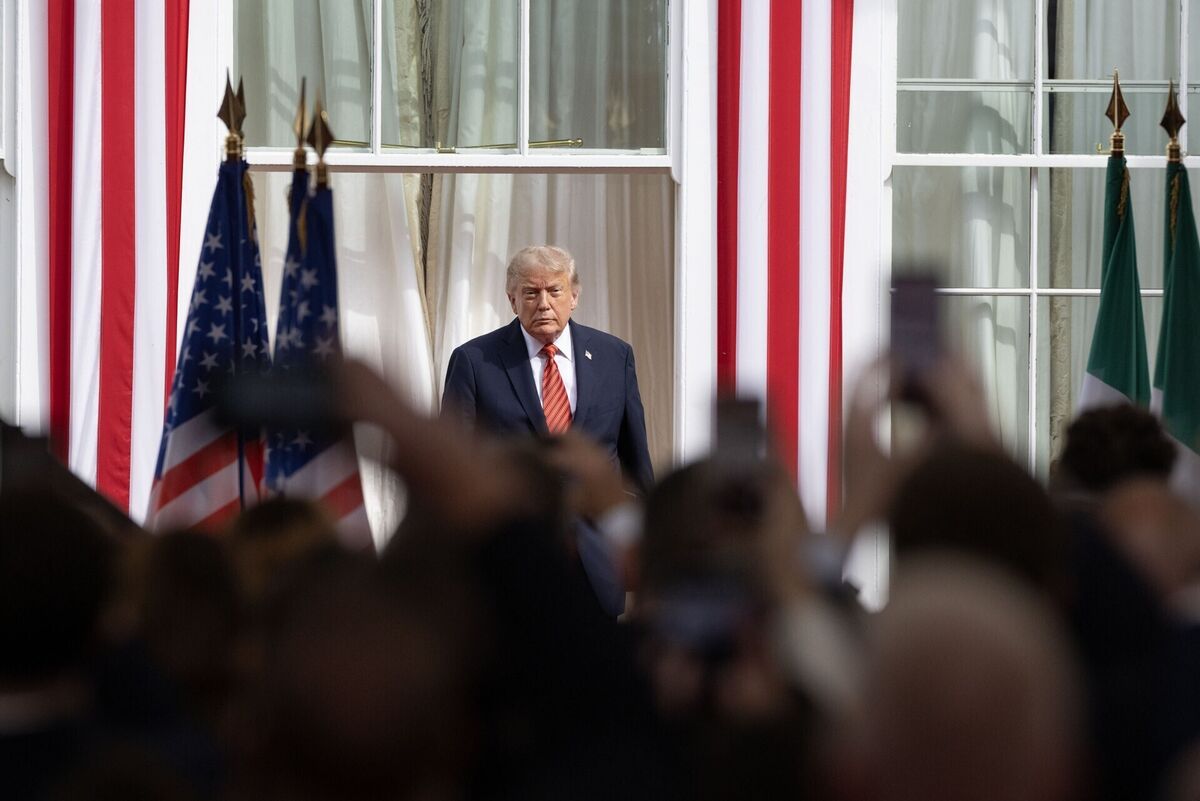
Mr Trump arrived at the Doonbeg golf course on the Marine One helicopter shortly before 3pm.
On Friday evening, a woman in her 20s was arrested for trespassing on the golf links.
On Saturday a woman in her 30s and one in her 40s were arrested for public order offences at the site.
The three women appeared at a special sitting of Ennis District Court on Saturday evening.
Mr Trump is due to present the trophy to the winner of the Irish Open on Sunday.
However, the remainder of the trip is likely to be overshadowed by the president’s comments about Irish unity.
The row could complicate Washington’s relations with Northern Irish parties.
While Sinn Féin has boycotted the annual St Patrick’s Day visit to Washington over Mr Trump’s Middle East policy, leading unionist parties the DUP and UUP have continued to engage with the president.
In response to his comments, DUP leader Gavin Robinson said Northern Ireland’s future would be decided by its people, not “commentary in London, Dublin or Washington”.
He added: “As unionists, we are not interested in the destruction of our country by joining with the Irish Republic.”
Traditional Unionist Voice leader Jim Allister said Mr Trump was “not the first US president to meddle in the affairs which don’t concern him”, adding: “Northern Ireland is not a pawn in Trump’s fallout with the UK.”
Sinn Féin leader Mary Lou McDonald said the president’s comments were “timely” and Mr Martin “must now begin planning for a united Ireland”.
The remarks are also likely to further strain relations between the US and the UK, with Mr Trump also casting doubt on Britain’s ability to defend the Falkland Islands during the visit.
On Wednesday, British prime minister Andy Burnham told MPs a border poll would be considered only when there was “a clear consensus in the country”.
Conservative deputy leader Alex Burghart said Mr Trump was “very wrong”, adding Northern Ireland was “an integral part” of the UK.
The UK-Ireland border remains a sensitive issue, with Mr Burnham triggering a political row earlier in the year after saying a referendum on reunification was “off the table”.
Under the terms of the Good Friday Agreement, Britain's Northern Ireland secretary can decide to hold a border poll, and has a duty to call one if it appears likely a majority would vote for Irish unification.
People in Ireland must also vote in favour to effect constitutional change.
Tánaiste and Fine Gael leader Simon Harris said the comments show “how much the conversation about a unified island is advancing at home and abroad” as he urged political parties to engage in a “constructive, informed and evidence-based way”.

CONNECT WITH US TODAY



Be the first to know the latest news and updates