Budget 2027: €1.5bn in tax cuts, and ministers must 'prioritise' if they seek to increase spending
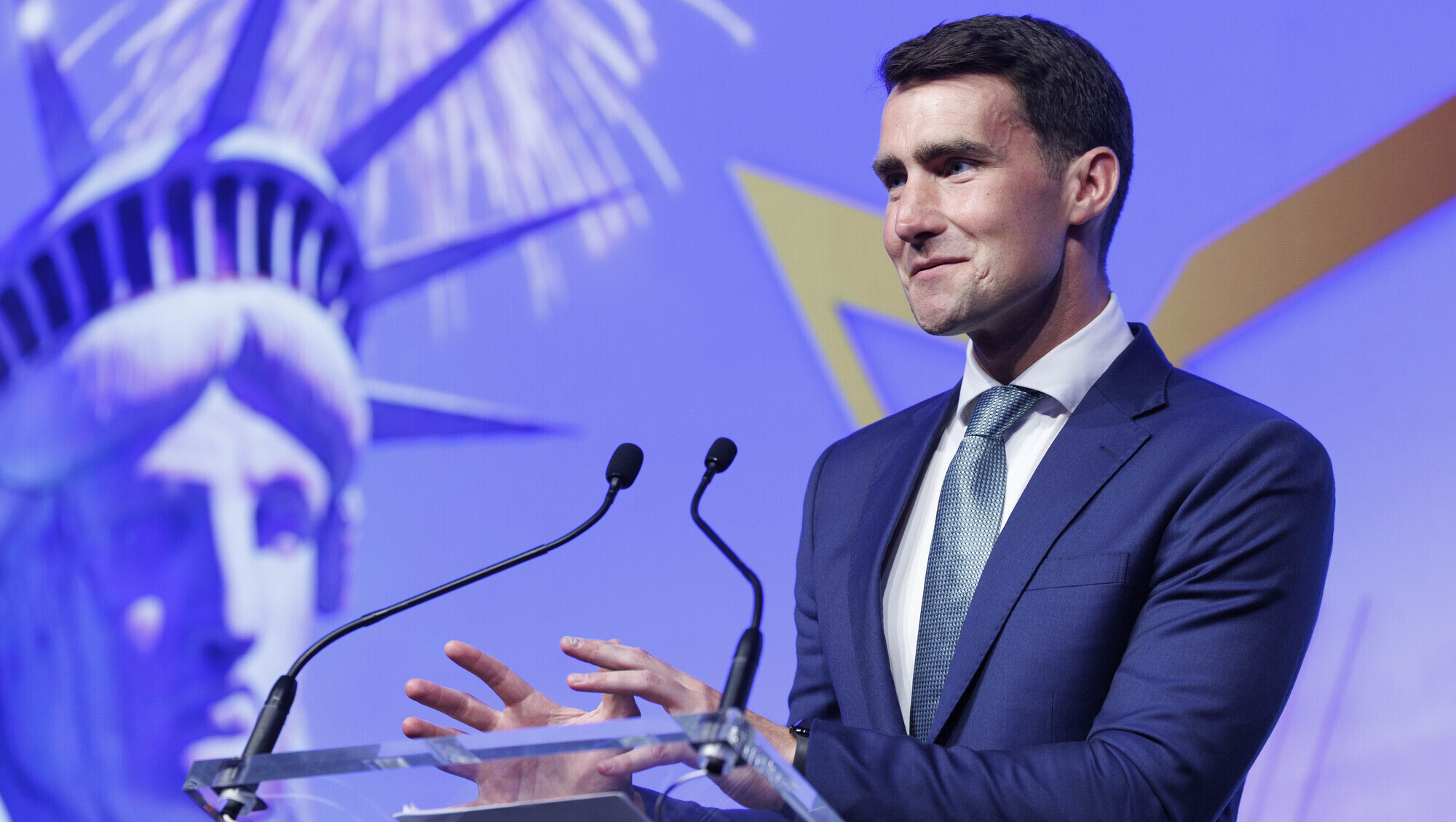
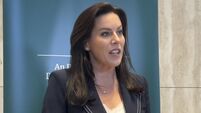
Jack Chambers speaking earlier this month at the American Chamber of Commerce Ireland. The public expenditure minister yesterday warned fellow ministers they would face 'real trade-offs and prioritisation' ahead of Budget 2027. File picture: Conor McCabe
The Government will have €1.5bn for tax cuts in this October’s budget, but ministers have been warned that new spending will see “choices and trade-offs” made as ministers grapple with belt-tightening in their departments.
Money ministers Jack Chambers and Simon Harris yesterday unveiled details of the summer economic statement, which shows that day-to-day government spending will climb by €5.9bn next year, with €1.1bn for capital expenditure and €1.5bn for tax cuts.
However, with some of the €5.9bn accounted for, and the Government and public servants without a pay deal that could take another €1bn, Mr Chambers told ministers that they will have to find savings to fund new programmes.
Mr Chambers, the minister for public expenditure, said that there is room for the Government to agree a public sector pay deal and advance some of the “big moves” in areas such as childcare that it has targeted.
However, spending for 2027 will involve fewer new measures than recent years, Mr Chambers said.
Read More
“There’s less available across Government next year than there was last year, and that means real trade-offs and prioritisation will be required,” Mr Chambers added.
Budget 2027 will see government spending climb to €125bn overall, and Mr Chambers said there had been “too much focus” on the use of the additional money in recent years. He said that budget discussions would focus on “clear priorities”.
“There’ll have to be choices and trade-offs within Government about what the clear priorities are, and it’s in that context in which the estimates discussions will take place.
“But I think there’s too often a focus on the additionality and the margin of what extra the budget is delivering, and not enough about the total level of spend in the economy by Government in terms of public expenditure.”
Mr Chambers said that departments would be pushed to “reprioritise” and reprofile if they were to spend more.
He said that an expenditure levy put in place on government departments in recent weeks had “created space” for some.
“But the wider availability for new measures is less than in recent years. That’s the case,” Mr Chambers said.
While no details of the tax package have been decided, the figure opens the door for personal income tax cuts, as previously indicated by Tánaiste and finance minister Simon Harris.
Mr Harris said the idea of continuing to increase the threshold at which the higher tax rate is paid is “logical”. He said:
“The higher rate tax was paid at €33,000 in 2015; you now pay it at €44,000. I’m not going to give a specific target and put a target on my back as to where I think we could be by the end of the Government.
“But I do think all things being equal, this is an area that we can continue to make progress on over the next number of budgets.”
The statement says the near-term economy is being shaped by “two opposing forces”.
While disruption in the Strait of Hormuz has triggered a “fossil fuel shock”, there has been strong growth in artificial intelligence (AI), which the statement says is “working in the opposite direction”.
The Irish economy, it says, is in a “healthy position”, with employment at a “near-record high”. Unemployment has remained below 5% for a record 54 consecutive months.
However, the statement says the global economy is in the midst of “significant structural change”, citing the wars in Ukraine and Iran, as well as tariffs and the digital transition.
The document adds that risks to the public finances "remain significant".
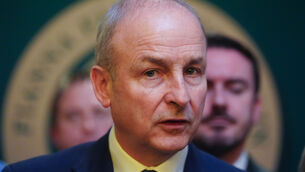
Earlier on Wednesday, Taoiseach Micheál Martin said the Budget would deliver a “significant tax package” that would particularly “look after middle-income workers and lower-income workers”.
He said it was important the Government did all it could to reduce the pressure of the cost of living on workers and on families.
- Paul Hosford, Deputy Political Editor

CONNECT WITH US TODAY



Be the first to know the latest news and updates