Government must 'stop people freezing to death' in winter if Iran war continues, groups warn
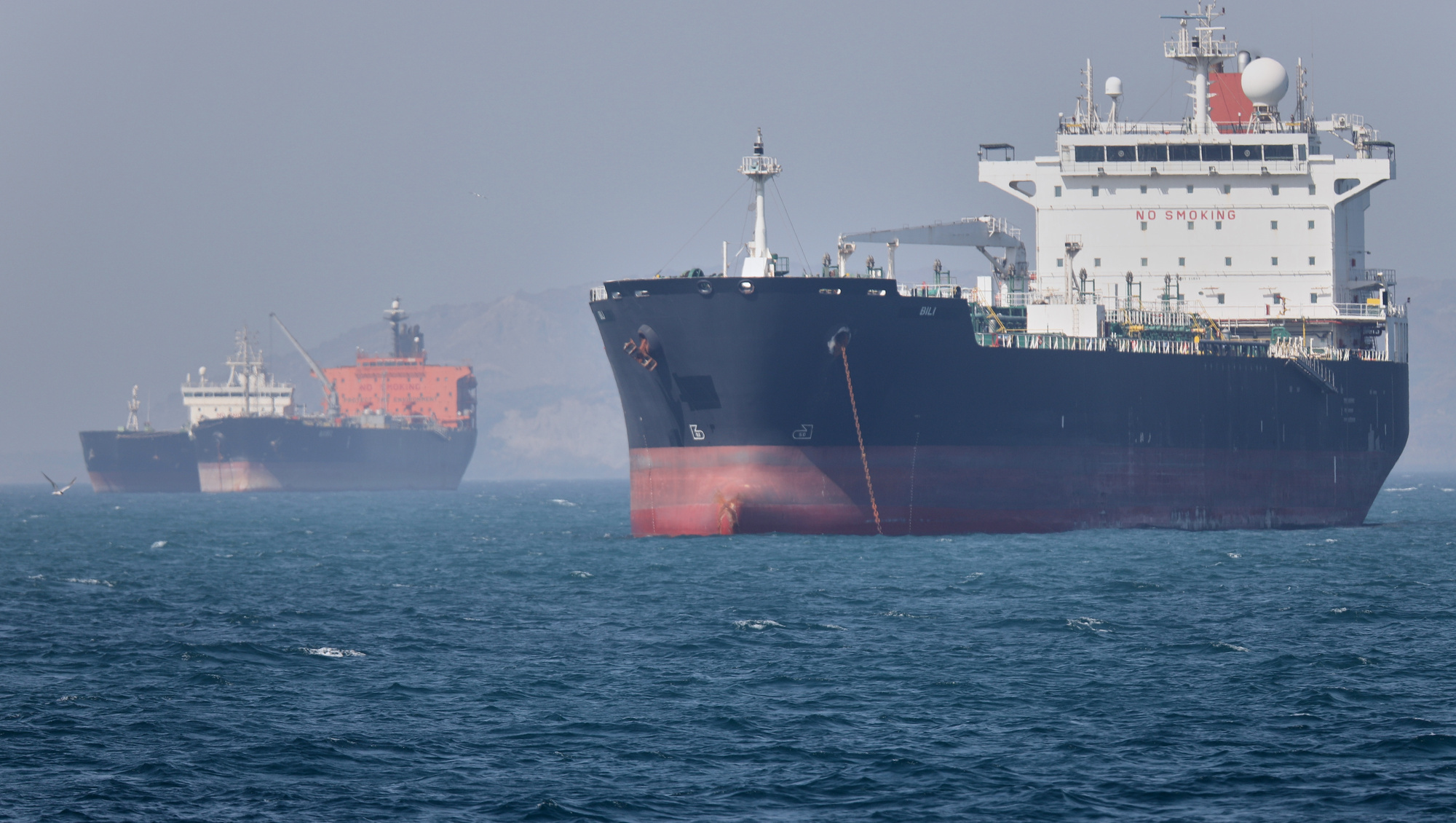
Oil tankers sit at anchor in the Strait of Hormuz at the beginning of May. Picture: Amirhosein Khorgooi/ISNA via AP
The Government must prevent “people freezing to death” next winter if the conflict in the Middle East continues, even if this means borrowing money, a committee has been told.
At a meeting of the Oireachtas Budgetary Oversight Committee, TDs and Senators were warned that there will be a “very big rise in consumer prices and unemployment” if the Strait of Hormuz does not reopen.
The committee was meeting with a range of groups to discuss the response to the energy crisis and cost-of-living pressures.
John Fitzgerald, an economist and adjunct professor at Trinity College Dublin, warned that the Government must “guard its resources” ahead of the winter due to the uncertainty about what will happen in the Middle East.
He warned that if the cost of oil rises further, there would be a “huge shock to the economy” and if inflation hits a “high figure”, the worldwide issue could trigger a recession.
“We're in a stronger financial position to deal with it,” Mr Fitzgerald said.
“My concern is households in rural areas. Farmers on very low incomes who are elderly. If they can't heat their houses next winter, there will be deaths from hypothermia.
“Ensuring that if the price of kerosene doubles, trebles, quadruples, that they can keep warm, that is what we need to be ready to deal with.”
Mr Fitzgerald also warned that “relying on the wisdom of Donald Trump to save us from an economic crisis is a dangerous bet”.
Professor Martina Lawless, director of the Economic and Social Research Institute (ESRI), said it is unclear how long fuel prices will remain high, and if it continues into next year, there will be “very substantial impacts on the public finances”.
He also said there are “running concerns about the vulnerability of the public finances and their level of reliance on corporate taxes”.
“There's a very substantial risk that this lowered demand caused by fuel prices could have knock-on impacts into employment and into other sectors of the economy, which would also give rise to further pressures on the Government to intervene,” she said.
Dr Claire Keane of the ESRI also warned that a report examining the Government's cost-of-living interventions is likely to confirm that “in cash terms, higher income households are likely to benefit more”.
Meanwhile, public expenditure minister Jack Chambers received Cabinet approval to introduce stricter spending controls to tackle department overruns.
This will include the removal of departments’ delegated sanction, as well as refusal to support new expenditure measures and the establishment of budgetary oversight groups.
It follows a decision last month to introduce expenditure levies on departments. An additional €646m was required by the Department of Education. Of this, €464m must be clawed back by other departments.
While the announcement caused anger at Cabinet, sources told the there was a more muted reception at Tuesday’s meeting.
It is understood that higher education minister James Lawless and Emer Higgins, junior minister for disability, both expressed concerns and “frustration” about what was being proposed.
Concerns focused on budgets being “disproportionately impacted” due to the pay structures in place.
However, Government sources said there is broad “acceptance and understanding” about ministers being told to keep to their budget.
Letters were sent to ministers in recent weeks advising that levies would range between 0.1% and 1.4%, with an average levy of 0.5%. The variation, one source said, is to “protect key areas”, including pensions, housing, homelessness, and frontline pay.
- Louise Burne is a political correspondent with the
CONNECT WITH US TODAY



Be the first to know the latest news and updates