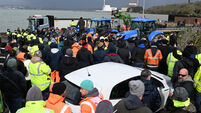
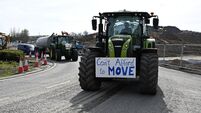
Road blockages continue as government pledges €505m package to quell fuel protests
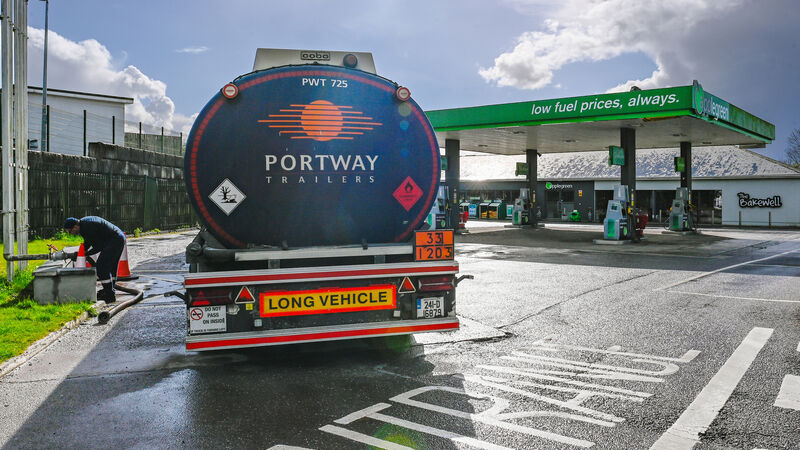
A tanker making a fuel delivery to the Applegreen service station on the North Ring rd in Ballyvolane, Cork City. Picture: Noel Sweeney
In Cork, the N28 Ringaskiddy Rd westbound is busy between Shanbally Cross and a protest near Rafeen bridge.
In Meath, there is a full road closure on the M3/N3 between Junction 11, Kells and Junction 9, Navan, going southbound.
Significant delays are likely, and Transport Infrastructure Ireland (TII) is advising drivers to use a different route.
In Cavan, the N3 southbound is solid behind a convoy on the Kells side of Virginia.
In Kildare, the M9 northbound is busy at Junction 3, Athy, where protestors have gathered.
And in Louth, there are convoys on the M1 southbound before Jctn 14 Ardee and Jctn 12 Dunleer.
The Garda Commissioner has extended the declaration of an 'exceptional event' until Tuesday.
Justin Kelly has directed that all rest days are cancelled until 7pm Tuesday - an extension from 8pm on Monday night.
'Exceptional Events' are declared when the Commissioner decides there is a security threat against the state.
It's understood gardaí were informed by their representative bodies last night of the extension.
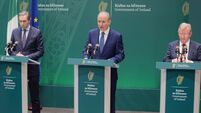
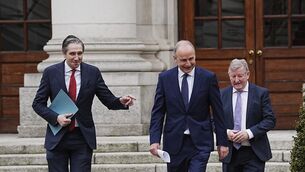
Taoiseach Micheál Martin, along with Tánaiste Simon Harris and junior minister Sean Canney, announced the plan after blockades at Whitegate oil refinery, ports at Foynes and Shannon, and Dublin’s O’Connell St were lifted, but as protests sprung up in other locations around the country in Cork, Kerry, Offaly, and Louth.
The larger-than-expected package will see:
- The cut in excise duty extended to June;
- A 10c cut on petrol and diesel and 2.4c on green diesel from midnight tomorrow;
- A fuel subsidy for farming and fisheries.
The scheme will be additional to the €250m package announced last month.
Read More
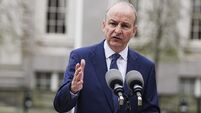
Mr Martin said the package would eat into the Government’s projected budget surplus this year but was a response to “real pressures” being felt by people around the country due to increasing fuel costs.
A new transport support scheme to help hauliers and those in the food and agri industries will be backdated to March 1.
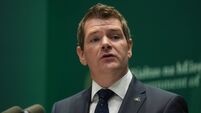
Mr Canney has said that the scheme will be modelled on the licenced haulage support scheme and will “help and support those who are vital in our economy”.
Both Mr Harris and Mr Martin were critical of those who blockaded ports in recent days, with Mr Martin warning that if blockades reoccur, particularly at Whitegate, “the full rigours of the law will be applied”.
Mr Harris said that while the Government will “always” engage with representative bodies, it cannot be “reasonably or rationally be expected to engage with self-appointed spokespeople”.
He also said that while the Government will work to protect people from the effects of rising prices, “no government can completely shield people” from the fallout of war in Iran.
The cut to diesel will require European Commission approval as Ireland has gone below the minimum tax allowed by EU rules.
Mr Harris said that “many countries” had engaged with the EU on the issue due to price shocks caused by the US-Israel war in Iran and the blockages of the Strait of Hormuz. He said that much would depend on how long that war goes on for.
Mr Martin hit out at the opposition for preparing to table and support a motion of no confidence in his Government this week, saying many opposition TDs had “acted as wardens” for “illegal blockades” or had spoken in support of protesters who had stopped oil from leaving the country’s only refinery at Whitegate in East Cork.
He said that those TDs were “not fit for government”.
Mr Martin said that there would be a review of the “latitude” shown to protesters and a “comprehensive security review” of just how the country’s oil supplies were able to be so severely curtailed.
Throughout Sunday, blockades that had been erected at the entrances to the Shannon Foynes Port Company and fuel terminals at Foynes in Co Limerick and Galway had dispersed while organisers of the blockade of Dublin’s O’Connell St had complained of being “ambushed” by a 3.30am Garda operation to move their six-day-long blockade.
The national emergency co-ordination group warned that it will take “several days” for fuel distribution to return to normal and there also remains a “risk to key supply chains”.
The group also said that “concern remains that workers, including essential workers, may not have sufficient access to fuel to drive to and from their places of work, which jeopardises the provision of critical services, health services, as well as business operations”.
The NECG also said that supplies of fertiliser and animal feed "remain a challenge and will take a number of days to replenish stock" and that exports of fresh fish, a time sensitive product, are "especially compromised due to the blockades".
The NECG also announced that, due to ongoing disruptions, the State Examinations Commission (SEC) has deferred practical examinations scheduled for today, Monday, for Leaving Certificate Music and Junior Cycle Home Economics.
This decision was made because the SEC "cannot be sure that all examiners and students will be able to travel to their schools". The deferral applies only to practical examinations scheduled for Monday and the SEC will put alternative arrangements in place for affected students and will contact impacted schools directly with further details.
- Paul Hosford, Acting Political Editor


CONNECT WITH US TODAY



Be the first to know the latest news and updates