Jet fuel supplies could be disrupted in May and June by Iran war – Ryanair chief
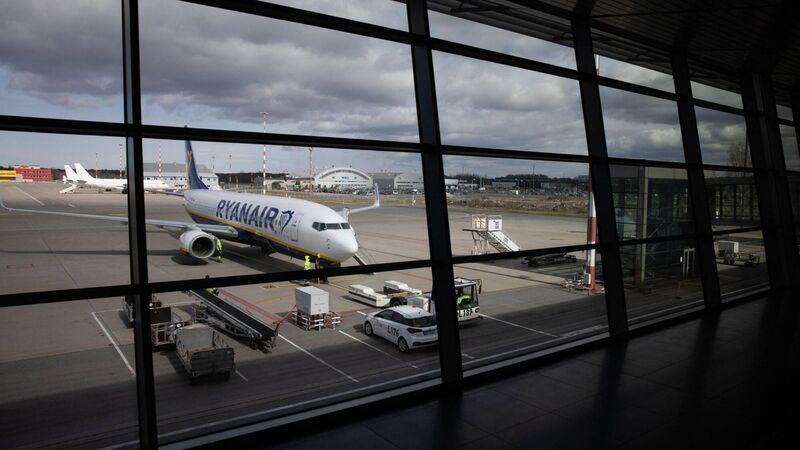
Michael O'Leary said that Ryanair has already bought 80% of its fuel, but that rising fuel prices have resulted in aviation fuel costs doubling. File picture
Jet fuel supplies could be disrupted in May and June if the war in Iran continues, Ryanair boss Michael O’Leary has said.
He was speaking after US President Donald Trump said he could walk away from the war in two to three weeks if he felt confident Iran would not be able to build a nuclear weapon, even if Tehran does not agree to a ceasefire.
Ryanair chief executive Mr O’Leary told that disruption to jet fuel supplies was not expected until May.
He said that Ryanair has already bought 80% of its fuel, but that rising fuel prices have resulted in aviation fuel costs doubling to $150 a barrel.
Read More
“The fuel companies are happy there won’t be any disruption until early May,” he said on Wednesday.
“But if the war continues, we do run the risk of supply disruptions in Europe in May and June and obviously we hope the war will finish sooner than that and that the risk to supply will be eliminated.”
Asked about the impact of such shortages, he said: “It’s almost impossible to know. If the war finishes and the Strait of Hormuz is opened by the middle or end of April, then there’s no risk to supply.
“If the war continues, and the disruption to supply continues, we think there is a reasonable risk that maybe 10%, 20%, 25% of our supplies might be at risk through May and June.
“So, like everybody else in the industry, we hope this war ends sooner rather than later.”
Mr O'Leary's comments come as the transport minister Darragh O’Brien vowed the Government will not ask people to curtail their travel.
As Mr O’Brien warned that aviation fuel will be impacted by the ongoing war in Iran, Tánaiste Simon Harris said that “we don't have another 21 days” for the war to end, adding that we are now “living through the largest energy crisis in the history of the world”.
“Michael O’Leary is someone I highly regard. He has his finger on the pulse of this,” Mr O'Brien said.
“Obviously, there are impacts. There are impacts across the transport sector, and if this doesn't cease soon, there will be impacts on aviation too.
“Those concerns have been raised with me, and it was something that was discussed at the Energy Council that I attended virtually, something the EU are acutely aware of, and I am too.
“Aviation is critically important to Ireland. We're a world leader in aviation.
“This is on the EU agenda. I'm awaiting in anticipation for the specifics of [Commission] President [Ursula] von der Leyen’s toolbox that she referred to, and I expect that to be published next week, [and] I’d expect that aviation will form part of that.”
Mr O’Brien said that European energy ministers discussed measures that can be introduced, including purchasing fuel in bulk, examining storage, and ensuring that affordability is “central”.
However, he insisted that Ireland’s fuel supplies are “robust”, and there are “no issues with supply at this moment in time” and “no threats” to the public transport or haulage sectors.
When asked whether people will be advised to holiday at home, Mr O’Brien said the Government is “not looking at curtailing travel at this stage”.
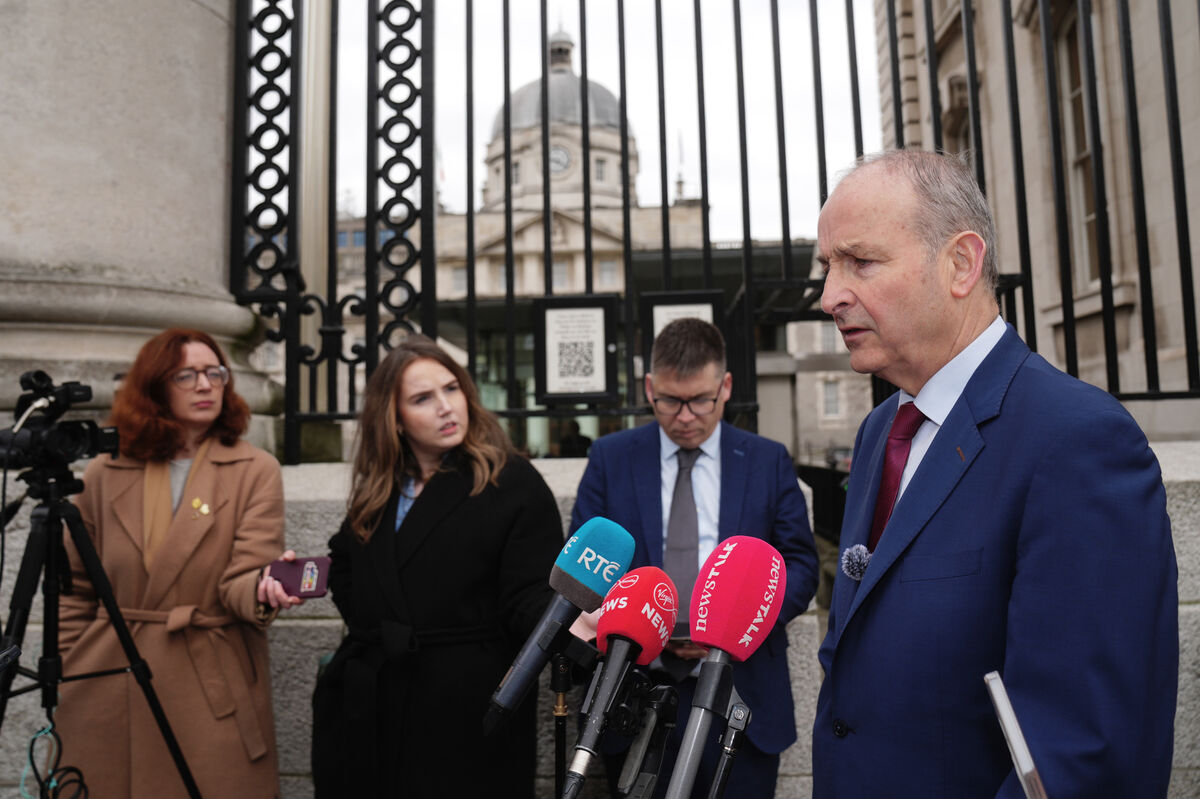
Taoiseach Micheál Martin, meanwhile, said two to three weeks for the war to end is “too long”.
“There is simply too much volatility around this war,” he said.
“It's extremely difficult to be certain as to what will unfold.
“We would press far as early an end to this as possible. The sooner this ends and the sooner we see de-escalation across the region, the greater the prospect of restoring some degree of normality, although it will take a considerable degree of time.”
The Tánaiste, meanwhile, urged a quicker conclusion to the war in Iran following President Trump’s suggestion that it will be over in the next three weeks.
“The war is currently ongoing for about 33 days. Look at the scale of damage that has been done to the world's energy infrastructure in that period of time,” Mr Harris said.
“We don't have another 21 days or thereabouts to see de-escalation. We're already living through the largest energy crisis in the history of the world, bigger than the last three combined.
“Saying two to three weeks this will end, it might sound like a relatively short period of time, but the impact of what could happen economically, and, of course, from a humanitarian point of view, during the course of another two to three weeks is extraordinarily concerning.”
Mr Harris confirmed that Budget 2027 will be held on Tuesday, October 6, and said the Government must “keep some economic powder dry for the time ahead”.
The Tánaiste said he is happy that petrol and diesel excise cuts were passed on to customers, and that prices at the pumps would have been much higher if the measures had not been taken.
He added: “Government stands ready to take further action, should that be required.
“We were very clear this was a first and measured set of interventions. There may be a requirement to intervene further in the time ahead.”
- Louise Burne, political correspondent


CONNECT WITH US TODAY



Be the first to know the latest news and updates