Government rules out energy credits as Middle East war sparks potential cost-of-living crisis

People examine the wreckage of houses in Sir al-Gharbiyeh village, south Lebanon on Sunday after Israeli air strikes as the conflict expanded across the Middle East. Picture: Mohammed Zaatari/AP
The Government has ruled out introducing cost-of-living supports and energy credits amid growing uncertainty about the economic impacts of the ongoing war in the Middle East.
Despite calls from opposition parties to introduce support for hard-pressed households, senior government sources said on Sunday night that they would not “play whack-a-mole” by introducing supports for every crisis that emerges.
While a future intervention may be required if the war deteriorates and drags on for months, there are no plans on the table at the moment to help households, and the introduction of energy credits has been completely ruled out by government.
It comes as an EU report warns that energy bills will get even higher due to the rapid expansion of data centres.
In a draft report on its “strategic roadmap for digitalisation and AI in the energy sector”, seen by the Irish Examiner, the European Commission has predicted that energy demand is set to triple across the bloc by 2030.
“The digitalisation of our economies implies an increased energy consumption, with potential impacts on all consumers in terms, notably, of decarbonisation, prices, or access to grids,” the report said.
“The International Energy Agency estimates that, in advanced economies, data centres alone will drive more than 20% of the growth in electricity demand between now and 2030.”
The caution sounded by the European Commission comes following similar warnings from officials in Ireland about data centres' impact on consumer bills.
Documents released to Sinn Féin MEP Lynn Boylan under freedom of information last year showed that the Department of Public Expenditure warned in late 2024 that demand from data centres will place “upward pressure on electricity prices” and exceed 30% of all electricity demand in Ireland by 2030.
In 2023, the energy regulator also wrote to then minister Eamon Ryan about the cost of energy and suggested “ongoing increases in energy sector costs to support electricity demand growth”.
Recent figures from Eurostat also suggest that households are paying twice as much for their electricity as data centres with the opposition claiming households are effectively subsidising data centres through higher network tariffs.
Ms Boylan said we now have a situation where three different organisations have flagged that data centres can lead to increased energy costs for households, “yet the Government continues with its strategy of data centre expansion”.
“With over 320,000 households in energy arrears and small businesses struggling to stay afloat, the prospect of further long term price increases due to the proliferation of data centres is just another slap in the face,” she said. “The red flags are flying in terms of the socialised costs of data centres, but it seems the government are choosing to ignore them.”
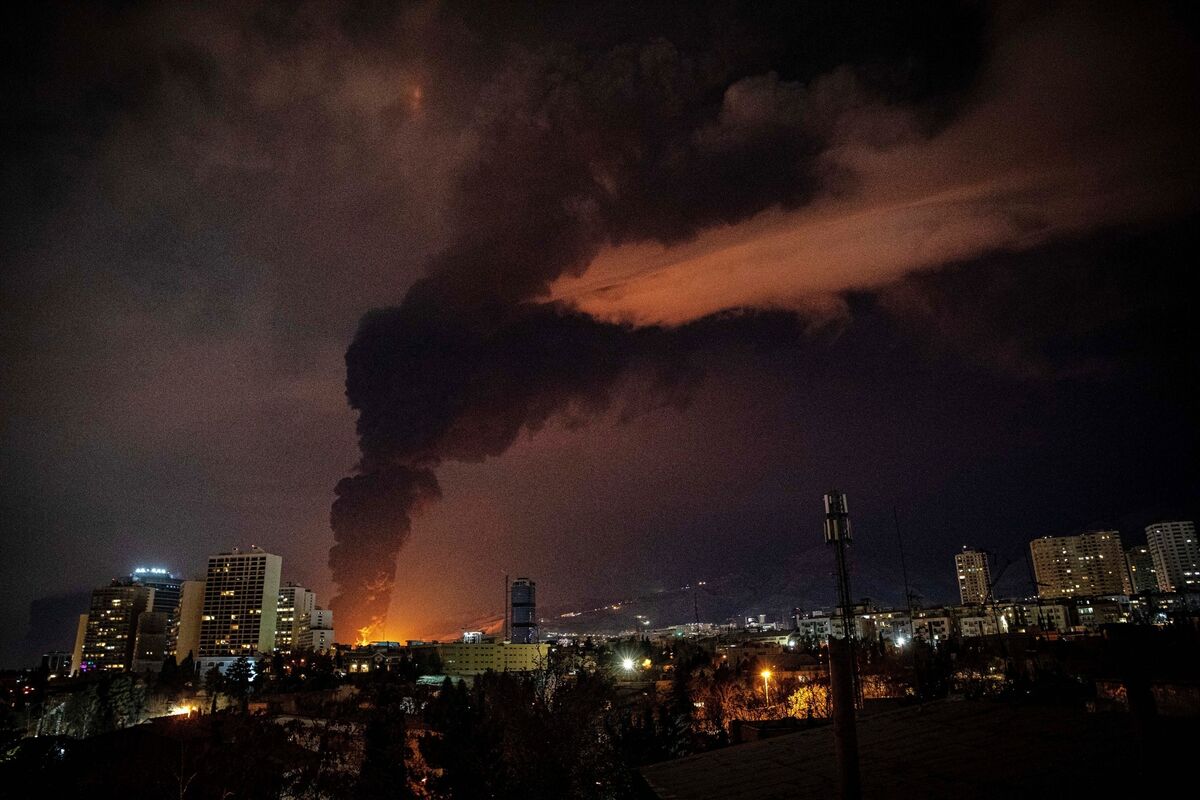
Meanwhile, the US-Israel conflict with Iran has already led to a sharp increase in fuel prices.
The average cost of a 500-litre fill of oil rose from €498.56 on February 28 to €832.50 on Sunday morning.
However, senior Government sources have completely ruled out energy credits, saying their introduction coming into the summer is “clearly not the answer”.
“What seems like the right thing to do today could be wrong tomorrow,” one source said.
“What if there is a major inflation impact? We can’t play whack-a-mole.”
There was an acknowledgement across Government that if things deteriorate, it may have to intervene and there are also ongoing concerns that the war will negatively impact more than just fuel prices.
There are now questions about whether inflation will rise once again and what impact this could have on mortgage interest rates.
Speaking on RTÉ’s , junior minister Thomas Byrne said that prices “may well go up dramatically again, and it won’t just be fuel and electricity. It could be food supplies”.
Read More


CONNECT WITH US TODAY



Be the first to know the latest news and updates