Plans seek to right 'imbalance' between savings and investments, committee told
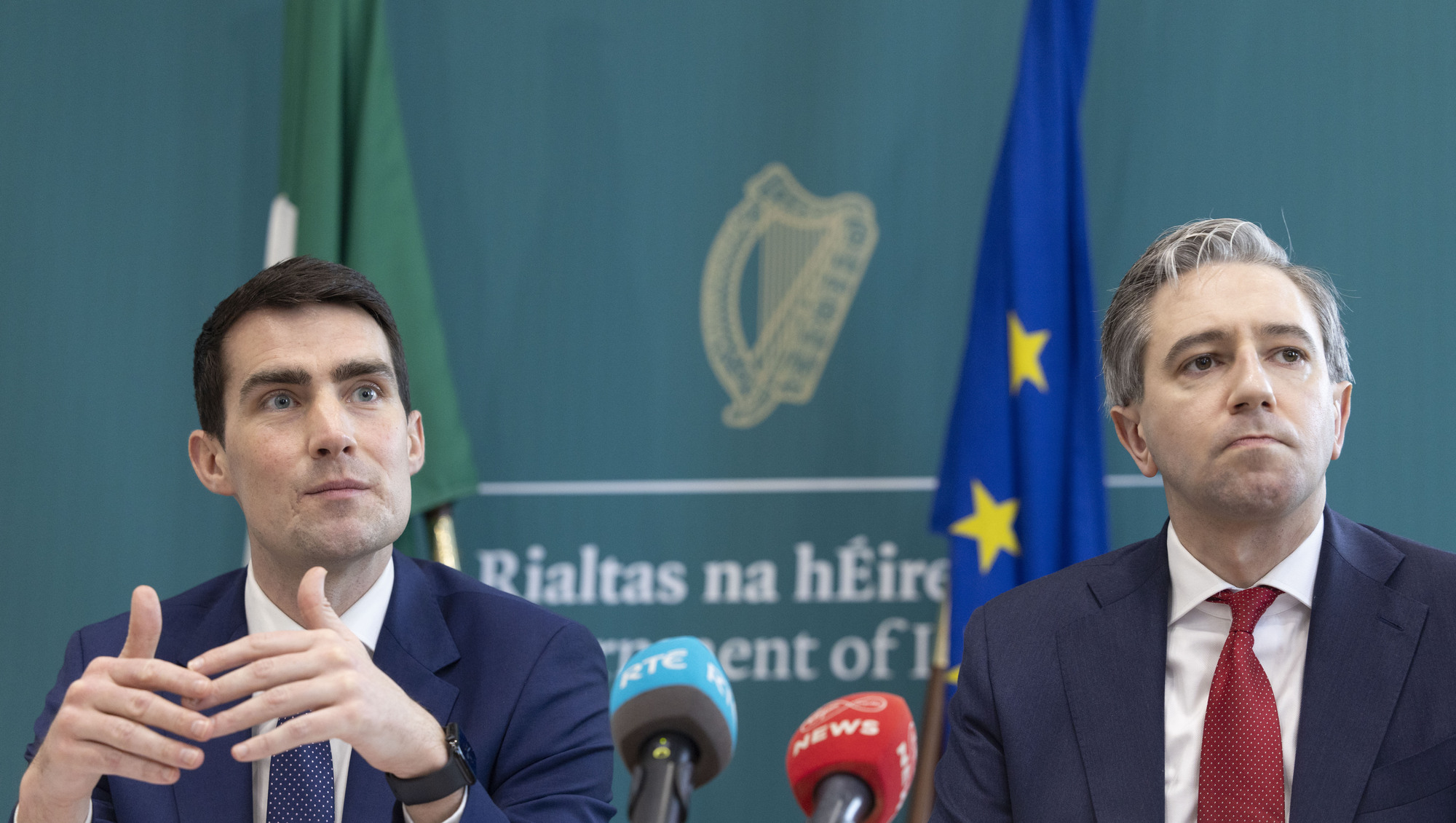
Simon Harris and public expenditure Minister Jack Chambers were before the Oireachtas Budgetary Oversight Committee on Tuesday to discuss the recently-approved medium-term fiscal plan. File picture: Sam Boal/Collins
Plans for a savings and investment account seek to "address the imbalance" of high levels of Irish savings but low investments, the Tánaiste has said.
Simon Harris and public expenditure Minister Jack Chambers were before the Oireachtas Budgetary Oversight Committee on Tuesday to discuss the recently-approved medium-term fiscal plan.
The EU requires member states to set out their economic and fiscal policies in ‘medium-term fiscal-structural plans’.
According to the Irish document, spending increases will be weighted towards capital expenditure, with investment under the National Development Plan (NDP) set to average 5% of national income over the rest of the decade.
Asked about plans for an incentivised investment account, Mr Harris said Ireland has high savings but low participation in markets and "that doesn’t seem right, and we are trying to address that imbalance".
“I don’t think it’s a question of whether we can afford to do it. It’s a question for households as to whether we can afford not to do it. We have so much money sitting on deposit earning nothing, and that is having a real impact on people’s economic well being.
“My starting point is to make sure that, whatever you wish to term them, workers, middle Ireland are not locked out of investment opportunities in Ireland, which they are now. You can only invest successfully now if you have significant funds. Everyone else is putting their money on deposit, so there’s €170bn earning nothing.”
During the committee hearing, Mr Harris said the plan can only be changed in the event of a general election, but represents an "opportunity" to more clearly lay out the Government's financial plans.
Asked by Labour TD Ged Nash why the Government had settled on a €1bn contingency in last year's Budget, Mr Chambers said the Government had felt the figure created "headroom" and would roll over throughout the five years of the plan.
In his opening statement, Mr Harris had said "the world we live in now is different to the one we have been used to in recent years".
He said this had been caused by the shift in US economic policy, the continued "competitiveness pressure" on European industry from China, the "seemingly inexorable rise in the capabilities of artificial intelligence" and Russia's war on Ukraine.
"These are all evidence of a new geopolitical and geo-economic paradigm. As an independent, ambitious and outward facing country, we must respond," Mr Harris said.
Mr Chambers said in his statement that the medium-term fiscal strategy shows the Government's investment in public services and infrastructure is "being matched by a focus on delivery and implementation", but said government departments must adhere to the plan.
"To deliver on our priorities, departments must adhere to the ceilings set out in both the Medium Term Plan and their Budget 2026 allocations," he said.
"This will require firm expenditure discipline, robust internal oversight and risk-management arrangements, and the avoidance of in-year policy decisions that create additional cost pressures and the need for supplementary estimates.
"Enhancing value for money must be at the heart of every decision we make, and securing value for money is the responsibility of all of us."
- Paul Hosford is Acting Political Editor.
CONNECT WITH US TODAY



Be the first to know the latest news and updates