Fianna Fáil calls for domestic violence register in push to prevent future tragedies
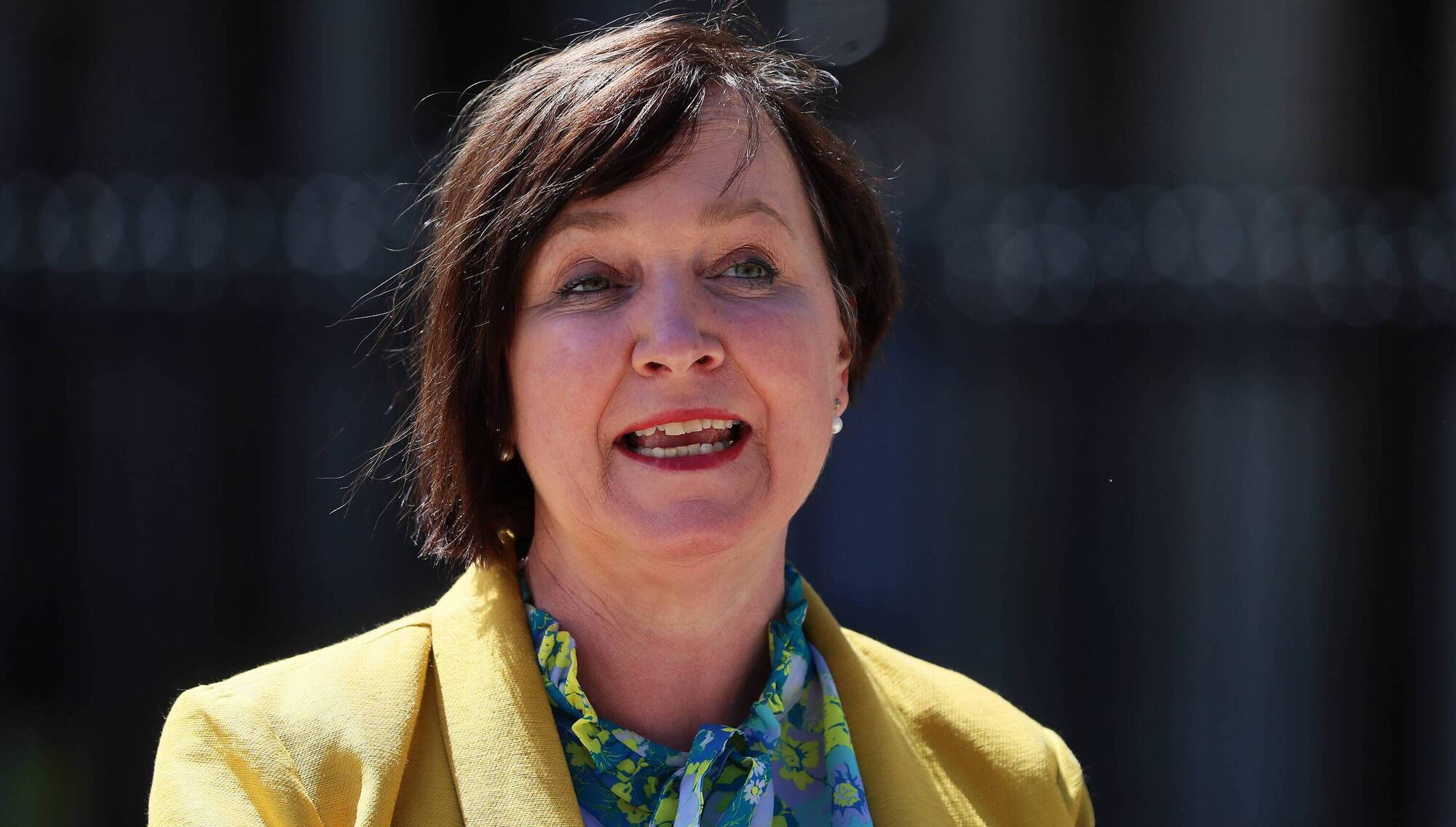
Senator Fiona O'Loughlin said Fianna Fáil would enact Jennie's Law, if returned to government. Picture: Brian Lawless
A domestic violence register must be established and has the potential to save lives, a Fianna Fáil candidate has said.
The introduction of a coercive control register would give gardaí the power to be able to inform somebody, when asked, whether their partner has a violent history.
The domestic violence and abuse disclosures scheme is part of the Fianna Fáil manifesto and has been developed by Fiona O'Loughlin in collaboration with Jason Poole whose sister was murdered by an ex-partner.
The bill is known as Jennie's Law, named after Jennifer Poole, who was killed by Gavin Murphy in April 2021.
Jennifer had not been aware that Murphy had a history of domestic violence.

Scroll for results in your area
"The importance of Jennie's Law cannot be understated. The existence of a domestic violence register could have prevented the murder of Jennifer as it would have meant that she would have been aware of her ex-partner’s history of domestic violence," said Ms O'Loughlin.
There were hopes the legislation would pass last year, but legal concerns were raised.
Ms O'Loughlin said Fianna Fáil would enact the bill if returned to government.
Mr Poole has said if Jennie's Law is passed it would mean he and his family will have achieved their ambitions to have a domestic violence register put in place and "have it named after my beloved sister who was taken from us".
"We need a domestic violence register and we need Jennie's Law," said Mr Poole.
Meanwhile, the Social Democrats has outlined its own plans to tackle domestic, sexual and gender-based violence (DSGBV) which is "endemic" in Ireland.
The party said it would establish a commissioner on DSGBV with appropriate resources and powers to monitor the third national strategy on DSGBV which was published in 2022.
It said the pace of change is too slow and the idea of zero tolerance towards DSGBV "remains a distant dream" for many.
"A key issue facing survivors is the lack of safe housing when they are fleeing domestic violence or leaving a refuge," said Social Democrats candidate Patricia Stephenson.
"The Social Democrats want to make survivors of GBV, including women and children, priority groups in the next housing strategy to ensure they have a safe home to rebuild their lives."
Ireland still has less than one-third of the required refuge beds mandated under the Istanbul convention and the party has committed to doubling the available refuge units over the lifetime of the next government, as well as "significantly" more safe homes.
Social Democrats would initiate new legislative powers that would enable An Garda Síochána to remove abusers from the home and amend legislation so a parent convicted of the murder or manslaughter of the other parent does not retain guardianship of any surviving children.
Party leader Holly Cairns was, last month, finalising legislation that would automatically suspend parental rights following sentencing for murder in a criminal court.
The move was prompted by the family of Valerie French who called for legislation to be changed after Valerie was murdered by her husband, James Kilroy, at their house in Mayo in June 2019.
Ms Cairns said the matter must be dealt with by the next Dáil and must be committed to by all other parties ahead of the election.
Catherine Murphy said that in order to truly transform Ireland into a country of zero tolerance, more must be invested in legislative reform, policy co-ordination, prevention, and protection.
"One in four women in this country are affected by domestic violence in their lifetime, while half of all women report experiencing sexual violence at some point," said Ms Murphy.
"Services in the sector are overstretched and underfunded, so cannot meet the ever-increasing demand."

CONNECT WITH US TODAY



Be the first to know the latest news and updates