Smaller gardens, fewer parking spaces planned for new developments
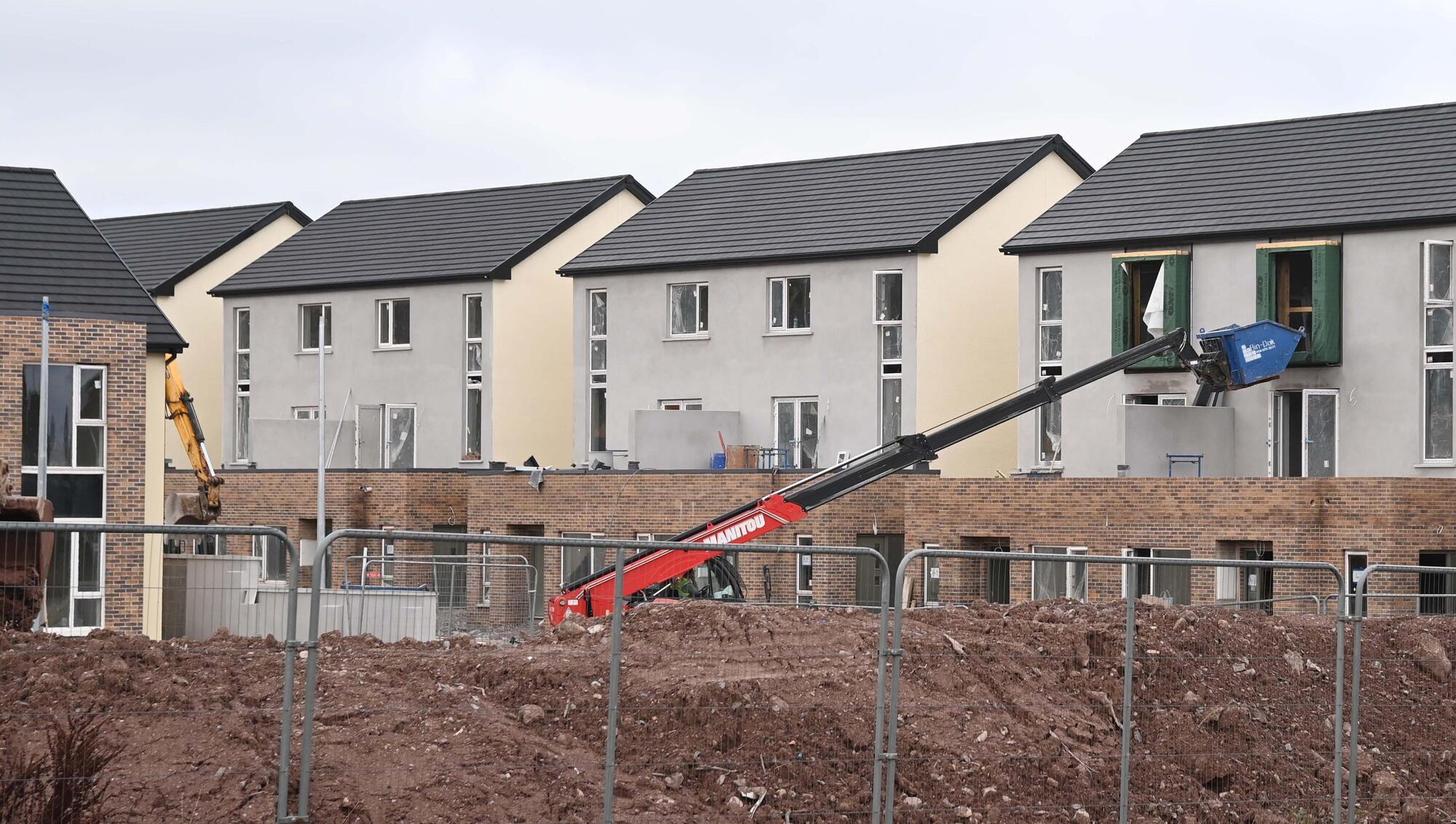
Under the changes, recommended density ranges will be based on settlement size. Picture: Denis Minihane
Housing Minister Darragh O'Brien has brought forward proposals to change the density of developments and to limit the number of car park spaces allowed for each new home.
Mr O'Brien has also suggested a reduction in the minimum amount of garden space homes must have as part of a series of changes that he wants included in updated guidelines for planning authorities.
Under the current 2009 Sustainable Residential Development Guidelines, a three-tiered approach to residential density is taken, with densities of up to 35 dwellings per hectare (dph) in smaller towns and villages, densities of 35 to 50 dph in outer suburban and greenfield areas of cities and large towns, and densities of at least 50 dph in more central and accessible urban locations.
However, the proposed policy approach, which will now go to consultation, will expand on the density ranges contained in the current guidelines.
It aims to ensure that decision-makers can take into account the particular circumstances of the individual site, with density standards acting as a tool to guide the appropriate scale of development, rather than as a prescriptive methodology.
Under the changes, recommended density ranges will be based on settlement size. These settlement sizes will be broken down into cities, large towns, small and medium-sized towns as well as rural towns and villages.
Whether the development is in a city centre area or a suburb will also dictate the density.
The proposed policy approach outlines:
- Cities: Densities of 100-300 dph in central areas, densities of 40-200 dph in urban areas, and densities of 40-80 dph in suburban and edge areas;
- Metropolitan towns: Densities of 40-150 dph in town centres and urban areas and densities of 35-80 dph in suburban and edge areas;
- Large towns (10,000+): Densities of 40-150 dph in town centres and urban areas and densities of 30-80 dph in suburban and edge areas;
- Small and medium-sized towns (>1,500 to 10,000): Densities that respond to existing context in town centres and urban areas and densities of 25-30 dph in edge areas;
- Rural towns and villages (>1,500): Densities response to existing context.
In order to meet the targets for reduced private car travel, Mr O'Brien has said it will be necessary to apply a graduated approach to the management of car parking in new residential development.
In areas with a population of more than 10,000, it has been recommended that car parking should be graduated based on location and access to services by public transport, walking, and cycling.
In areas of high accessibility, car-parking provision should be minimised, substantially reduced, or wholly eliminated.
In areas of medium accessibility, car-parking provision should be substantially reduced, and in areas of low accessibility, it is proposed that the maximum car parking provision should be two spaces per dwelling.
The size of gardens and other open spaces around homes will also be reduced under the proposals.
The current standards vary but are typically in the region of 55 sq m for a two-bed house, 60 sq m for a three-bed house, and 70-75 sq m for a four-bed house.
The proposed policy approach would reduce the minimum requirement to 40 sq m for a typical two-bed house, 50 sq m for a typical three-bed house, and 60 sq m for a typical four-bed house.


CONNECT WITH US TODAY



Be the first to know the latest news and updates