ICTU: 'Fallacy' to suggest minimum wage rise will lead to more business closures
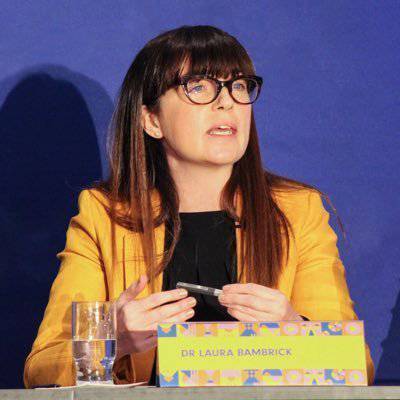
Laura Bambrick, social policy officer with the Irish Congress of Trade Unions, said that there was “no evidence” that pay increases to a small percentage of the working population — those on minimum wage — would fuel “wage-spiral inflation”.
Increasing the minimum wage by 80c an hour in the new year won’t lead to a “tsunami” of business closures due to rising costs and such a suggestion is a “fallacy”, an Oireachtas Committee has heard.
The Oireachtas Committee on Enterprise, Trade and Employment heard on Wednesday from representatives from the Irish Congress of Trade Unions (ICTU) as part of its meetings on the cost of living, the minimum wage and the Low Pay Commission.
ICTU head of social policy and employment affairs Laura Bambrick said that there was “no evidence” that pay increases to a small percentage of the working population — those on minimum wage — would fuel “wage-spiral inflation”.
“I suppose to make it clear, unions are in the business of keeping people in their jobs,” she said. “We don’t put forward recommendations that put jobs at risk.”
Her colleague, ICTU’s industrial officer Liam Berney, added that in terms of the recently agreed public sector pay increases, unions would “not be shy” in triggering a review of that agreement if inflation continues to persist at a high level.
Committee chair Maurice Quinlivan, Sinn Féin TD for Limerick city, said that business groups were invited to attend the hearing but did not for a “number of reasons”.
He said the committee would ask them for written submissions in lieu of their attendance. Fine Gael's David Stanton remarked “it’s a pity we don’t have the other side here” to give their view on the matters being discussed.
![Independent Waterford TD, Matt Shanahan, said: “I’m a supporter of adequate wages for everybody. [But] I’m dealing with huge amounts of SMEs in significant financial distress. Adding more costs to their business is not going to make them sustainable.” File picture: Larry Cummins](/cms_media/module_img/6478/3239378_6_articleinline_LC_20inquest_2009.jpg "Independent Waterford TD, Matt Shanahan, said: “I’m a supporter of adequate wages for everybody. [But] I’m dealing with huge amounts of SMEs in significant financial distress. Adding more costs to their business is not going to make them sustainable.” File picture: Larry Cummins")
Last month, Cabinet signed off on recommendations from the Low Pay Commission, which has independent members alongside business and worker representatives, to increase the national minimum wage by 80c to €11.30 an hour. Just under 170,000 workers stand to benefit from the measure, giving full-time workers around €1,600 more a year.
The Low Pay Commission also set out indicative rates for the so-called Living Wage, which would be set at 60% of the median wage and phased in to replace the minimum wage by 2026.
Ms Bambrick told the committee that just three in every 100 employers pay more than half their employees the minimum wage and that across the EU there are minimum wages that “aren’t keeping workers out of poverty”.
She referenced the cost-of-living measures contained in the most recent budget and said while many workers will benefit from them, the cohort of low-paid workers are not paid enough to benefit from the tax package and their wage is the “only avenue available to keep up living standards”.
She said that retail and hospitality are two “big sectors” where many workers are on minimum wage. “They’re seeing the biggest problems with retention and recruitment,” she said.
Ms Bambrick said that a lot of businesses were “kept on life support” through the pandemic because of “correctly very generous Government supports”.
She said that would have kept many viable businesses in place, but also ones that were not viable. She said the winding down of these supports could be a reason that firms go out of business in the short term rather than the increase to the minimum wage.
Independent Waterford TD, Matt Shanahan, referenced Ms Bambrick’s assertion that it was a “fallacy” to suggest that the minimum wage rise would lead to more businesses going under, and said “we’ll see where the fallacy lies in the next six months”.
“Costs are going up at a time when revenues are going south,” he said. “I’m a supporter of adequate wages for everybody. [But] I’m dealing with huge amounts of SMEs in significant financial distress. Adding more costs to their business is not going to make them sustainable.”
CONNECT WITH US TODAY



Be the first to know the latest news and updates