Budget will contain provisions for a windfall tax on energy companies, says Ryan
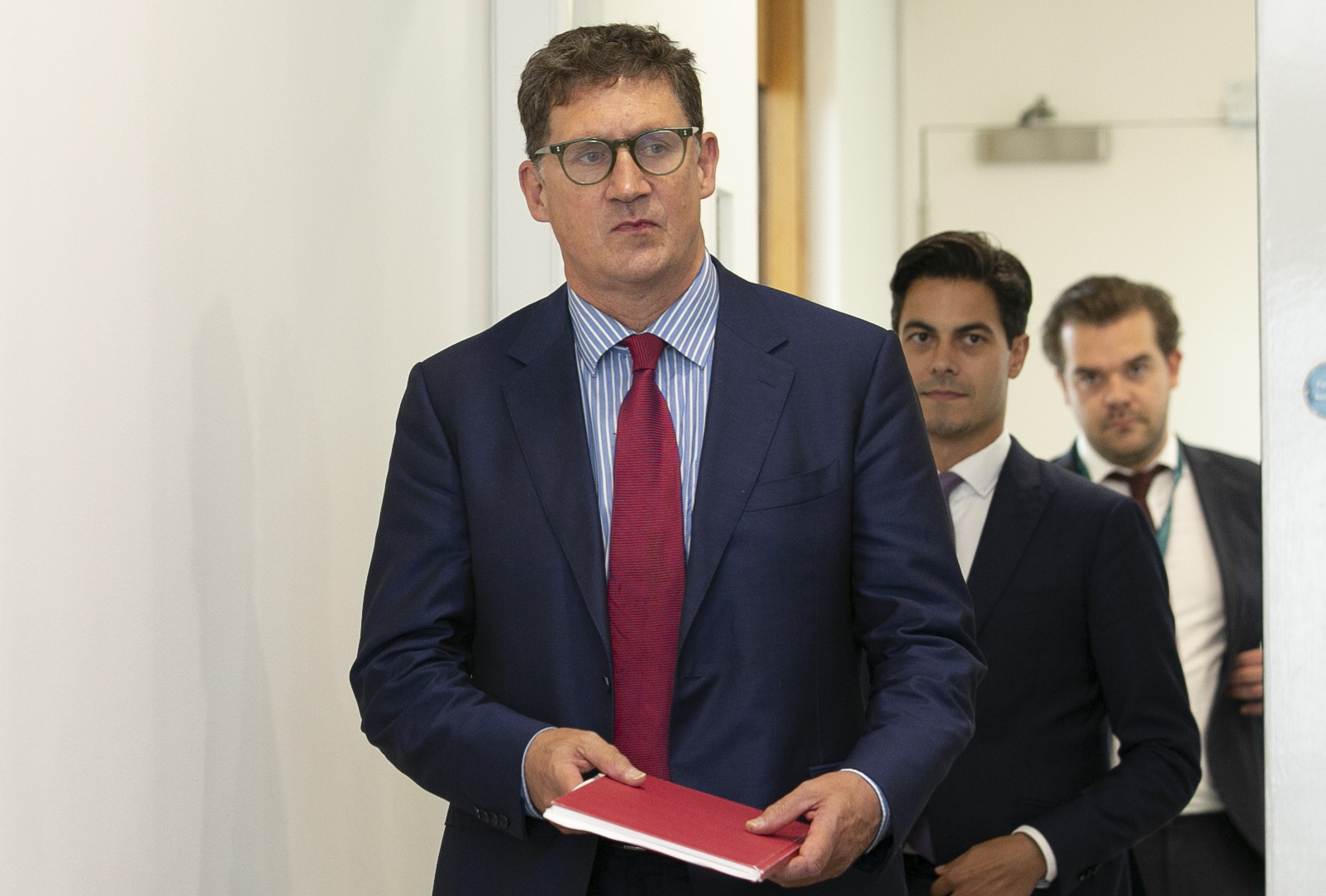
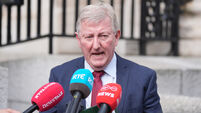
Energy Minister Eamon Ryan said that there is "absolute agreement" on the tax, which will claw back excess profits from fossil fuel-burning energy companies. Picture: Gareth Chaney/ Collins Photos
The budget will contain provisions for a windfall tax on energy companies, even if the EU has not agreed the move by September 27.
Energy Minister Eamon Ryan said that there is "absolute agreement" on the tax, which will claw back excess profits from fossil fuel-burning energy companies.
"We will return before the end of this month to agree [the EU Commission's proposals around energy prices] as energy ministers. The provisions to take money back from some of the excess profits being developed in the power generation sector and from the fossil fuel companies are ones that there is absolute agreement on.
"They will provide the same mechanism to what we were looking for in the introduction of a windfall tax, it will address the same issues. It will return similar amounts of revenue, dependent on the final details produced by the commission tomorrow. So we were very supportive.
Mr Ryan said that while he does not expect EU ministers to sign off on the move before the budget, there will be "estimates" from the EU that would be factored into the budget.
Mr Ryan was speaking as energy ministers from the members of the North Seas Energy Cooperation (NSEC) and the European Commission today announced a significant increase in their collective ambition in the deployment of offshore renewable energy.
At their ministerial meeting in Dublin, the NSEC ministers for the first time agreed aggregate, non-binding offshore renewable energy targets for the maritime area of the entire NSEC region.
The nine NSEC countries have agreed to reach at least 260GW of offshore wind energy by 2050. This will represent more than 85% of the EU-wide ambition of reaching 300GW by 2050.
Mr Ryan said that Ireland would play a major part in the agreement, which he said was a reaction to Russia's invasion of Ukraine.
"In Ireland alone, our sea area is seven times our landmass.
"With this approach, we can provide assurances to householders and businesses — in our own countries and across Europe — that firstly, Europe will be energy independent, and secondly, that these new renewable energy sources and resultant hydrogen from our seas will be fairly shared and, critically, will be affordable.”
Mr Ryan will appear before the Oireachtas committee on environment and climate to discuss sectoral emissions targets.
Committee cathaoirleach Brian Leddin said that the meeting was important as a means to discuss how the 51% reduction in emissions will be met.
“To meet these legally-binding targets, the Climate Change Advisory Council has proposed a programme of three successive five-year carbon budgets up to 2035 which specify a cap on the total amount of all greenhouse gases that may be emitted in the State during each five-year period, measured in tonnes of carbon dioxide equivalent.
“Sector emission ceilings are the maximum amount of greenhouse gas emissions that are permitted in each sector of the economy during the carbon budget period. The emission ceilings for each sector have now been agreed and the committee now looks forward to discussing how these targets will be met with Minister Ryan.”
CONNECT WITH US TODAY



Be the first to know the latest news and updates