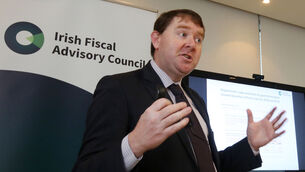
Abolishing TV licence fee 'a danger to democracy' - Taoiseach
The Government has also committed to putting in place an “interim” funding mechanism for RTÉ until a conclusion on the new licence fee model is finalised.
Abolishing the licence fee and having RTÉ fully funded by the taxpayer represented “a danger to democracy”, the Taoiseach has said.
The Taoiseach was speaking at a press conference after the Cabinet published its response to the Future of Media Commission report which called for the licence fee to be abolished and replaced by direct exchequer funding.
Mr Martin described the recommendation by the Commission as “not realistic” and said the Government has decided to keep and enhance the current licence fee, which delivers about €150m in revenues each year.
He said there must be a clear demarcation between funding and the independence of media.
"I think there are genuine legitimate concerns about having the entirety of the budget, determined by a government right into the future from year to year. Some will say it can be done. I hadn't seen it yet and it remains to be convinced as to how that happens in the fullness of time,” Mr Martin said.
“I have long experience in government and whatever decisions we take have to be future-proofed,” he said.
“I've been around the Government table when there's been significant cuts in previous times. So when you have every single department looking to hold on to its funding, it gets very rough.
He added:
In response, the chair of the Commission Professor Brian MacCraith said he was “very pleased” that 49 of the 50 recommendations have been adopted and said it's a very strong signal from governments that support those recommendations.
He said on the Commission’s recommendation to abolish the TV licence, “there was a well-argued case” in the report itself in terms of why it went for the Exchequer model.
“But that's the result of our deliberations, governments have to make the hard decisions,” he added.
Another key recommendation is that the current broadcast fund is to be replaced by a new Media Fund to support schemes for print, online and broadcast media at local, regional and national level.
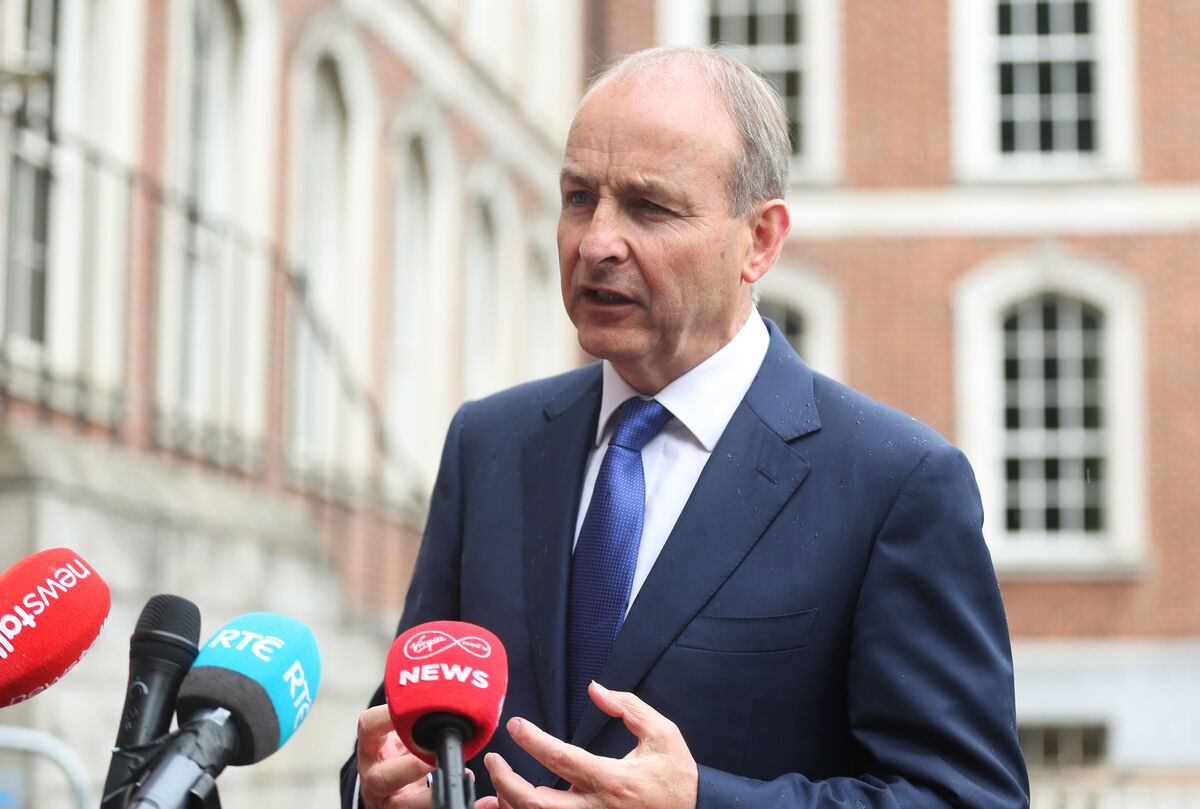
"We will establish a Media Fund, which will support public service content, including through schemes for local democracy reporting, news reporting, court reporting, access and training, community media and digital transformation," Mr Martin said.
The Government has also committed to putting in place an “interim” funding mechanism for RTÉ until a conclusion on the new licence fee model is finalised.
In response, RTÉ Director-General Dee Forbes said the commitment by the Government to link the licence fee to how media is now consumed is to be welcomed.
“This is critical given how much media consumption habits have been changed by the internet in the last decade,” she said.
RTÉ said it would strongly impress upon Ms Martin of the need to ensure any legislative changes and system reforms are progressed as quickly as possible and within the lifetime of this government.
Ms Forbes said: “The decision by Government today to align the obligation to pay the Licence Fee with how people consume media today is critical to ensure the future sustainability of the system.”
Meanwhile, on the issue of 0% VAT rating for newspapers, the Taoiseach would only commit to “examining” the issue but warned there are limitations in terms of EU directives.
In response, Newsbrands Ireland said several European countries "already apply a zero rate in support of journalism" and pointed to changes made to the EU VAT Directive allowing print and digital newspapers to be zero rated for VAT.
Mr Martin did accept that the print industry is facing huge challenges.
He did accept that the print industry is facing huge challenges in the current and future climate.
He did say the government is also examining a review of the defamation laws, which the media industry has been for decades calling for reform.
NewsBrands Ireland, the representative body for Ireland’s national news publishers, said since the report was finalised last year, changes have been made to the EU VAT Directive, allowing print and digital newspapers to be zero-rated for VAT, despite the Taoiseach’s comments.
Newsbrands Ireland said several European countries already apply a zero rate in support of journalism whilst also providing a range of other supports.
“The most significant decision that the Government can make to immediately support the news publishing industry would be to introduce a zero rate of VAT on print and digital newspapers in Budget 2023,” the body said.
Given the huge structural challenges the sector facts, its importance to our democracy and the absence of any economic supports currently, reducing the VAT rate to zero will immediately enhance the viability of the Irish news publishing industry and facilitate the ongoing investment required to ensure citizens have access to fact-checked, trusted journalism, Newsbrands Ireland said.
Arts and Media Minister Catherine Martin is to establish a technical group which will report back to the Government by November as to how that fund will work to ensure reporting of key aspects of public life continues at all levels of the media.
Prof MacCraith rejected arguments that the proposals to bring RTÉ under the New Era structure in government will serve to copper-fasten its perceived dominant position in the media landscape.
He said the Commission’s recommendations do “the opposite” and will broaden out the media in Ireland.
The Commission was mandated to specifically examine a funding stream for RTÉ into the future.

CONNECT WITH US TODAY



Be the first to know the latest news and updates