Taoiseach to raise plight of Ukraine with Biden on St Patrick's Day visit
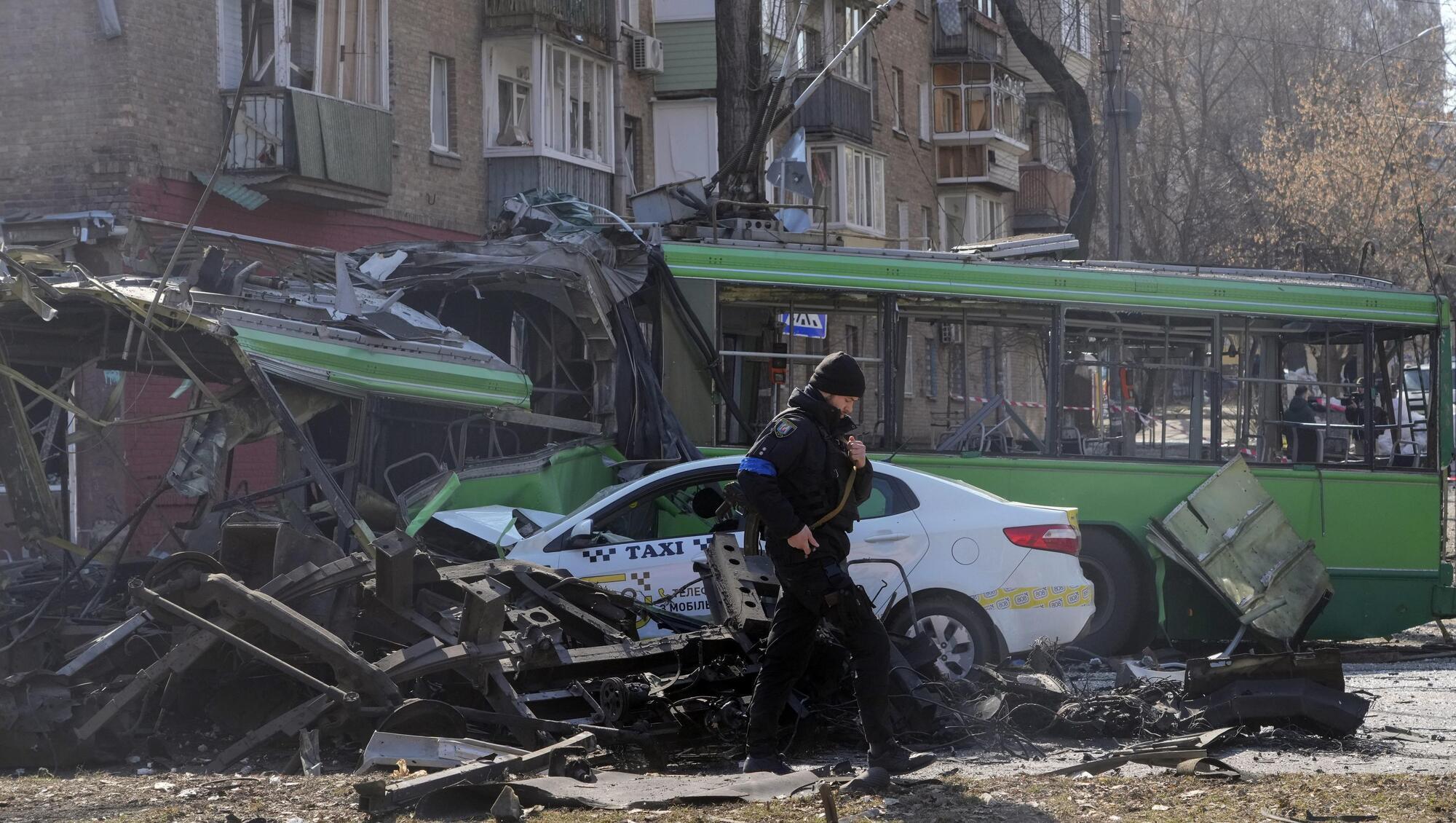
A Ukrainian soldier passes by a destroyed a trolleybus and taxi after a Russian bombing attack in Kyiv, Ukraine.
Ireland will use its platform in the week of St Patrick's Day to raise the plight of Ukraine, the Taoiseach has said.
Speaking to the as he flew to Washington DC, Micheál Martin said that while his visit to the US "will embrace the full gamut of US-Irish relationships", Ukraine will be a key issue. Mr Martin said US President Joe Biden was right when he warned that the world is splitting between authoritarian regimes and democracy.
He said while Ireland is lucky to have President Biden "who wears his Irishness on his sleeve", much of the discussion will focus on the humanitarian crisis in Ukraine.
"There's an open door to raise issues (with the Biden Administration) and we will use this week to use our platform to raise the plight of the Ukrainians."
Mr Martin said he was heartened to see that over 20,000 offers of housing have been made by Irish people for Ukrainians. He said he believes Irish people have risen to crisis because of an innate sense of charity.
"I believe that it's within Irish people. I believe it's the only response we can make given that this is the largest displacement since World War 2. The EU has responded with unity of purpose on sanctions and taking in refugees but we're very aware that the border states are under pressure."
The Taoiseach also expressed his sympathies to the family of filmmaker Brent Renaud. The American filmmaker was killed over the weekend by Russian troops. He had been gathering material for a report about refugees when his vehicle was hit at a checkpoint in Irpin, just outside the capital Kyiv.
"I think that Brent Renaud's death represented another new low in this war and I extend my sympathies to his family."
Domestically, the Taoiseach said that there will be fallout from the war in Ukraine which will result in higher prices for energy and food which will be with us for some time. He said that the use of the remaining €3 billion Covid contingency fund was possible but even that could not be guaranteed to meet the costs of up to 100,000 Ukrainian refugees coming to Ireland.
"We have to be honest that the war will have an impact. In the first phase, that is higher energy prices. There will be issues with food prices across Europe and other commodities as well. All of that feeds into a general economic situation that is very uncertain. Inflation will be with us for some time.
"There will be extra spending, both current and capital. There will be extra pressures on services housing and education. We have a financial framework by virtue of the contingency but that's uncertain."
Mr Martin had on Sunday said that the fund, set up in last year's Budget, could be used to house and provide services for refugees.
Meanwhile, Foreign Affairs Minister Simon Coveney said that it was "naive" to think that Ireland would not be targeted by staying out of the war in Russia.
"There seems to be a view that is held by a very small group of people that by being neutral and staying out of conflicts like this that all of a sudden Ireland won't be threatened," said Mr Coveney.
"I think that's very naive. We know that in the middle of Covid, we were targeted. Our health service was targeted — by non-state actors, we understand — coming from east of the EU, probably Russia, and that cost us an enormous amount of money to solve."
His cabinet colleague Simon Harris announced that Ukrainians fleeing war can study at Irish universities.
Mr Harris also confirmed that Irish students who fled from Ukraine will be able to continue their studies in Ireland, after places were made available by universities.
Mr Harris said that the most pressing issue facing colleges and universities will be the issue of English language support.