New bill tabled to allow jury selection for Stardust Inquest
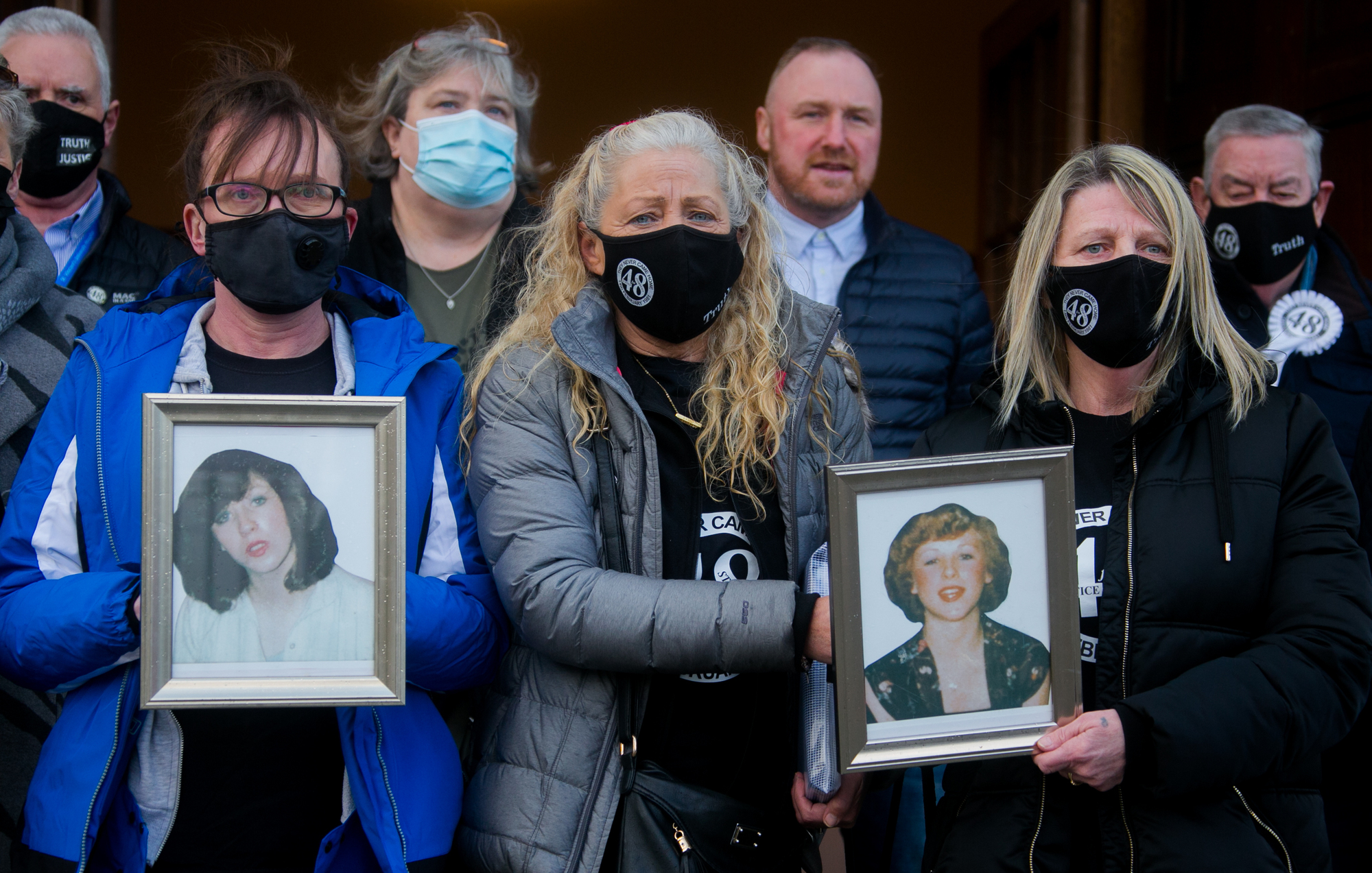
(Left to right) Martina Hand, Antoinette Keegan and Pauline Braymer hold photos of Stardust victims Martina and Mary Keegan with Stardust supporters and families at the Coroners Court in the RDS, Dublin. A letter sent last month from the majority of the families to the Minister of Justice Helen McEntee, and seen by the Irish Examiner, called on the government to intervene. Photo: Gareth Chaney/ Collins Photos
A new bill tabled in the Seanad would allow for a jury to be selected for the Stardust Inquest as it would in criminal cases.
The bill, which will be tabled in the Seanad on Wednesday by Sinn Féin senators Lynn Boylan, Paul Gavan and Fintan Warfield, would amend the Coroners Act 1962 to make provision for the coroner to select a jury using the provisions of the Juries Act 1976 for the purposes of the Stardust Inquest.
If passed, the bill would allow for the coroner to use the same process used for selecting a criminal jury for the Stardust Inquest, using the electoral register and allowing for legal teams to dismiss jurors without any given reason during selection.
Sinn Féin senator Lynn Boylan says the government should not oppose the bill in order to ensure the inquest can move forward swiftly. "It's essential for the families and victims that this inquest can move forward in a transparent manner," Ms Boylan said.
The inquest into the blaze which killed 48 young people is expected to be the longest in the history of the State and there have been concerns that the issue of paying jurors may affect the jury selection.
Inquest juries are not paid like they are in criminal cases, and the Stardust Inquest has no means to pay people for their lost earnings. Typically in criminal cases, a juror’s employer continues to pay them while they serve. There is no such legislation for those on coroner juries.
A letter sent last month from the majority of the families to the Minister of Justice Helen McEntee, and seen by the , called on the government to intervene.
The letter notes it is "wholly unsatisfactory and indeed unrealistic" to expect any juror to serve where they would not be reimbursed for their wages and time. The letter added it was "not fair" to ask people to serve in excess of six months.
The coroner has made it repeatedly clear she wants a jury to preside over the inquests, however as the law stands, the inquests could be held without one. The popular nightclub in Artane, Dublin, was destroyed in a blaze on Valentine’s Day in 1981 in the worst fire disaster in the history of the State.
Investigations into the fire showed that a number of escape routes from the dance hall were blocked as emergency doors were locked by chains. Concerns have also been raised about the investigation of the scene, which allowed politicians and media to walk through the building just hours later.
Despite findings of safety breaches, there were no prosecutions over the incident. An initial finding of probable arson meant that the relatives of the dead and injured were unable to sue the club owners and operators for alleged negligence.
The Department of Justice has been contacted for comment.