Don't go to nightclubs three times a week, warns Donnelly
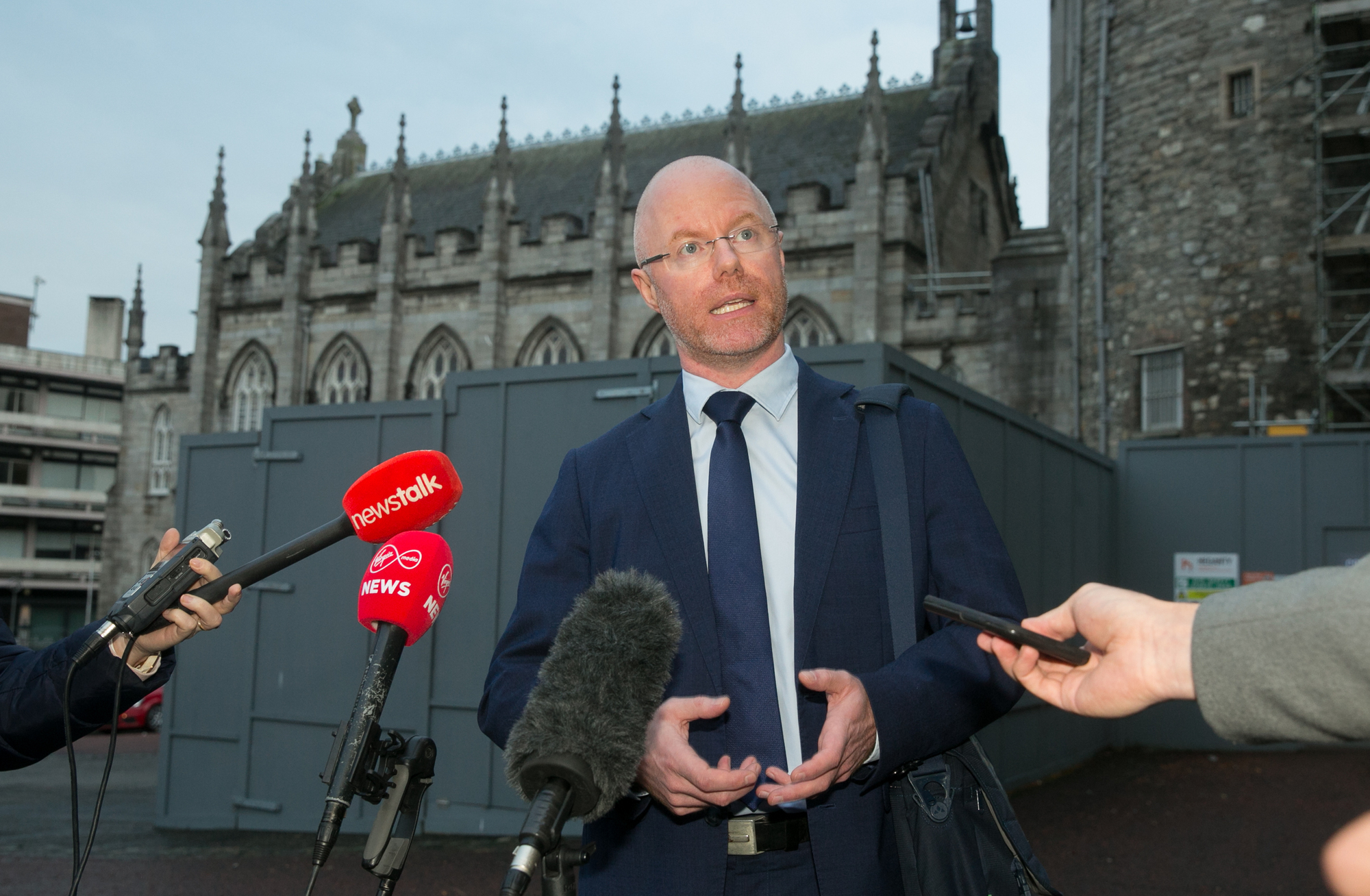
Health Minister Stephen Donnelly has warned case numbers are rising fast in all age groups, in particular among 19 to 24-year-olds. Picture: Gareth Chaney/Collins
Health Minister Stephen Donnelly has called for the public to reduce their discretionary social contacts amid a surge in Covid-19 cases.
On Tuesday evening, a further 3,578 new cases of the virus were confirmed, with the five-day average now 3,551, up from 2,812 the previous week.

Mr Donnelly said that everyone must "play their part" as the nation braces for a difficult winter for the health service.
"The situation right now is quite finely balanced," he said, urging everybody to "just reduce their discretionary social contacts" for a while.
"We know that's how this virus spreads and another really important message right now is if you're symptomatic, stay at home.
"There are things working for us and there are things working against us. The number of cases continues to rise and in all age groups under 75. They're rising fast.
"In the age groups from about 35 down, particularly for the 19- to 24-year-olds, the lines on the graph are almost vertical. So cases are rising really, really quickly."
Mr Donnelly said that vaccines, booster vaccines, antigen testing, and PCR testing were all part of Ireland's arsenal against the virus, however, the hospitality industry must do more.
"The majority are doing exactly the right thing and it's not easy to do. It comes at a cost to them and it comes at a complexity to them. But far too many are not doing the right thing. So we really need everybody now to just step up."
When asked if it was still safe to attend nightclubs, Mr Donnelly said "not three times a week" and that "if you enjoy going to nightclubs three times a week, don't do anything else".
"It's different for each person," he said.
"There are people who might want to go to nightclubs several times a week, there are the people who might want to go to the pub. There are other people who might like to spend a lot of time in friends houses, so really, it's about just for each of us.
"Have a think about the number of people you're going to meet this week in whatever setting it is and just look to bring it down, particularly indoors. Just pull it back a bit.
"The modelling from Professor [Philip] Nolan shows is that it's a relatively small increase in social in socialisation really has fuelled this so we just need to pull that back."
Mr Donnelly added that the conversations he is having with the National Immunisation Advisory Committee (Niac) include those with underlying conditions.
"If you look at the profile of people who end up getting really sick from Covid, who end up in hospital or an ICU, or indeed mortality rates, you see obviously age is a big determinant," he said.
"The second is underlying conditions. So if we can get boosters to those with underlying conditions, we obviously know boosters for everyone at 60 and above, that can greatly de-risk the situation.
"I know that Niac are looking at this very, very carefully and I will be continuing the conversation with them.
"Certainly if we do get that advice, the conversation I'm having with the HSE is to be ready to go because remember, this group with underlying conditions is more complex. At the start of the year, it was a prioritised group, but because we don't have unique patient identifiers, because we don't have a national patient registry, it took some time.
"So the conversation with the HSE is, 'Let's do everything we can to be ready'."
Mr Donnelly's comments were sharply criticised by those who work in nightclubs and other late-night venues.
The Give Us the Night campaign said operators have been working with a "very tough set of rules that are still extremely flawed" and called for the regulations to be amended.
Also, the regulations don't hurt just late gigs, it's early ones too. Many events are being pulled ahead of the date because ticket sales aren't high enough. Without the assurance of a walk-up, it kills confidence. Venues/promoters/staff/performers/service providers all lose out.
— Give Us The Night (@GiveUsTheNight) November 10, 2021
Many questioned how nightclubs could be blamed for the high number of Covid cases as they were closed for 18 months and only recently reopened.
Cork DJ Stevie G called it amazing that nightclubs are being blamed as there are so few left in the country.
"People who obviously haven’t been clubbing for years throw this stuff around but there’s very few clubs left, and even in Dublin it is tough," he said on Twitter.
It’s amazing that nightclubs, which barely exist in this country anymore, are still being blamed for the spread of covid despite being closed for 18 months
— Stevie G (@StevieGrainger) November 10, 2021
And despite operating under massive & often unworkable restrictions even now.
How many nightclubs are left in your town? https://t.co/0bHdy6iYZy
"Down here our main nightclub story recently was about dug up skeleton remains which is apt in a way."
Many venues had to pull their music entertainment in an effort to reduce their costs following the lengthy closure and tight restrictions, he added, while others did not reopen at all.
"So, basically the few clubs that are open in the country for the last couple of weeks are probably not the problem here," the DJ concluded, before calling Mr Donnelly a bluffer.