Small firms' taxes will not rise beyond 12.5% under OECD deal
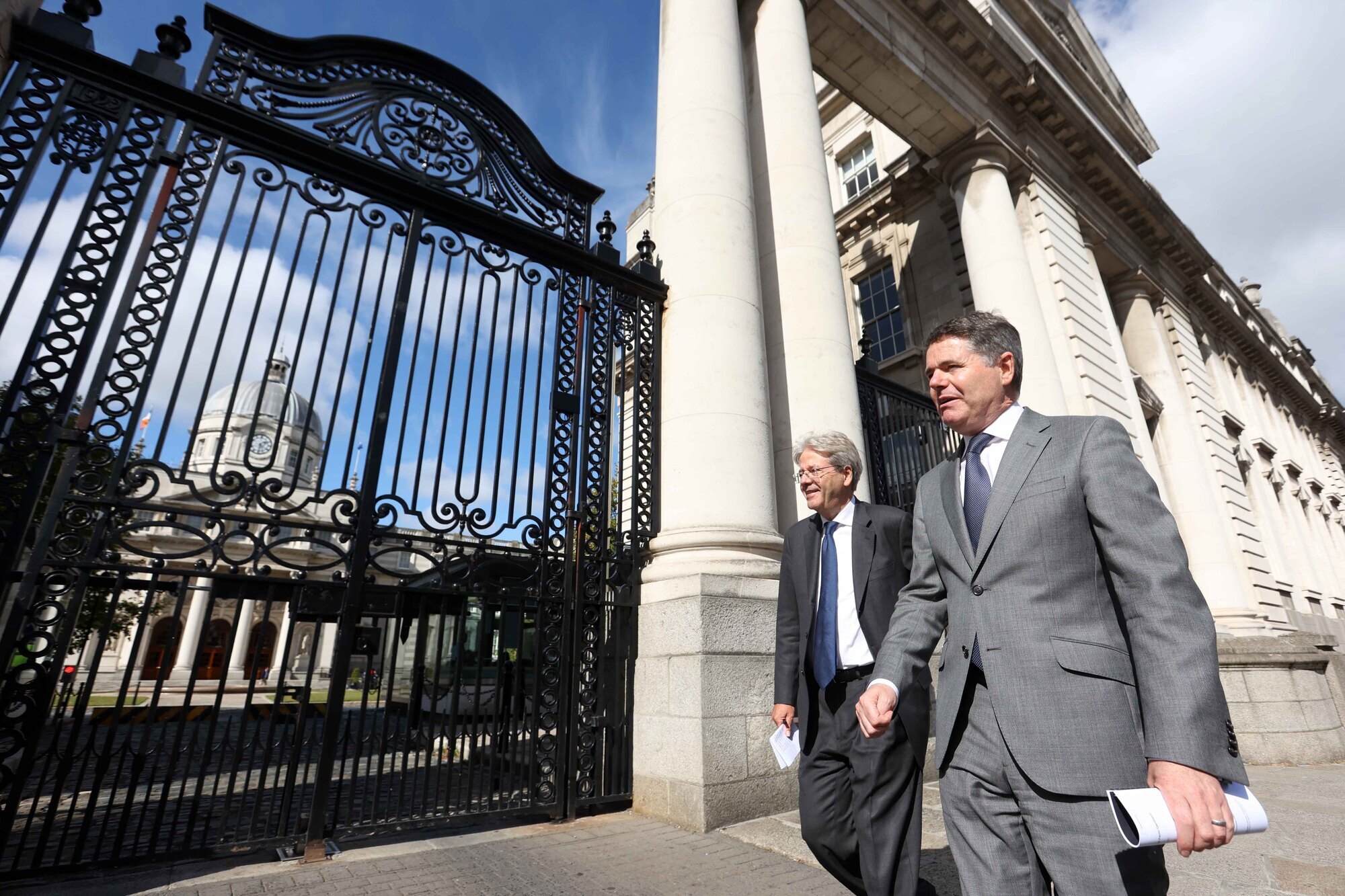
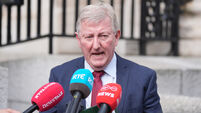
European Commissioner for the Economy Paolo Gentiloni and Finance Minister Paschal Donohoe during a press conference at Government Buildings on Monday. Picture: Sam Boal/RollingNews.ie
Only large multinational firms with turnovers of more than $750m a year would face a higher corporate tax bill should Ireland sign up to the OECD deal, the Government has said.
In the clearest sign that Ireland is likely to abandon its 12.5% rate, Tánaiste Leo Varadkar made clear that a dual rate was likely to apply, with indigenous Irish firms still likely to pay the lower rate.
Ireland is under significant international scrutiny and pressure to sign up to the OECD deal, which would see a rate of “at least” 15% apply.
Finance Minister Paschal Donohoe and the Government have made it clear they want to see the “at least” element eliminated before Ireland could agree to support the deal, which is now only opposed by six countries, including some zero tax states.
Speaking after Cabinet, Mr Varadkar said he could not guarantee the 12.5% corporation tax would remain in place.
He moved to reassure Irish companies, saying any hikes in the tax would not impact average Irish companies.
"One thing I would say, I think it's important to say this, the discussions that we're having internationally at the moment only relate to very large companies, companies with a turnover of more than $750m a year.”
"So any agreement that we may or may not come to won't impact the average Irish business, won't impact even large Irish businesses, or mid-caps. The 12.5% rate will stay in place for them. Any change, if there is any change and we're not committing either way, would only apply to those very large companies," Mr Varadkar said.
Speaking in New York, Taoiseach Micheál Martin said Ireland would fight to maintain its tax competitiveness, but said any two-track system would not represent a capitulation on the 12.5% rate.
Asked if a twin-track approach is one the Government could live with, Mr Martin said the OECD process had seen the proposals change a number of times.
"Certainly moves have already been made in respect of this. I mean, originally, it was 21%, for example, it's at least 15% now, which we're not happy with. So, I'm loathe to get into the specifics until the final process is concluded.
"But remember, our overriding objective will be competitiveness and retaining our competitiveness, and also the principle of tax competition, which keeps these countries and people on their toes with respective efficiencies and so on."
The Labour Party backed the proposed increase, saying Ireland can operate successfully with a minimum corporation tax of 15%.
The party’s finance spokesman Ged Nash said the party believed a “small marginal increase” of the minimum effective rate could be tolerated and would not inhibit Ireland’s ability to attract foreign direct investment to the State.

CONNECT WITH US TODAY



Be the first to know the latest news and updates