Quarantining could cut passenger numbers by 80%, says Donnelly
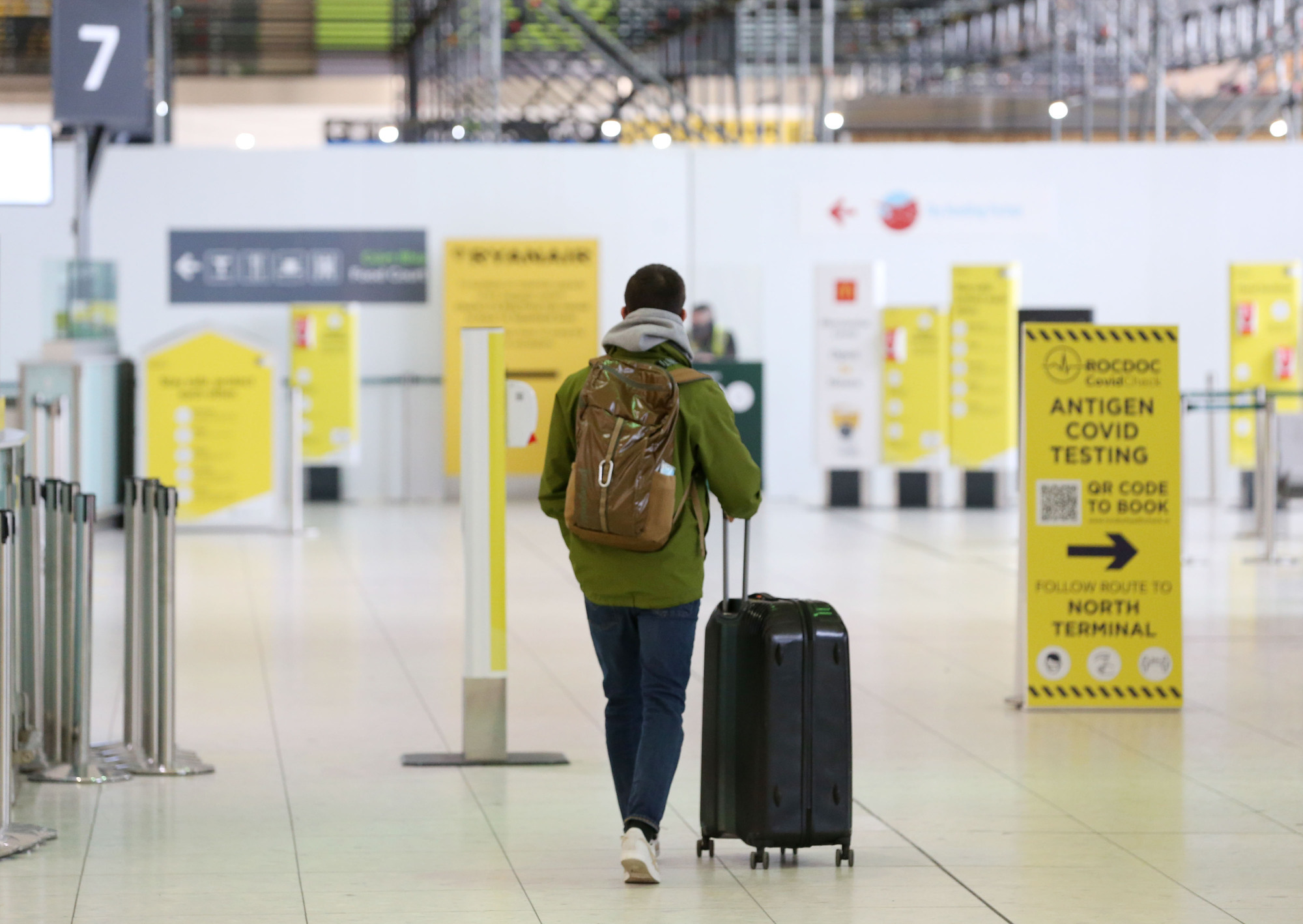
Pictured are passengers passing through Dublin Airport. Picture: Sasko Lazarov / RollingNews.ie
The introduction of hotel quarantining this week could result in an 80% reduction in the number of passengers arriving here, the Health Minister has suggested.
The portal to book a stay in hotel quarantine opened at 7am this morning ahead of its introduction on Friday.
People who arrive into the country without a PCR test will be confined to their room until they get a negative result under the new hotel quarantine system.
The defence forces will act as State liaison and will have operational oversight of the entire hotel quarantining system.
Mr Donnelly said it will be an offence to leave the hotel early and in those cases the gardaí will be called.
There are currently 33 countries on the list for mandatory quarantining, which will require people to stay in a hotel for between 10 and 12 days.
However, those who arrive into Ireland from other countries but who cannot show a negative PCR test will also be brought to a quarantine facility and will have to stay there until they receive a negative Covid result.
Mr Donnelly said passengers would be escorted from the plane through the airport.
"The passengers will then be brought on a bus to the hotel. They're brought in, they get the welcome packs, they get brought through health questionnaires and so forth and then they're they're brought to the rooms and essentially that is the start for most people have a stay somewhere between 10 and 12 days," he said.

Mr Donnelly said the defence forces have been asked to act as the "fulltime on-site representative of the State" and will be involved in making sure the end to end process involving State agencies and the hotel runs smoothly.
"So, for example, in transport, they won't be on the bus, but they will be escorting the buses," he said.
"Private security will be there obviously, they will be there in the hotels but there shouldn't really be too much interaction, certainly in the in the passenger journey."
Mr Donnelly could not say how many people will use the hotels each week but he hopes the introduction of quarantining will dramatically reduce the numbers of people arriving from high-risk countries.
"The whole purpose of this really is to is to act as a deterrent.
"We've looked to the UK. What England found was within the first week or two, they saw about an 80% reduction in incoming travel. Now in other parts of the UK they saw, after a few weeks, in excess of a 90% reduction.
"We'll have to wait to see what happens here, one of the issues will be Irish citizens, Irish residents who are in these countries and have travelled through these countries wanting to come home. To a point we're going to have to wait and see what level of reduction there is."
Asked about the easing of restrictions on April 5, Mr Donnelly said people are "exhausted" and the Government would be looking at low-risk activities.
"What I would love to see is if we can identify what will have to be a relatively small number of areas that will make life easier for people," hr told RTÉ's Morning Ireland programme.
The general secretary of the Association of Garda Sergeants and Inspectors (AGSI), Antoinette Cunningham has warned that gardaí have still not received operational instructions on how they will be expected to police mandatory quarantine hotels.
Ms Cunningham also warned that gardaí could become “super spreaders” if they were called to a dispute involving possibly infectious passengers at a mandatory quarantine location and afterwards returned to duties in the community.
Speaking on show Ms Cunningham said it was unacceptable to ask gardaí to risk such exposure at a time when there was still uncertainty about where they were on the vaccination priority list.
On the same programme, former military doctor Independent TD Cathal Berry said that the Defence Forces will have mainly a supervisory role which was likely to be in the form of a junior officer operating from an office in a hotel room.
The private security firms involved will be able to perform a citizen’s arrest on any passenger attempting to leave quarantine.

The gardaí would then be called and “will take it from there,” he said.
However, Ms Cunningham, warned that a citizen’s arrest was not simple to perform and came with “a whole pile of conditions”, and any action would have to abide by legal guidelines.
“Whether we like it or not gardaí are going to be involved,” she said.
Ms Cunningham also appealed for a risk assessment of the gardaí’s role in policing the pandemic.
“People need to have faith in the gardaí that they will not be bringing Covid-19 into their homes.”
She said policing was only getting more and more difficult and more dangerous.