Covid has ruined Micheál Martin's chances of leaving a legacy as Taoiseach
The high and lows of the Fianna Fáil leader's time as Taoiseach and when will he step down and who will replace him
Covid has ruined Micheál Martin's chances of leaving a legacy as Taoiseach

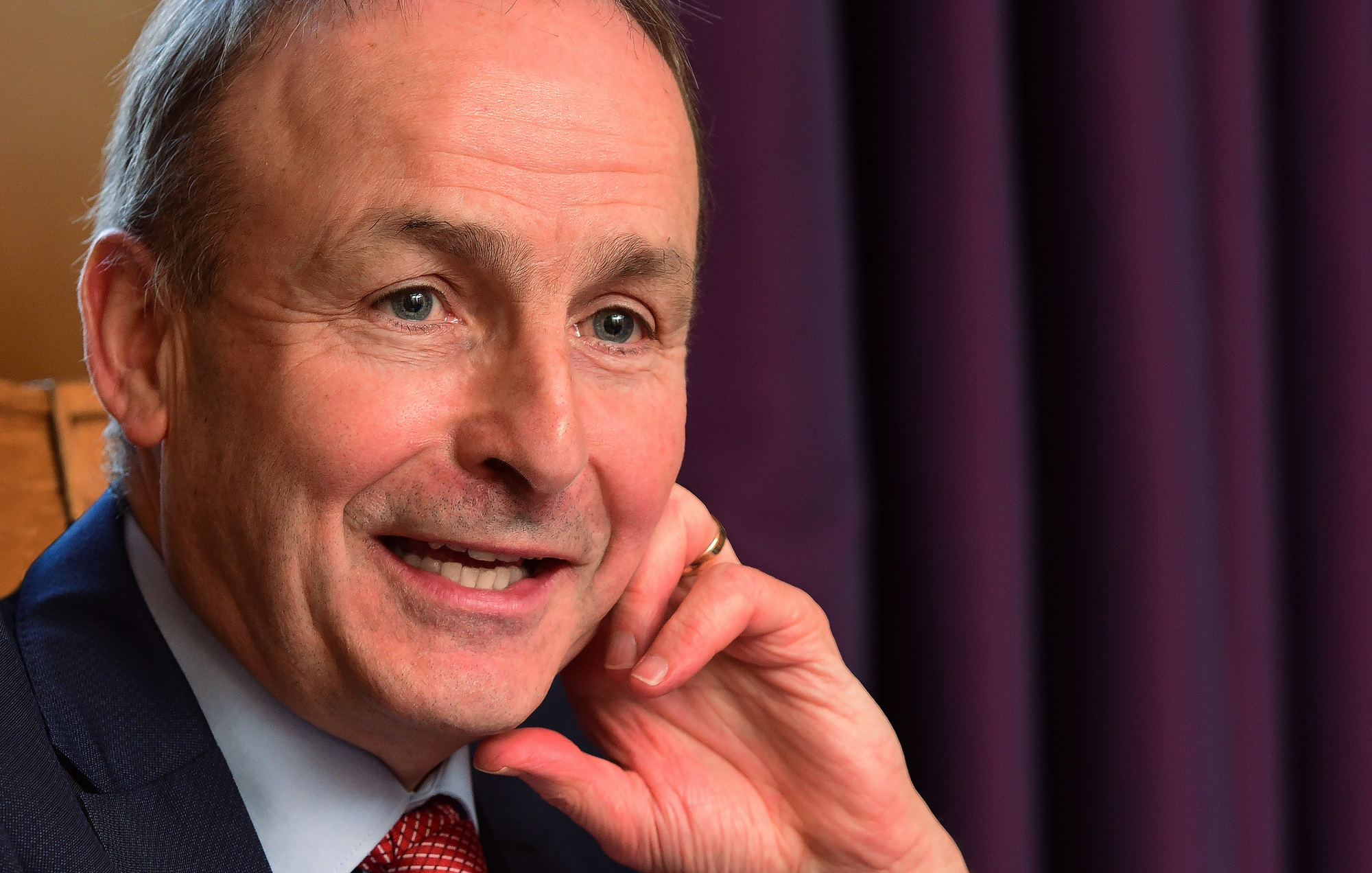
The Taoiseach Micheál Martin in his office at Government Buildings. Picture: Moya Nolan

Fans of the hit TV show The West Wing will recall the scene whereby the soon to be departing President Bartlett summons the two contenders to replace him — Arnold Vinnick and Matt Santos — to the White House.

His purpose in doing so is to inform them of an impending overseas military incursion into a foreign country which will cost many tens of billions of dollars.


“There go my tax cuts,” said a weary Senator Vinnick. “And you can say goodbye to your education plan,” he says to his rival.

Also in today's special feature:

  • The highs and lows of Micheál Martin's time as leader
  • The leadership question: When will Micheál Martin step down and who will replace him?

On the day he was elected Taoiseach last June in Dublin’s Convention Centre, Micheál Martin attempted to set out his vision as to how he would seek to lead the country.

“There is much more that we can and must do to help our society and our economy to recover. Starting today, this work will be at the very centre of everything the new Government will do,” he said.

We know there are other great challenges we faced before the pandemic and which remain to be overcome. 

"Too many of our people cannot find a decent and affordable place to live. Waiting times for urgent treatments are far too long. Our communities, our families and our young people need support to be able to thrive in a rapidly changing, modern economy. We must tackle the existential crisis posed by climate change,” he said.

If you cannot see the audio file of Daniel McConnell's interview with the Taoiseach above follow this link to hear the interview in full.

“We are conscious of the fact that we must work hard to build trust with each other and with the people we have a duty and privilege to serve,” Mr Martin added.

No one listening to him that day would have anticipated that seven months on, Ireland would still find itself struggling to contain the ravages of Covid-19 with months of pain, sacrifice and restrictions still ahead of us all.

Like the fictional characters Vinnick and Santos, Mr Martin finds himself with the ability to implement his main policy agenda stymied by the relentless virus and the fallout from Brexit.

Most of the policy issues he outlined as priorities on the day he appointed his Cabinet have been delayed or severely impeded because of Covid.

Housing

For example, on housing, the major failing of the previous Fine Gael-led government, Mr Martin said his Government would work to deliver early and sustained action on housing. 

“We are determined to restore hope to people that they will be able to find a place to buy or rent. There are no easy answers. Action and investment are required across a wide range of measures,” he said.

But Minister Darragh O’Brien has been forced to delay the rollout of his action plan on housing and the delivery of homes in 2020 was severely negatively impacted.

The Taoiseach (centre) visits a Respond housing development in Balgriffin with Minister Darragh O’Brien (right) in October last year.

Mr O’Brien said that the Covid-19 pandemic has been a “serious impediment” to the building of new social housing in the State as latest figures showed how just 725 were constructed in the first six months of the year.

The Social Housing Construction Status Report to the end of June 2020 showed how there were 1,467 built, acquired or leased homes made available. In 2019, more than 10,000 homes were delivered.

Mr Martin declared that “the single most important decision in delivering progress for modern Ireland involved a decisive move towards expanding educational opportunity”.

Education

Heralding the creation of the new stand-alone department for Higher Education, Mr Martin said his new Government is committed to delivering further progress on education and is implementing the most significant modern reform in the structure of how Government oversees this area.

As we know, education has been a major focus so far, but this has all been in the context of Covid. Overseeing the Leaving Cert grades system and getting kids to college, getting schools back open in September, keeping them open until Christmas despite considerable angst from teachers and now trying to get them back open are the issues which have dominated.

Little or nothing on reform, merely firefighting.

Environment

Mr Martin, on taking office said all three parties in this new Government believe that climate change is a defining challenge not just of this generation but of human history.

The programme we have agreed puts action on climate change into the work of every part of Government.

But again, little or no progress has been made and Ireland displayed "astonishing reluctance" to comply with EU environmental laws, according to Judge Anthony Collins.

He also said Ireland needed to improve access to the courts for activists and remove certain costs barriers.

His comments come at a time when the Government is considering restrictions to make it more difficult to take legal challenges. Ireland has been summoned repeatedly to European Court of Justice (ECJ) for long-running breaches of environmental legislation.

Health

Mr Martin, on taking office, also said he and his Government were committed to delivering a public health service which will care for people faster and to the highest standards.

Hit by as he called “the fastest-moving recession ever to hit our country,” Micheál Martin is likely to have to console himself as being the ‘Covid Taoiseach’ – the man who steered us through the worst of the pandemic. Picture: Moya Nolan

Despite a total budget of €22 billion for the health service this year, very few will accept that the health service in Ireland operates to the highest of standards.

Again, despite the whopping increase in budget for health, year-on-year, in terms of additional structural capacity, we appear to have little to show for it.

The health system has been only spared from being overwhelmed because of the absence of a flu season.

Shared-island unit

Mr Martin’s other major policy priority was the establishment of his shared-island unit which has been roundly criticised both north and south of the border.

Continued tensions with Belfast amid accusations of a failure to properly engage on Covid-19 have done little to instil confidence.

Ultimately, Mr Martin has been extraordinarily unlucky in his timing. Far from being given the space and time to implement his vision for the country, Covid-19 and Brexit means his room for manoeuvre is minimal.

Hit by as he called “the fastest-moving recession ever to hit our country,” he is likely to have to console himself as being the ‘Covid Taoiseach’ — the man who steered us through the worst of the pandemic.

As for the rest of his agenda, sadly he may simply have to forget about it.

The highs and lows of Micheál Martin's time as leader

Last Tuesday marked the 10th anniversary of Micheál Martin becoming the leader of Fianna Fáil. From the near wipe-out election in 2011 to the Taoiseach’s office last year, he has seen some real highs and lows as president of his party.

Highs

1) Becoming taoiseach 

Despite losing his third election in February 2020 and returning with just 38 seats (now 37 with Seán Ó Fearghaíl’s re-election as Ceann Comhairle, he clung on and created history by creating the grand coalition with Fine Gael and also the Green Party. By doing so, he became the first Cork taoiseach in 41 years.

Having been in the Dáil since 1989, the deal with Leo Varadkar on the basis of parity of esteem which will see the parties rotate the position of taoiseach in 2022 paved the way for Mr Martin to reach the promised land last June.

A significant achievement by any milestone, even if the circumstances are less than ideal.

2) Abortion

In 2018, Mr Martin won widespread acclaim for defying the majority of his conservative-leaning parliamentary party in backing the then government’s proposal to liberalise the country’s abortion laws.

He angered the hell out of his party by not giving any advance warning of his intentions, but he simply didn’t care.

Micheál Martin became the first Cork taoiseach in 41 years by creating the grand coalition with Fine Gael and the Green Party. Picture: Moya Nolan

The subsequent public referendum showed he was far more in tune with the majority feeling in the country than his colleagues. Despite such internal opposition, Mr Martin must also be credited with not losing any of his TDs over the abortion and marriage equality issues.

3) Dáil reform

After winning 44 seats in the stalemate General Election in 2016, Mr Martin had more than doubled his party’s Dáil seats. While it was not enough to seize power, it certainly emboldened him as leader.

Immediately after the election as the slow process of government formation played out, Mr Martin championed the need for Dáil reform. A sweeping set of changes ensued which weakened the hand of the executive over the legislature.

Sadly, now as head of majority government, his administration has sought to unwind many of the reforms he sought five years ago.

Lows

1) 2011 General Election

While he had just taken over a leader of his party just weeks before the election, the final result for him was devastating. 

Reduced to just 20 seats, little or no money and genuine questions about the viability of Fianna Fáil. He too had just suffered his own personal tragedy with the loss of his eight-year-old daughter a few months previous. It was a torrid time.

2) Losing his deputy leader

Just a year into his tenure as leader, Mr Martin lost his deputy leader Eamon Ó Cúiv after he openly defied the party’s support for the 2012 fiscal treaty referendum.

“It meant it was no longer feasible for him to occupy those roles,” he said.

Mr Ó Cuív, in media interviews, indicated that the resignation had been forced upon him, although he said he had told Mr Martin that he was prepared to face the consequence of his stance on the referendum. 

It was a major test of Mr Martin’s embryonic leadership when he was vulnerable.

3) Tenure as taoiseach

A poor election result, losing two agriculture ministers in seven weeks, losing another deputy leader in Dara Calleary and alienating a host of former loyal lieutenants including Jim O’Callaghan, Michael Moynihan and Barry Cowen, Mr Martin’s tenure as Taoiseach has been bruising. 

Low poll ratings and mounting internal rancour as to his leadership, he is cutting an increasingly isolated figure. 

Also the ongoing pandemic has utterly hijacked his agenda so far and his ability to cement his political legacy ahead of his departure from office in December 2022.

The leadership question: When will Micheál Martin step down and who will replace him?

Paul Hosford, Political Correspondent 

As delays to Ireland's vaccination rollout become more and more likely, so too does the very real possibility that Micheál Martin spends over half of his time as Taoiseach in some form of lockdown.

For a man who waited patiently to ascend to the throne and who will know that his chance of returning to the taoiseach's office, it will be a source of frustration, regardless of what Mr Martin might say, that the agenda he wanted to implement after last year's general election will not now be possible.

Instead, he has been thrust into being a "war-time leader" with all of the challenges associated and the problem with being a war-time leader is that your legacy is built how you win or lose the war.

Micheál Martin is adamant that he will lead the party which he has been at the helm of for a decade into the 2025 election. Picture: Moya Nolan

Mr Martin is due to hand over the keys to the taoiseach's office in December 2022, by which time Covid-19 should be a figure of our past. But some 22 months out, there is already questions about Mr Martin's next step.

For his part, he is adamant that he will lead the party which he has been at the helm of for a decade into the 2025 election. 

At that point, he will be 64 and have been a TD for Cork South-Central for 35 years and served as minister for health, education, trade and foreign affairs — as well as Lord Mayor of Cork.

Before Christmas, he told journalists that his plans were clear. “I am intrigued as to how this has developed into a storyline,” Mr Martin responded when asked whether he would still be at the helm come the next poll.

Yes, I’ve said this before, I am on the record as saying I intend to lead Fianna Fáil into the next election, yes.

All going to Mr Martin's plan, he will take the reins as tánaiste as well as a ministry next December and work on leading Fianna Fáil in an election cycle. To do so would show a level of determination and political stamina which would be impressive but not impossible. 

But both Mr Martin and his party know that the biggest hurdle to him lasting to the next election is not his own desire or ability. Mr Martin is tolerated within Fianna Fáil, but he is not loved. 

Negative comments about him do not provoke a siege mentality or a rush to his aid in the way that it does for Mr Varadkar within Fine Gael. 

While this genuinely does not seem to bother the Taoiseach, who genuinely believes in policy over politics, the goodwill well which he has had in the party has now run dry in many quarters.

TDs in marginal or contested seats grimace every time an opinion poll comes out as the party slips to record lows.

Most know that polls four years before an election are not a harbinger of much, but they also know that turning the figures around may need change.

Jim O'Callaghan has reached out to party grassroots. Picture: Sam Boal / RollingNews.ie

Around Mr Martin, subtle manoeuvres are underway from those most likely to reach for the brass ring of leadership. Jim O'Callaghan declined a junior ministry and has undertaken an outreach to the grassroots and Barry Cowen has said that he believes Mr Martin should stand down. 

Two others who may be in the frame are Housing Minister Darragh O'Brien and Public Expenditure Minister Michael McGrath, but both have been quiet on their future ambitions and have been loyal lieutenants for Mr Martin in government.

That is not to say that either man would not be interested if and when a vacancy does arise.

In that case, the if is not in question. At some point, Mr Martin will walk away from the party to which he has given so much service. The question is when and some within the party believe that he may not last until the handover.

One TD says:

The party needs a shot in the arm

"There seems to be very little energy at times around what we do and how we sell ourselves. It will be hard to see how we can go back to the public and say that the man who led us into confidence and supply and a coalition with Fine Gael is the man to lead real change.

"People wanted real change last February so by 2025, they won't accept Micheál Martin as it."

But Mr Martin, a keen student of history, will be aware of his limited ability to leave a lasting impact and will know that the 2023 Budget will likely be the first he has control of which does not have the shadow of Covid hanging over it. He will be loathe to walk away before then, but it may not be his choice. 

The party has just 37 TDs and 14 senators, meaning that the critical mass to remove him is not particularly large. Calls for him to set a date from a high-profile TD could see enough members roll in behind the idea quickly.

Public Expenditure Minister Michael McGrath has been a loyal lieutenant for the Taoiseach in government. Photo: Sam Boal / RollingNews.ie

It is reasonable to ask what those who want Mr Martin to go before 2025 are hoping to achieve. Following the electoral drubbing in 2011, Mr Martin has stabilised the party's structures and finances and has led them back to power within a decade. That is no mean feat.

He has been a calm head among mistakes made by his ministers and is generally seen as a safe hand on the tiller at a time of tumult. But within the confines of Covid, he has played what baseball fans would call "small ball". 

His style is methodical, deliberate, but low on broad ambition. In baseball, small ball focuses on moving runners base by base if necessary. It is pure, but it rarely gets the crowd on their feet the way a home run does. 

Mr Martin is not of the character to really do anything different — he believes in calm, reasonable governance.

But with time running out to be something other than the steady hand for the pandemic, Mr Martin may have to start swinging for the fences — and hoping he hits a home run soon.

x

More in this section

Politics

Newsletter

From the corridors of power to your inbox ... sign up for your essential weekly political briefing.

Cookie Policy Privacy Policy Brand Safety FAQ Help Contact Us Terms and Conditions

© Examiner Echo Group Limited