'Something catastrophic could happen': Warnings as Oireachtas committees hears of fallout from legal aid dispute
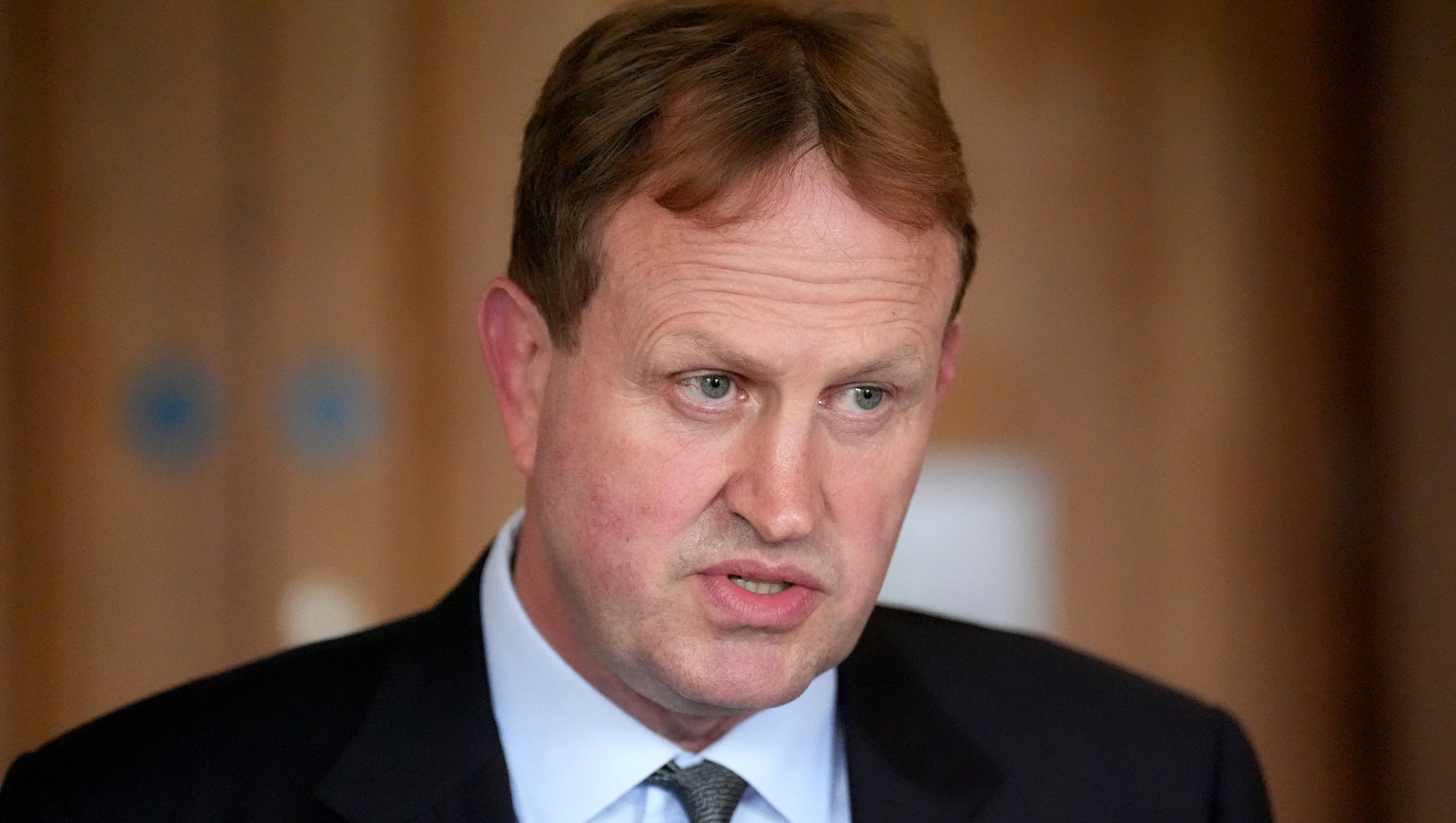
Justice minister Jim O’Callaghan did not attend the committee hearing. Chairman Matt Carthy called on Mr O'Callaghan to appear and address the matter. File picture: PA
Hundreds of criminals remain free and people accused of domestic abuse and rape can now personally cross-examine alleged victims in court because of the ongoing criminal legal aid dispute, the Oireachtas justice committee has heard.
Major Garda operations are also being postponed over concerns that a solicitor not being available when a suspect is detained could have implications for any subsequent prosecution.
That is according to Amanda Connolly, vice-chair of the Law Society's criminal law committee.
She told TDs and senators on Tuesday: "I fear that something catastrophic could happen in relation to that."
Cases relying on criminal legal aid have plummeted, with a 93% collapse in criminal legal aid certificates issued in July compared with the same month last year.
This is “deeply worrying” and threatens the effectiveness of the constitutional right to legal representation, said Law Society president Rosemarie Loftus.
With the higher courts due back in October, the situation may worsen sharply, she said, adding that every time a victim’s case is adjourned it heightens their anxiety.
Hundreds of people convicted of serious crimes such as rape are still out in the community awaiting sentencing since July, said Aoife O'Leary, chair of the Criminal State Bar Committee at The Bar of Ireland.
Read More
If the dispute continues, their cases may be adjourned again in October, she warned.
“It is stark: The number of legal aid certificates granted has collapsed compared to July 2025 — down 93% from 10,277 to just 702 in July 2026,” Ms Loftus told the committee.
“Under the Criminal Justice (Legal Aid) Act 1962, the State is required to provide legal representation to those who cannot afford it,” she said.
The Criminal Legal Aid Scheme was brought in on July 1 and introduced one flat fee per case, prompting solicitors to withdraw their services across the country, with major impacts on the courts.
While complex cases can take up to 50 appearances in court, they are only paid for five under the new scheme, which would mean that solicitors would be expected to work for free on more difficult cases, the committee heard.
This may result in lawyers avoiding more complex cases.
While the slowdown in the criminal justice system has started, the shutdown is about to occur, Ms Loftus said, as she urged for a solution to be found.
“The Law Society is renewing its call for an independent mediator, who could help bridge the gap between the policy objectives of the [Justice] department and the practical realities experienced by everyone working in the courts," she said.
Two issues are core to solicitors’ concerns:
- The treatment of separate and distinct criminal cases as a single matter where they happen to come before the court on the same day;
- The absence of any practical mechanism to address cases of extended duration involving exceptionally high numbers of court appearances.
Other jurisdictions have accounted for such measures within otherwise flat-fee payment models which work and could be considered here, the committee heard.
“Criminal legal aid is a cornerstone of our justice system, serving as a vital mechanism to uphold the constitutional right to legal representation," Ms Loftus said.
"By protecting the right to representation and ensuring a fair trial, the criminal legal aid scheme ensures that justice in Ireland remains a fundamental right for all."
“The new scheme takes a one-size-fits-all, uniform approach that is especially problematic as it has no regard to the complexity of cases coming before the courts.
“The scheme is based on a fundamental misunderstanding of how the district court operates. It prioritises administrative efficiencies over fairness," she said.
“It also replicates a flawed model that has already failed in civil legal aid.”
Ms Loftus said that the Law Society has been calling for reform of the legal aid system for many years but it needs to be evidence-based.
Solicitor Tony Collier told the committee that the bill for criminal legal aid solicitors is about 1% of the justice budget and is already good value without further cuts.
Seamus Clarke, chair of the Council of the Bar of Ireland, warned that the system is getting increasingly bottlenecked and backlogged, with victims suffering while the cases drag on.
“The issue before us is not simply a disagreement about fees. It is about the obligation on the State to maintain a functioning criminal justice system; one that protects victims, vindicates the rights of accused persons and commands public confidence," Mr Clarke said.
“The disruption to the criminal courts since July is already serious."
Justice minister Jim O’Callaghan did not attend the committee hearing. Chairman Matt Carthy called on Mr O'Callaghan to appear and address the matter.


CONNECT WITH US TODAY



Be the first to know the latest news and updates