Parents of children at Cork special school to meet TDs to demand full-time multi-disciplinary therapists
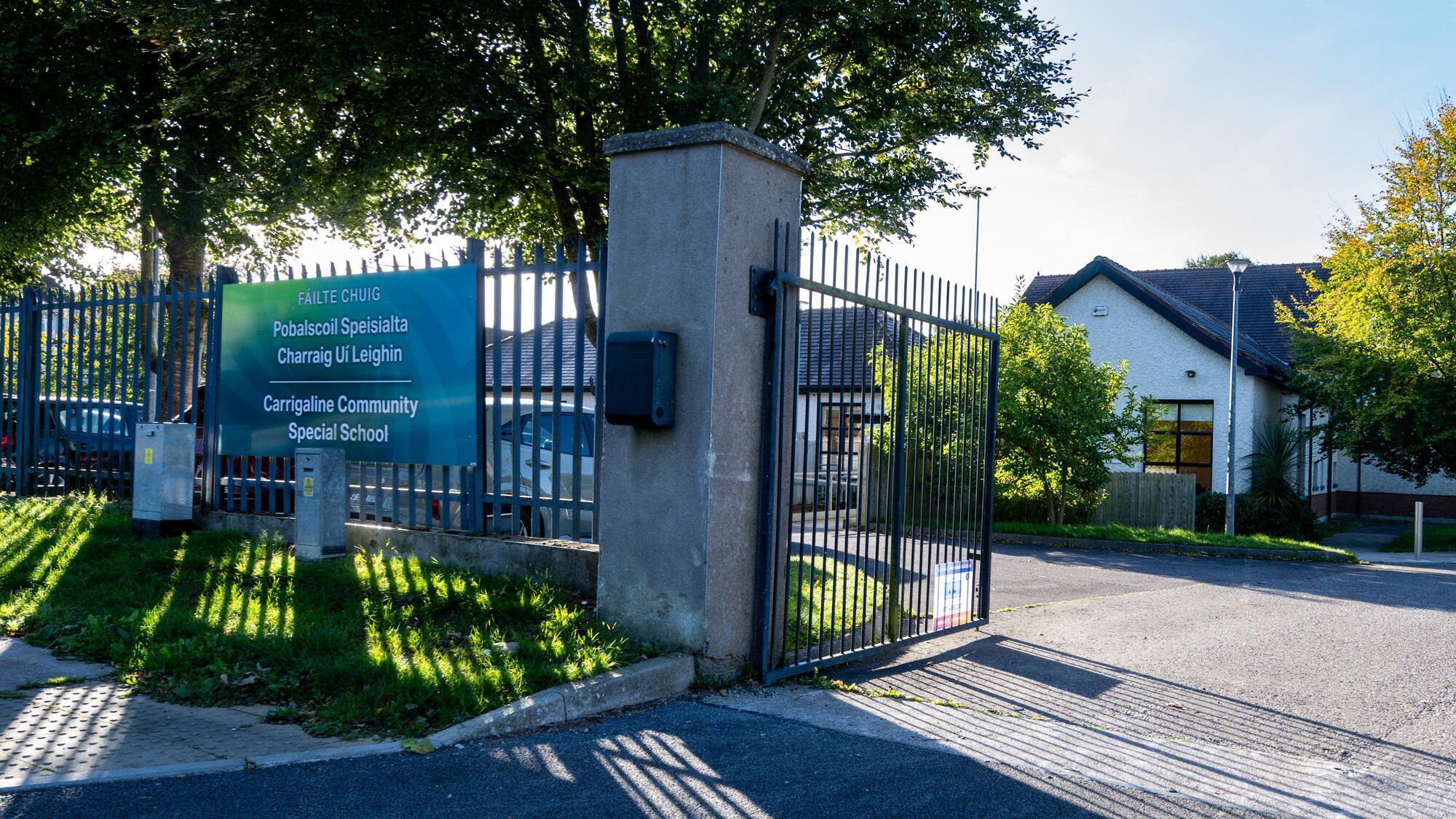
Carrigaline Community Special School: Parents concerned about staffing, class closures, and their child’s lack of direct access to the therapies and services. Picture: Chani Anderson
“Carrigaline Community Special School is not a mainstream school and as such, cannot be treated as if it is, because our children are not mainstream children,” parent Niamh O’Grady told the
“You can't fit a square peg into a round hole.”
A year ago, Niamh was one of the parents to share their concerns about Carrigaline Community Special School with the .
Opened by Cork Education and Training Board (ETB), the school was the first “flagship” special school under its patronage, established in the Taoiseach’s own constituency.
The parents who spoke out last year all shared similar concerns about staffing, class closures, and their child’s lack of direct access to the therapies and services necessary for their education.
Combined, these issues were creating an environment causing high levels of anxiety and dysregulation among the school’s students, aged from four to 18, with a dual diagnosis of autism and an intellectual disability.
As well as increased school refusal, the high levels of dysregulation were also resulting in some students becoming distressed or “lashing out”.
Rather than address the core issues behind these behaviours, parents who spoke to the a year ago believed the approach instead was “punitive”, resulting in an “out of control” suspension rate.
They were also concerned about “de facto” suspensions, whereby parents were being called regularly to collect their children.
Through Freedom of Information requests, they found the school issued 17 official suspensions between 2021 and 2024.
Read More
They also discovered a pattern of suspensions at other community special schools operating under the patronage of CETB: Rochestown Community Special School issued 14 official suspensions between its opening in 2022 and June 2025.
Parents also found two official student suspensions in East Cork Community Special School recorded between December 2024 to June 2025.
In response to the ’s reporting at the time, the Department of Education and CETB both acknowledged they were aware of parents' concerns.
But within a month, a student at the school was officially suspended again.
In February, the school closed abruptly following an incident to “work through a number of issues”.
As it reopened more than a week later, it did so “excluding a different child and a parent who were not involved in the event that caused the closure", the Dáil heard in March.
Earlier this year, parents also learned they were not alone in having concerns about the model of community special schools that have been backed by the Taoiseach.
Parents at another more recently established community special school in a different part of the country have also experienced eerily similar issues.
Belmayne Community Special School, which opened in 2025, has faced similar issues in terms of resources, supports, and staffing.
In May, they called on several ministers to address “serious failures” they said placed their children in unsafe circumstances.
Taoiseach Micheál Martin previously told the Dáil he believed the model of community special schools “is the way forward”.
In March, he told the Dáil, Cork ETB “stepped into the breach” to “provide desperately needed places in an area where children could not get places at the time.”
He added: “We had to take action. For the long term, ETBs have a very significant role in special education across the country.
"That is my view. If we look at how it is evolving, some of the section 39 bodies have pulled back from education so the State has to get more involved in this particular area. The structures of ETBs are such that they have flexibility in providing resources.”
A group of parents, whose children attend Belmayne and Carrigaline community special schools, are on Wednesday to meet with TDs to call for immediate full-time, multi-disciplinary therapists to work directly with children attending both schools.
They are also calling for a new, Hiqa-type section of the Department of Education to carry out spot checking and planned inspections, with statutory powers attached to their recommendations.
The group is also to call for an immediate overhaul of the vetting and appointment system to safeguard children and disqualify those with a track record in exclusion, and those with Tusla "findings of concern".
The group is seeking the introduction of standardisation across special schools in terms of policies and practice, with an emphasis on inclusion and standards set by experts in the field.
A spokesperson for the Department of Education said the number of children receiving special educational supports had grown from 70,000 to 250,000 in the last 10 years.
“While this expansion has brought challenges, significant progress has been made in increasing capacity across the education system and we will continue to work closely with children, parents, principals, teachers and SNAs to ensure that every child and young person receive the education support and opportunities they deserve," the spokesperson said.
Recent inspections in special schools have focused on how “special schools support children and young people’s regulation and behaviour”, the department said.
“While some special schools supported children very effectively, aspects for improvement were identified in others which require attention by those schools to ensure children can access the best possible educational experience," the spokesperson added.
“In those schools where practice was effective, inspectors noted how staff implemented agreed comprehensive person-centred systems that included prevention, early intervention, co-regulation and de-escalation.
"Areas for improvement in a number of schools include better development of learning and behavioural targets, supporting continuity and progression of education and ensuring children access a full school day.”
Read More
A spokesperson for Cork ETB said it continued to work with the Department of Education, the National Council For Special Education (NCSE), the HSE, National Educational Psychological Service (NEPS), and other relevant agencies to strengthen provision at Carrigaline Community Special School.
The spokesperson said these supports included: “One principal, two deputy principals, 12 teachers and 25 SNAs, increased co-operation hours, additional NEPS support, access to a behaviour adviser for one day a week and accommodation upgrades and reconfiguration.
"The school also currently receives 15 hours per week of in-house occupational therapy support and 15 hours per week of in-house speech and language therapy support.”
These supports are “being used to build consistent practice across the school, strengthen home-school and inter-agency relationships, support staff capacity, improve the learning environment and ensure that individual plans are informed by educational, communication, sensory, therapeutic and wellbeing needs,” the spokesperson added.
A spokesperson for Dublin and Dún Laoghaire Education and Training Board (DDLETB) said Belmayne Community Special School opened “in response to urgent demand for special school places in North Co Dublin”.
“The school has made very strong progress on an ongoing and continuing basis throughout the past 10 months.
"Since opening, DDLETB and the school have worked continuously to strengthen staffing, therapeutic support, governance, policies and engagement with families. Staffing has been kept under continuous review with the Department of Education and Youth, the NCSE, the Special Educational Needs Organiser, and relevant agencies.
"As students’ needs became clearer, DDLETB sought and secured significant additional resources.
The spokesperson added: “Students have access to HSE Children’s Disability Network Team services and other therapeutic supports. The school is also participating in the NCSE’s new Education Therapy Service, providing onsite support for individual children, classes and wider school community."
CONNECT WITH US TODAY



Be the first to know the latest news and updates