€100 device has 'empowered' heart patients in Cork to understand symptoms
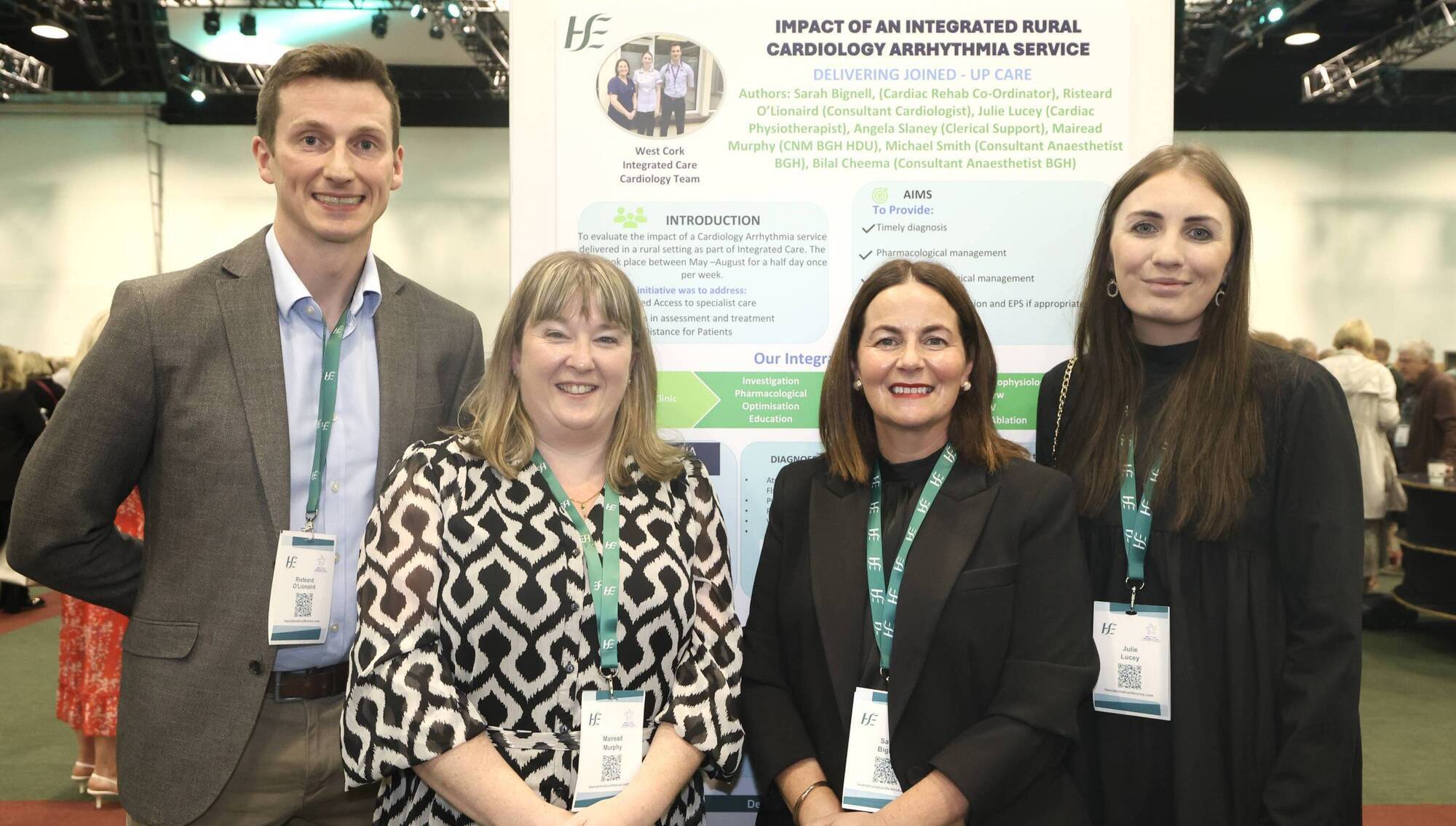
Dr Risteard O’Lionaird, Mairéad Murphy, Sarah Bignell, and Julie Lucey of the HSE Integrated Care Programme for Chronic Disease (ICPCD) Service, specialising in Cardiology, HSE South West.
A device costing just €100 has “empowered” heart patients in Cork to understand their symptoms, but the project needs more nurses to expand further.
A clinic at Bantry General Hospital, under consultant cardiologist Risteard O’Lionaird and Sarah Bignell, cardiac rehab co-ordinator, treats patients with heart rhythm problems.
“The most significant one is atrial fibrillation and flutter, which carries a stroke risk,” Dr O'Lionaird said.
“It needs to be treated as soon as possible.”
The clinic is held weekly, and diagnosis can lead to treatment with supported therapy, medications, or cardioversion: A controlled shock to the chest.
Patients are also given a device, which connects to a mobile phone app to support them at home.
“We spent €1,000 on these Kardia devices. They’re €100 each, we got 10 of them,” he said.
“They’re a form of patient-controlled rhythm monitoring. They download an app, they can put their finger on the sensor and get an ECG [visible on the phone screen].”
Results can be emailed from the app to the clinic or shared at an appointment.

“We loaned the devices to the patients,” he said.
“We were warned, ‘oh people might not give them back’, but no problems with that so far.
"The major benefit is it’s a more efficient way to get a diagnosis.”
Patients can be referred by a GP, to Bantry hospital, or CUH, with eight patients using the devices at the moment, according to Ms Bignell.
“We do a bit of education, risk management, we talk about blood pressures and where their targets need to be,” she said.
She can download the data if people need help.
“It’s brilliant really.
However, Dr O’Lionaird said the project, which won an award at the HSE Integrated Care Conference, could be rolled out further.
“We need to expand, and what we need really more than anything is to add nurse-led clinics,” he said.
“That’s where you get your volume up. We need to use the likes of Sarah’s expertise, nurses can work independently with appropriate oversight from me as needed.”
He said: “What we need, of course, is progress on the recruitment embargoes. We made that clear today to management, and they seem supportive, so we hope for the best.”

CONNECT WITH US TODAY



Be the first to know the latest news and updates