Cork train used 'as drug corridor' between cities, transport union claims
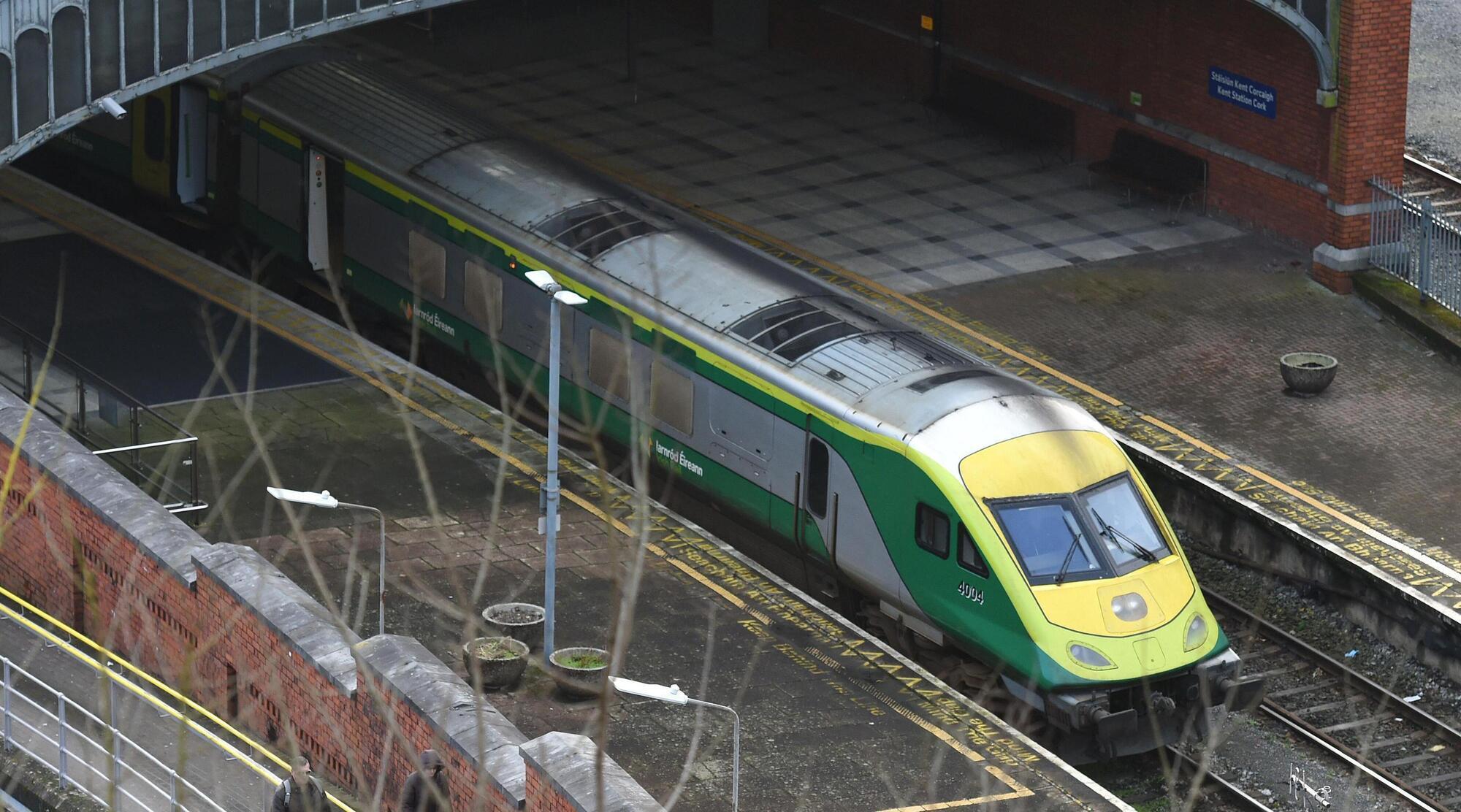
Dermot O’Leary, general secretary of the National Bus and Rail Union, said abuse, assault and threats of assault have left some customer service staff having to leave their roles, often when repeat perpetrators recognise their faces. Picture: Larry Cummins
The Cork to Dublin train line has been used as “a drug corridor”, according to a representative of transport staff.
Nearly 120 complaints about antisocial behaviour on trains within, to and from Cork over the last 12 months were recently analysed by the Irish Examiner.
More than 87% of these complaints, which detailed intimidation, assault, disturbance, racism, alcohol and drug use, as well as smoking and vaping on trains, occurred on the Dublin to Cork train.
Asked if this service was particularly problematic, Dermot O’Leary, general secretary of the National Bus and Rail Union, said the Cork to Dublin train had been a “hot spot” of antisocial behaviour for many years.
“The people working on the train know full well the particularly times of day and stops that are problematic, they know exactly where the flashpoints are.”
He said abuse, assault and threats of assault have left some customer service staff having to leave their roles, often when repeat perpetrators recognise their faces.
Issues include people using the train to transport drugs between the two cities, he said.
“There’s been drug mules going up and down that corridor, gardaí have been somewhat successful in dealing with that.”
A spokesperson for Iarnród Éireann pushed back on his claims, saying: “The movement of drugs is a societal issue and we have no reason to think at the present time that it is an issue that is disproportionately affecting our Cork/Dublin service.
Read More
“If a small number of car drivers/passengers or cyclists carried drugs, we wouldn’t refer to a motorway or a cycle lane as a 'drug corridor'."
However, they added: “We work closely with gardaí both on ongoing proactive patrols and to facilitate any operations to apprehend any suspected offenders.
“During the most stringent phases of covid-19, when there were extensive road checks for public health reasons, it is fair to say at that time that initially we saw a notable increase in this issue to 'evade' road-based patrols, but again, gardaí undertook targeted operations to counteract this at that time.”
A Garda spokesperson said they “proactively engage” with all national transport operators, including Irish Rail, through Operation Twin Tracks, which provides for a Garda presence on public transport with an aim of preventing and detecting anti-social behaviour.
This programme “remains an integral part of Garda operations nationally, to ensure that public transport passengers and commuters continue to travel safely and without encountering anti-social behaviour,” the spokesperson said.
“All incidents which are alleged to have occurred on public transport services that are reported to An Garda Síochána are fully investigated and prosecuted where possible.”
Mr O’Leary added Iarnród Éireann had “done their best” with implementing security personnel onboard, but these staff do not have the powers of detention and arrest like gardaí do.
A dedicated branch of An Garda Síochána to deal with public transport is therefore a better option than the transport security force committed to in the programme for government, he said.
Work is ongoing on that force, but primary legislation would be required to give them the necessary powers, which he said would slow the operation down.

CONNECT WITH US TODAY



Be the first to know the latest news and updates