David McCullagh warns against imagining how Michael Collins would have led Ireland
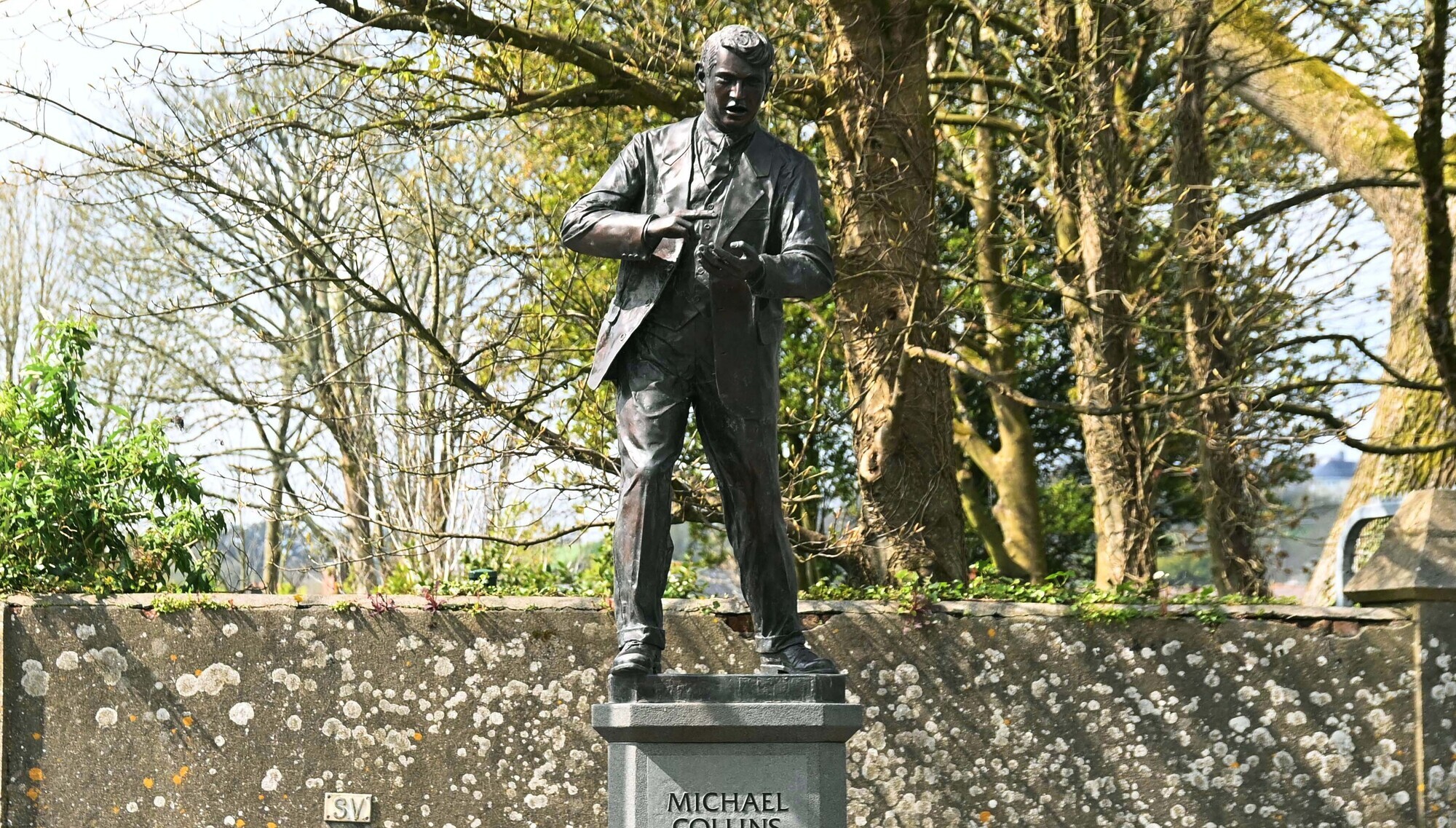
Michael Collins was shot and killed in an ambush by anti-Treaty forces at Béal na Bláth on August 22, 1922, becoming the most high-profile casualty of Ireland’s Civil War. Picture: Denis Minihane.
Michael Collins was a man of his time, and “lost leader” narratives about how different Ireland might have been under his leadership are probably “a fool’s errand”, the historian delivering this year’s Béal na Bláth oration has said.
Michael Collins was shot and killed in an ambush by anti-Treaty forces at Béal na Bláth on August 22, 1922, becoming the most high-profile casualty of Ireland’s Civil War.
Collins is considered by Fine Gael to be its spiritual founder, despite the fact he died 11 years before the party’s formation and four months before that of Cumann na nGaedheal (CnaG), which in 1933 merged with the Centre Party and the Blueshirts.
Fine Gael has long since airbrushed from history its actual founder, former garda commissioner Eoin O’Duffy, who was fired by de Valera in 1933 for urging the outgoing CnaG government to stage a military coup.
The 2022 centennial commemoration oration was delivered by Taoiseach Micheál Martin, whose presence was hailed by some as a definitive end to Civil War politics.
Mr Martin described Collins as a national hero, saying his killing had robbed Ireland of a clear path to peace and reconciliation.
Read More
This year’s oration is to be delivered by journalist and historian David McCullagh, who is the author of six books, including a biography of John A Costello, as well as a two-volume biography of Éamon de Valera –
He presents RTÉ Radio 1’s Today programme.
Mr McCullagh’s most recent book, , examines the 27-year journey from the Treaty negotiations of 1921 to the 1949 declaration of Ireland’s new status as a republic.
He said that his Béal na Bláth oration will look at the Treaty and the evolution of the relationship between Britain and Ireland, and Collins’s contention that the Treaty offered “the freedom to achieve freedom”.
“There are lots of different aspects to Collins’s career, the intelligence chief, the financial mastermind, and all the rest of it, but people tend not to talk as much about Collins as a constructive statesman,” Mr McCullagh said.
“Collins was the person who did more than anybody to set up the constitution of the Irish Free State, and how it would develop over the subsequent years.”
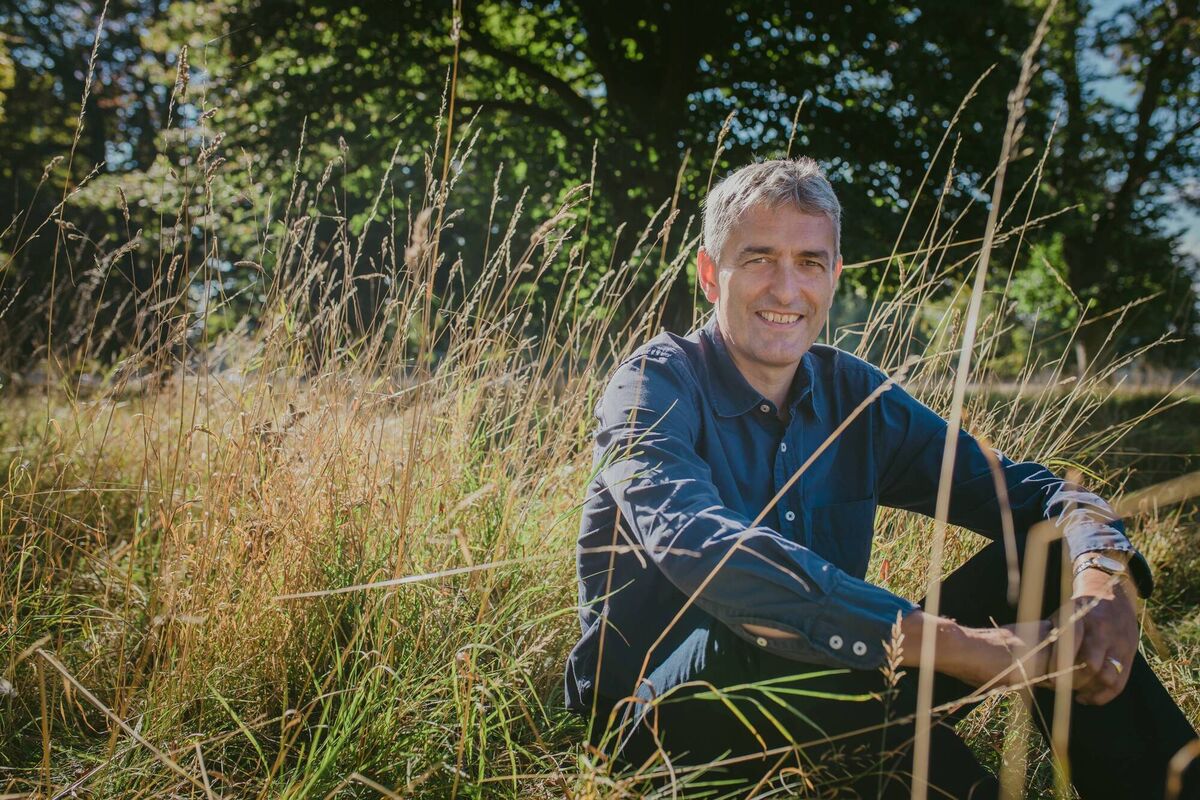
Mr McCullagh said it was pointless to speculate about Collins as a great lost leader, noting that he is frequently recruited to support various political points of view.
“It’s probably a fool’s errand to try and work out what Collins would have said or done in any particular situation, and we can’t really know.
“We know a bit about what he thought about the structures of government and all the rest of it, and in terms of the Department of Finance having control over everything, which hasn’t necessarily turned out all that well over the decades,” he said.
“But as to what he would have done in the later 1920s or in the 1930s, you can speculate all you want, but I’m not sure how much value there is.
“He was a creature of his time, as are we all, and as was de Valera, certainly.
“I don’t know that his economic philosophy would have been all that different to de Valera’s. He came up in that Sinn Féin tradition of self-sufficiency, so in the context of the 1930s, he probably would have had a very similar viewpoint to the one de Valera had.
“When people talk about de Valera’s Ireland and conservatism and all that sort of thing, he wasn’t alone in that.
“It was the way people thought at the time, the way people had been brought up to think, so I don’t think de Valera was necessarily out of line with the general view of society,” Mr McCullagh said.
“It’s convenient to talk about de Valera’s Ireland and blame him for everything that went wrong, but you know, the other side politically was just as conservative as he was, sometimes more so.
“It’s very difficult to know how Collins would have dealt with society, but I doubt that it would be radically different.”
CONNECT WITH US TODAY



Be the first to know the latest news and updates