Study on nature-based solutions for Midleton's floods in limbo after council takes issue with it
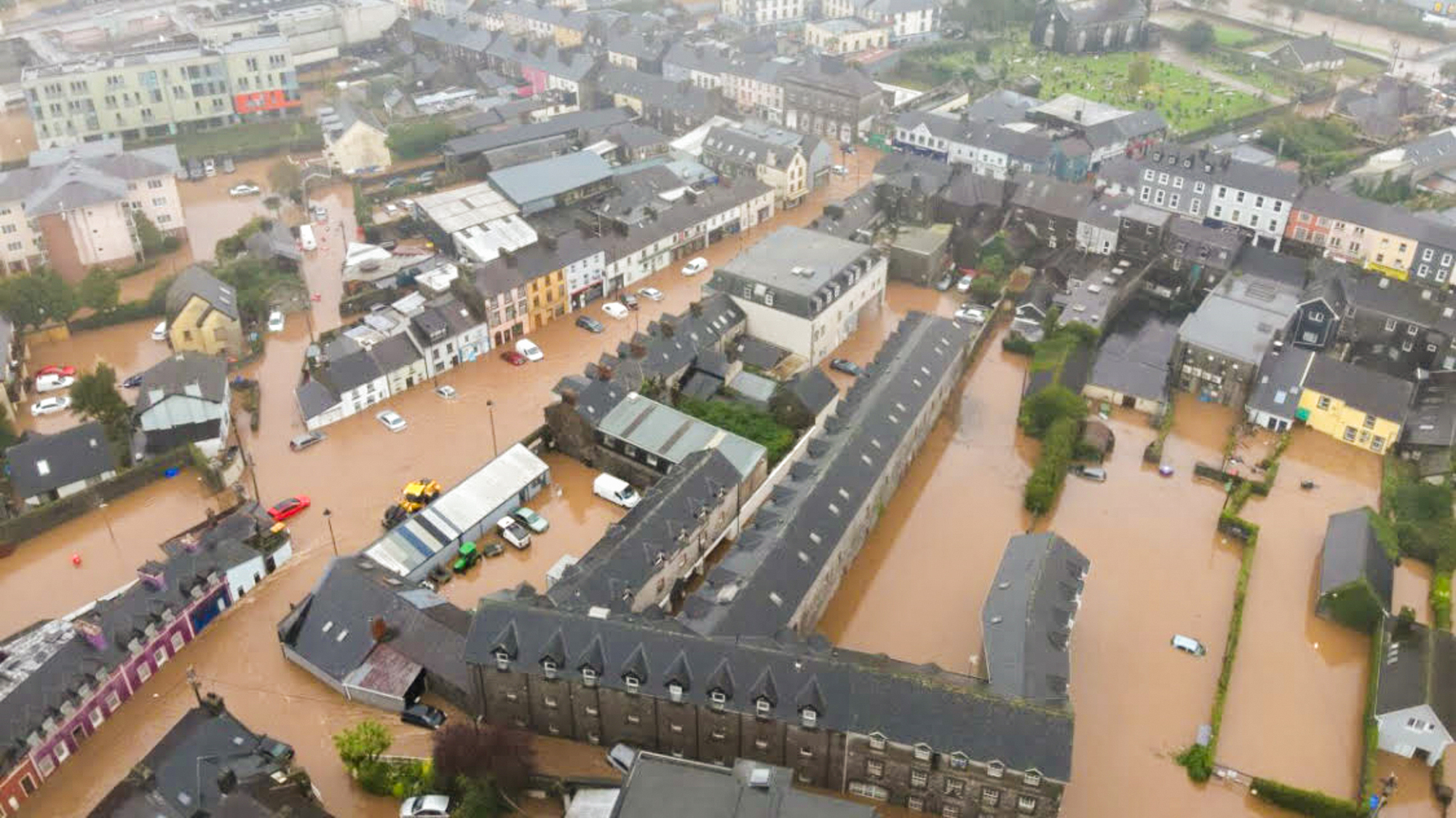
The study was commissioned some 10 months after Storm Babet wreaked havoc on the south-east of the country, particularly in the Midleton area which was devastated by flood waters, with a full month’s worth of rainwater falling in less than two days. File photo: Guileen Coast Guard unit.
A study commissioned by Cork County Council regarding potential nature-based solutions for flooding in Midleton remains in limbo after the local authority took serious umbrage at the draft report’s contents.
The local authority commissioned two academics based at Trinity College Dublin — Professor Mary Bourke and Dr Paul Quinn of that university’s geography department — to investigate in August 2024.
That commissioning came some 10 months after Storm Babet wreaked havoc on the south-east of the country, particularly in the Midleton area which was devastated by flood waters, with a full month’s worth of rainwater falling in less than two days. The overall cost of the damage wrought by the storm was estimated to be around €200m.
A deal of mystery surrounded the fate of the Trinity report, which aimed to outline what impact nature-based solutions (NbS) could have if implemented in the Midleton area, which has been susceptible to flooding for generations.
NbS typically involve measures such as wetland restoration, forestation, and the introduction of green spaces in urban areas, to slow run-off and enhance water retention outside vulnerable areas.
Read More
While a draft report was delivered to the council by its authors in March 2025, a final version has never been published.
Documents released under Freedom of Information legislation now reveal that Cork County Council compiled a substantial list of comments regarding the report’s contents, taking issue with everything from typos, language and formatting, to the authors' allegedly making assertions without substantiation.
One comment from the council took issue with the report announcing its intention to focus “on the opportunity” for surface water storage during floods, stating: “This is a report, not a works proposal”.
Another objected to the “informal” language used in the report, after it stated that “it might be good to get access to” principal component analysis maps of the area, which are not available online.
An assertion that areas of the catchment upstream from Midleton “have a high probability of being suitable” for NbS is dismissed, with the commenter arguing that “the probability is unknown... or actually low”.
“I suggest that you should back up claims,” they said.
Further discussion in the report of “opportunity areas” in the Midleton catchment “conflict with unsuitable areas identified in study site selection”, the council’s commenters said.
“It is either suitable or unsuitable – cannot be both,” they said.
The commenters complain that “exact co-ordinates (are) not provided for the sites to allow for analysis of options".
Issue is also taken with the authors allegedly failing to note that some of the sites they identify as suitable for solutions are owned by multiple individuals, a fact the council describes as “misleading”.
“You had no consultation with landowners... however you say (it will) have low/no impact on farming,” the council said. “How does flooding fields have low/no impact on farming?”.
The commenters also sought clarity regarding how floodwater storage figures were calculated by the authors, and how an assertion that a “high cost-benefit ratio” for the introduction of water storage NbS was arrived at.
“What cost benefit have you done? This claim is unsubstantiated and no evidence provided,” they said.
Professor Bourke and Dr Quinn did not reply to a request for comment.
A spokesperson for Cork County Council meanwhile said a second draft was delivered last March, adding that engagement with the authors “has continued in relation to completion of the report”.

CONNECT WITH US TODAY



Be the first to know the latest news and updates