Modular homes debate intensifies as Limerick falls thousands behind housing targets
On Monday, Limerick councillors voted unanimously to not proceed with the development of 500 modular homes at Boro Park. Picture: Manon Gilbart
Modular homes could make a “real difference to an entire generation” as Limerick is already significantly behind in meeting housing targets.
On Monday, Limerick councillors voted unanimously not to proceed with the development of 500 modular homes at Boro Park, despite Mayor John Moran’s declaration of a housing emergency.
As it stands, Limerick is 6,000 homes short of the Land Development Agency’s target.
More than 10,000 homes were due to be delivered in Limerick over the past four years, but the local authority has under-delivered on its nationally mandated housing targets.
Read More
Earlier this week, Mr Moran said a Government analysis “confirmed my worst fears” as Limerick now ranks 31st out of 31 local authorities for social housing delivery over five years.
Speaking of the figures, Mr Moran said: “They mean that we now have to build faster—and at greater scale—than ever before”.
He added that housing policy must serve the whole community — not one group over another.
This comes as councillors invoked Section 139 of the Local Government Act 2001, emergency legislation directing that works shall not proceed on a proposed site.
Mr Moran told the that the preferences of the public must be acknowledged and that councillors have a right to “change their mind too”.
Mr Moran said: “They decided that the idea of new public gardens and apartments for the area had to change to leave it just as a park. I respect that and it sorts out the future of the Boro Park. But it does leave us all now in Limerick 400-500 homes short in our pipeline.
That means going back to the drawing board and identifying new sites or buying more lands which naturally risks making it more expensive too. But we drive on.
"The thousands of people looking for homes want my priority to be quadrupling of our housing output each year to 4,000 units. Failure cannot be an option.”
As emergency legislation was invoked, Limerick Chambers’ chief economist, Seán Golden, said: “I'm interested to see what type of precedent this sets for development going forward.”
Mr Golden said: “The big question here is, are SMART homes going to be brought forward on other local authority sites? Will they all be blocked?”
“If there was 500 units going to be in that place, specifically, now where are we putting them? As we can see from the data, not only are we not building enough houses as it is, need somewhere between 5,000 homes to hit the development plan targets, we're significantly behind catering for the housing need as it is.” Mr Golden added: “Over 60% of employees that we serve are living with their parents or family. Almost a third of workers aged 35 to 44 are living with their parents, and over 40% of people aged 25 to 34 are living with their parents. These are very scary figures and huge social issues, they're not just economic issues.”
A report on modular housing by Limerick City and County Council found most respondents had a “very positive reaction” to the concept.
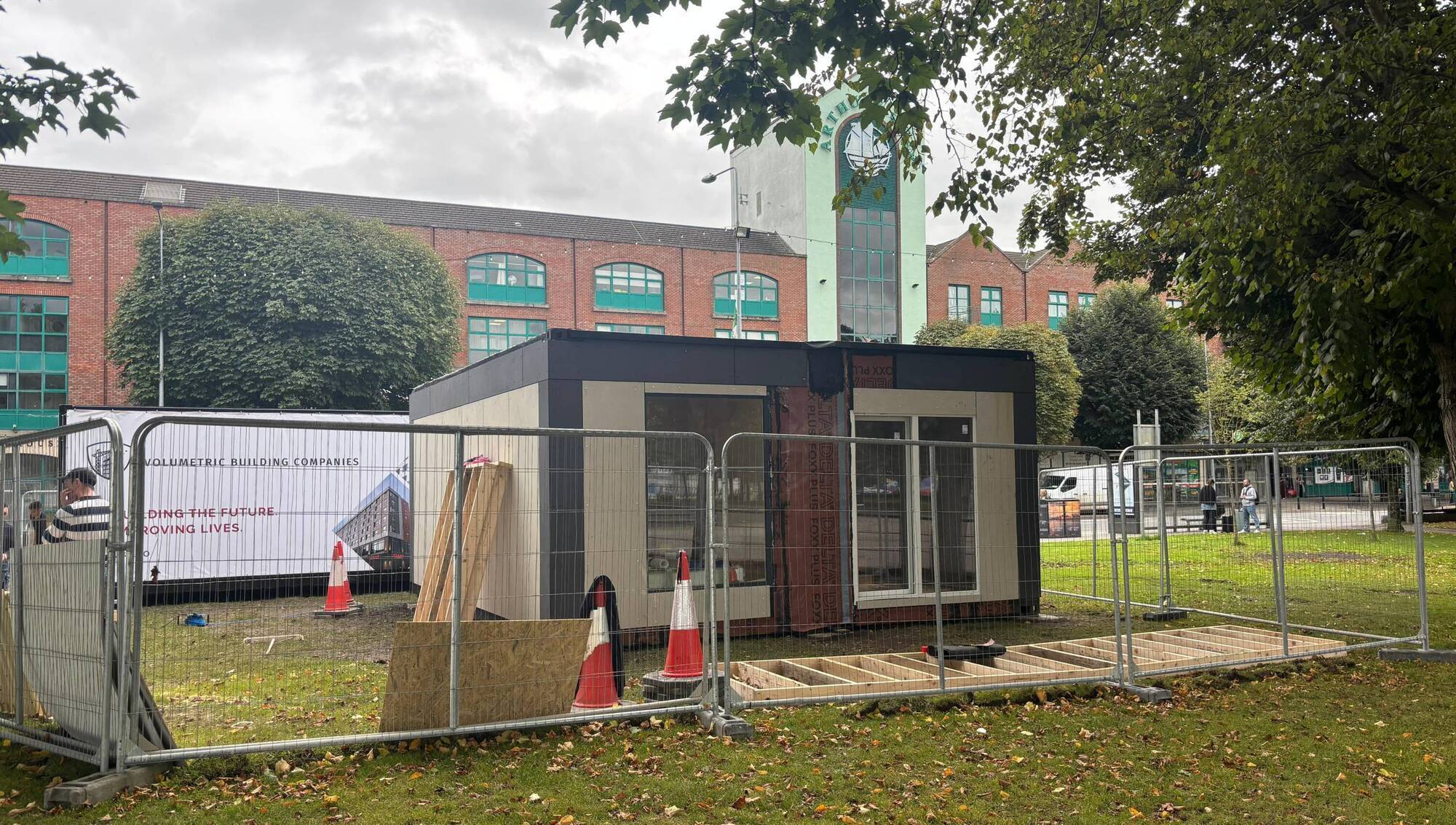
A total of 131 participants were questioned while visiting the prototype displayed at Arthur’s Quay last year, while another 101 were surveyed online.
One of the participants said the concept could “make a real difference to an entire generation who are currently unable to move out of their parents’ homes”.
“I’m 34 years old and I’m sick of sharing a house with 3 or 4 others – up eating my dinner in my bedroom,” said another respondent.
Parents who accompanied their children, who are students, to view the prototype said it offered an “alternative to leaving Ireland” and that Ireland is “competing with Australia”.

CONNECT WITH US TODAY



Be the first to know the latest news and updates