Cork teenager develops software to find ships trying to avoid sanctions
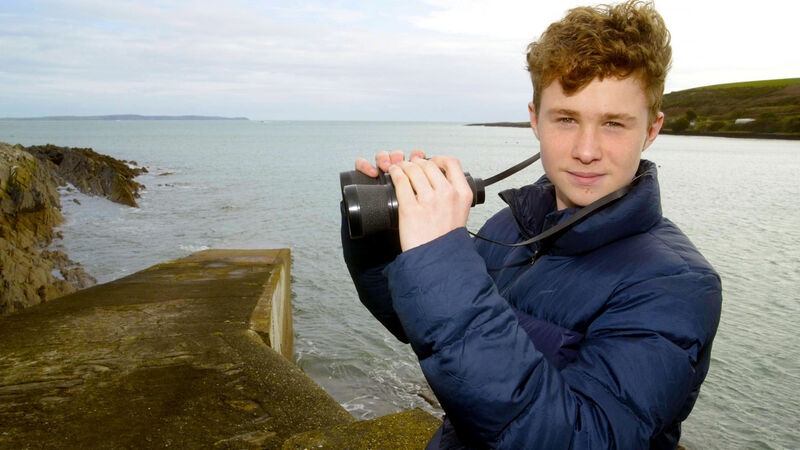
Seán Fitzgerald, a fourth-year St Brogan's College, Bandon, student has created software that predicts the movements of ships attempting to cloak themselves from conventional tracking systems. Picture: Denis Boyle
A teenager is being tipped for a national student innovation award after developing software capable of identifying sanction-evading vessels and those involved in suspicious activity near critical undersea cables.
Seán Fitzgerald's creation predicts the movements of ships attempting to cloak themselves from conventional tracking systems.
Read More
The fourth-year St Brogan's College, Bandon, student is a senior category finalist in the Student Enterprise Programme for his ‘Fleet Monitor’ project. It is a web-based maritime surveillance platform that tracks vessels at sea using Automatic Identification System (AIS) transponder data.
Seán, 16, who is doing work experience at the National Maritime College of Ireland in Ringaskiddy, developed a system which could be the envy of experts in military organisations.
All large commercial vessels and fishing boats are legally required to broadcast their vessel’s name, position, course and speed continuously.
The platform cross-references live vessel positions in real time against official EU and NATO sanctions lists to identify known or suspected shadow fleet ships operating anywhere in the world.
A further innovation is his integration of detailed geographic layers mapping the world's undersea fibre optic cables, gas pipelines and power interconnectors.
The software gives alerts when vessels behave suspiciously near such sensitive assets.
The platform incorporates a zone-monitoring system, allowing users to define areas of interest — such as Ireland's Economic Exclusion Zone or territorial waters — and receive instant on-screen, email, or SMS notifications when a vessel of interest enters or exits them.
The Fleet Monitor has been developed to include predictive tracking modules for vessels that "go dark", disabling, spoofing, or intermittently broadcasting their transponders to evade detection.
Using AI and custom algorithms, the system analyses a 'dark' vessel's heading, speed, cargo type, vessel class, historical routing patterns, and typical shipping lane behaviour to estimate where it is most likely to be and heading.
The practical implication, Seán says, is an intelligence agency could potentially be alerted that a vessel of concern is expected to enter their territorial waters or EEZ potentially weeks before it arrives.
“I came up with the idea when I saw an article about the shadow fleet operating near Ireland. I wondered if I can find any of these vessels?
"It came as a shock when I looked on my ship tracking app and discovered that there were eight shadow fleet vessels operating around Ireland's EEZ that were listed on NATO or EU sanctions lists.
"So I took a look online to see if there was any website or app that tracked the shadow fleet globally. When I discovered none existed, I decided to see if I could build my own."


CONNECT WITH US TODAY



Be the first to know the latest news and updates