Family seek first inquest of its kind here after 'reservations' over autopsy of woman who died in CUMH
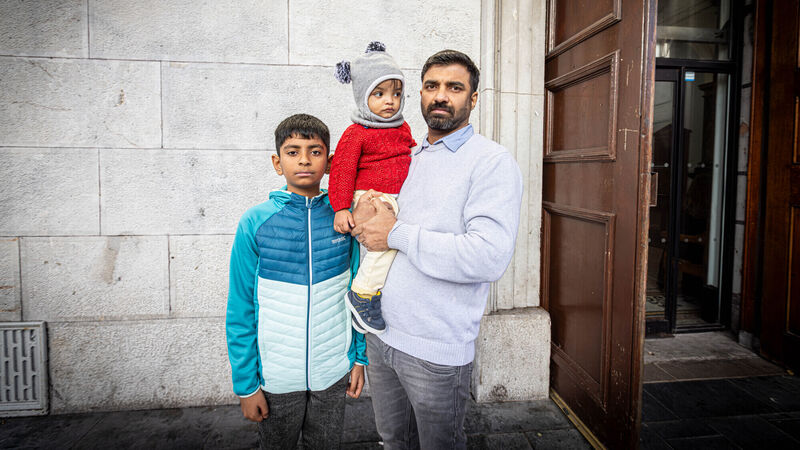
(Left to right) Stephy Ouseph’s 10-year-old son Johann, her husband Baiju, and Juwann, at the pre-inquest hearing into her death in Cork City. Mrs Ouseph's post-mortem examination failed to find a cause of death. Picture: Neil Michael
The family of a woman who died giving birth in Cork last year have "grave reservations about the adequacy" of the post-mortem examination into her death, a coroner's court has heard.
Baiju Ouseph has asked for a wider scope than normal to be given to the inquest to examine his wife Stephy’s death at Cork University Maternity Hospital (CUMH) in June 2024.
Mrs Ouseph died on June 21, 2024, after a caesarean birth in CUMH. The 35-year-old, who lived in Abbeyfeale, Co Limerick, had previously been a patient in another hospital but had not been happy with a number of issues, and her care was transferred to Cork.
For the family, barrister Doireann O'Mahony, acting on instructions from Murphy Healy Solicitors, made a preliminary submission on his behalf for a so-called Article 2 inquest at a hearing in Cork City.
Article 2 of the European Convention on Human Rights (ECHR) established everyone’s fundamental right to life, obligating states to — among other things — prevent avoidable deaths and ensure effective investigations into them when they happen. Mrs Ouseph was in the care of the State when she died.
This would be the first inquest of its kind in the history of the Irish State if the application, which would ensure the scope of the inquest into her death is as wide as possible, is successful.
Addressing Cork city coroner Philip Comyn, Ms O’Mahony said: “We say this inquest engages Article 2 of the European Convention on Human Rights. A maternal death is a Category 1 incident, attracting the highest level of scrutiny. This death arose in the context of State obstetric care.”
She said it is also important because Mrs Ouseph's post-mortem examination failed to find a cause of death.
“The family have grave reservations about the adequacy of the post-mortem investigation,” she said, addressing Mr Comyn at the hearing, which was attended by Stephy's husband, and sons Johann, 10, and Juwann, 18 months.
The court heard the coroner had asked an independent Scottish-based pathologist to examine the post-mortem examination, and that she had found the cause of death to be "unascertained".
Ms O’Mahony said: “The family’s concerns are grounded in the views of your own independent expert, Dr Esther Youd, who identified investigative limitations and left open multiple clinically possible causes of death.

“We submit the inquest must be sufficiently thorough, independent and effective to address unresolved issues. Proceeding on a more narrow footing would risk falling short of that standard, and it would not provide the family with a meaningful answer."
Of her submission for an Article 2 inquest, Mr Comyn said: “It’s an interesting submission, and not one I have had before, but that does not mean it is not well-founded.”
Ms O’Mahoney also asked the coroner to request CUMH to provide an update on the external review they announced of Stephy's death more than 18 months ago.
The hearing was adjourned until the end of January.