'Like a homecoming': UL presents novelist Paul Lynch with Honorary Doctorate
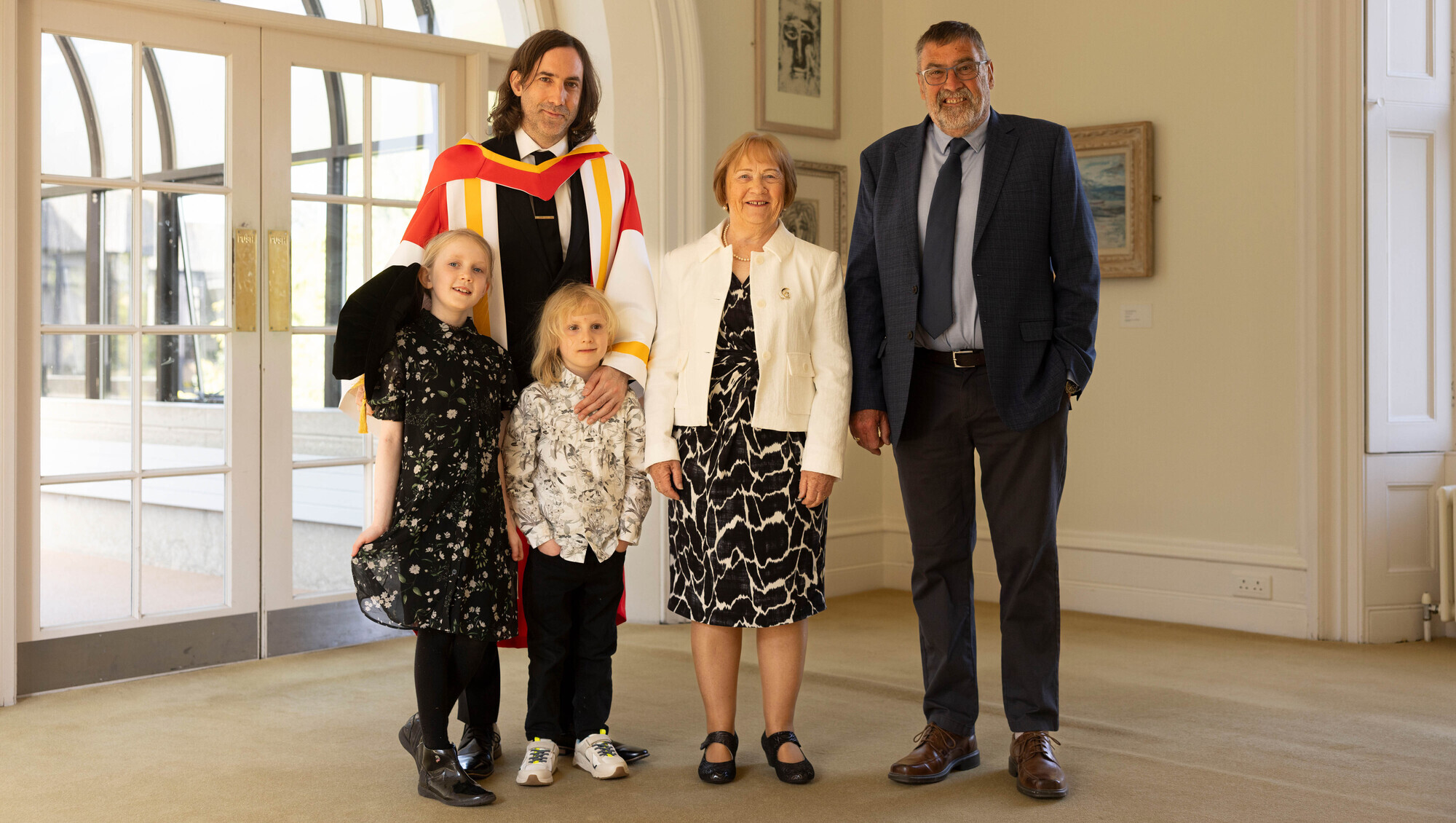
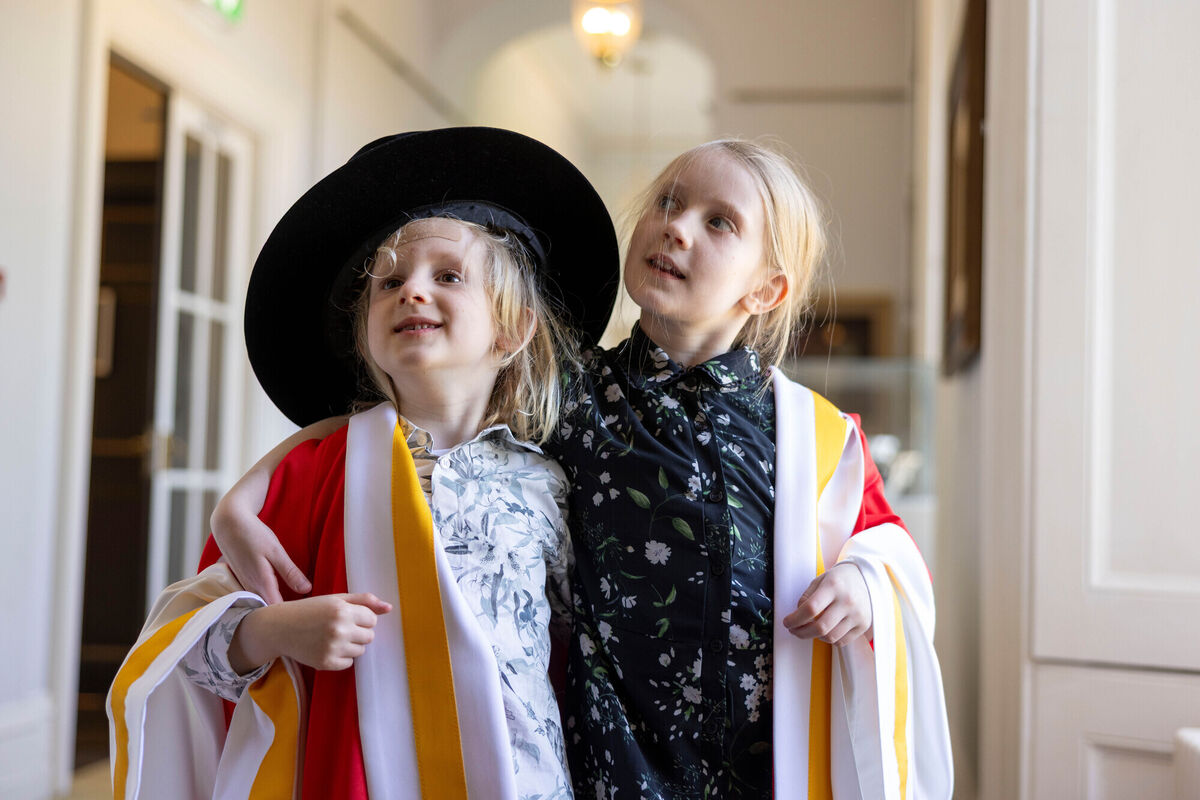
Pictured from left: Novelist Paul Lynch (second from left) with his children Amelie and Elliot and parents Mary and Pat at the University of Limerick on Friday. Paul said: 'It’s a wonderful honour, I immediately thought of my beloved grandparents on either side, it’s the kind of thing that would've given them a bit of a thrill.' Picture: Sean Curtin
Booker-prize winner Paul Lynch was presented with an Honorary Doctorate at the University of Limerick on Friday, where he was hailed as “one of the great novelists of his generation”.
The Limerick native was presented with an Honorary Doctorate of Letters by Acting UL President Shane Kilcommins.
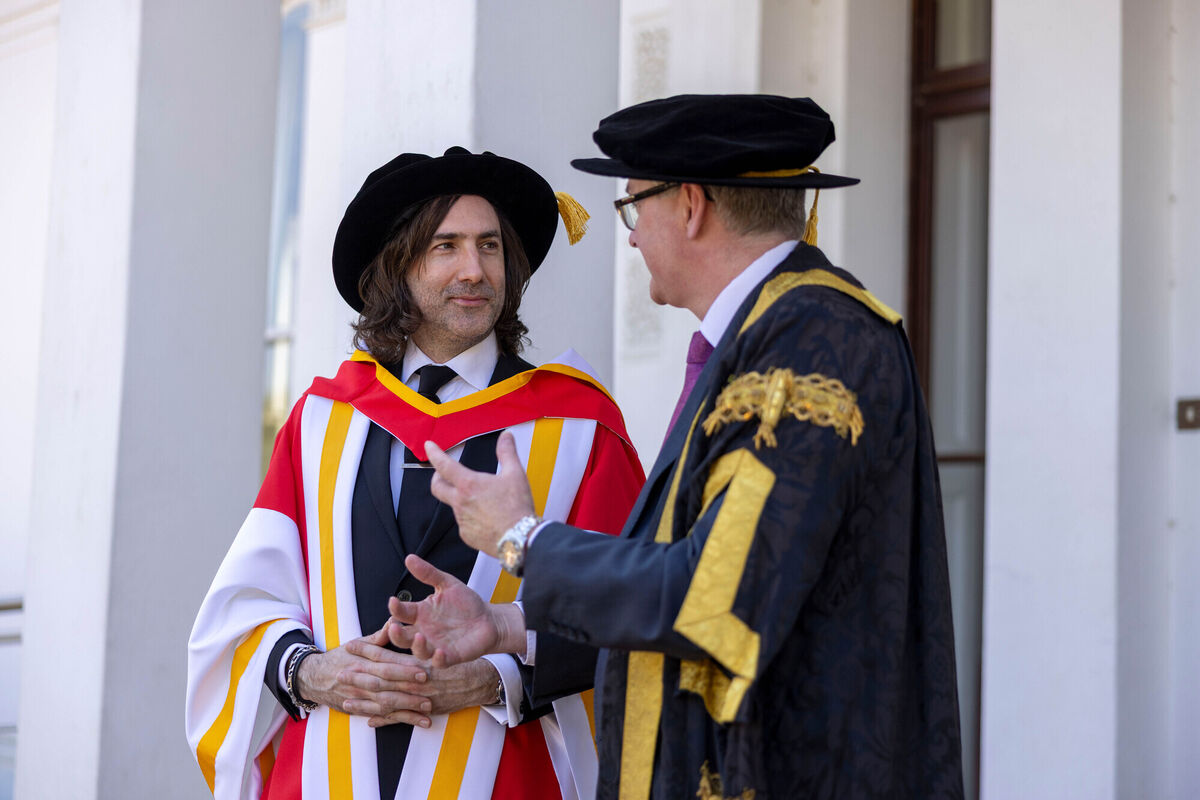
The author won the prestigious Booker Prize in 2023 for his novel , set in a dystopian Ireland which examined what the country would be like under a totalitarian reign.
Paul Lynch told the that he “did not see it coming”, but that his grandparents would be proud.
“It’s a wonderful honour, I immediately thought of my beloved grandparents on either side, it’s the kind of thing that would've given them a bit of a thrill. It's obviously a thrill for my parents too here in Limerick.”
The author was born in Caherdavin and even though he has not lived in Limerick since he was 11 months old, he knows the city like the back of his hands.
He said
"I was growing up in Donegal, but actually the real me was living in Limerick all along. I used to yearn to get to what seemed at the time was the bright city lights. It always seemed to be a big city, I always have that impression in my head still.
"Of course, I'm grown up now, it's not quite like that, but it's a place where all my relatives live. Limerick is home,” he said smiling.
Paul started writing in 2018 when it seemed like the world was entering a rapidly changing political period.
“It was obvious that there was an increase in right-wing sentiment, in nationalism. We had seen Donald Trump and we'd seen Brexit, we’d also seen this extraordinary indifference to the Syrian refugee crisis. It was obvious that the mood was shifting,” he said
His book followed the logic of an unravelling of a democratic society, he said.
“Where does that lead to? It incorporates multiple political realities from around the world, but it's unique to itself. I don't consider it a political novel, I consider it a book about what human beings are, what we do to ourselves, what we're always going to do, what we've always done.”
According to the novelist, fiction can create the full complexity of a human being for the reader. And in today’s world, we could use a little more empathy.
“When we watch the news, when we see people in situations of great distress, people having to take the boats across the Mediterranean, in convoys trying to find a place of greater safety, we often fail to truly understand the complexity of those acts. We often judge people for leaving their homes.
“We are fully embedded in our lives, all of us. We have family, we have jobs, we have many commitments, we have community. There's so many things that make a modern person. To leave all of that behind is the hardest thing in the world to do.”
He said he is looking forward to writing more fiction – and treats every book like a gift.
“I'm tentatively writing something at the moment now, and I feel like as though I've just begun. So even winning the Booker Prize doesn't fix the fundamental act of writing. Every time you sit down to write a new project, you are a beginner again. I can't think of a better way to live than to keep writing.”
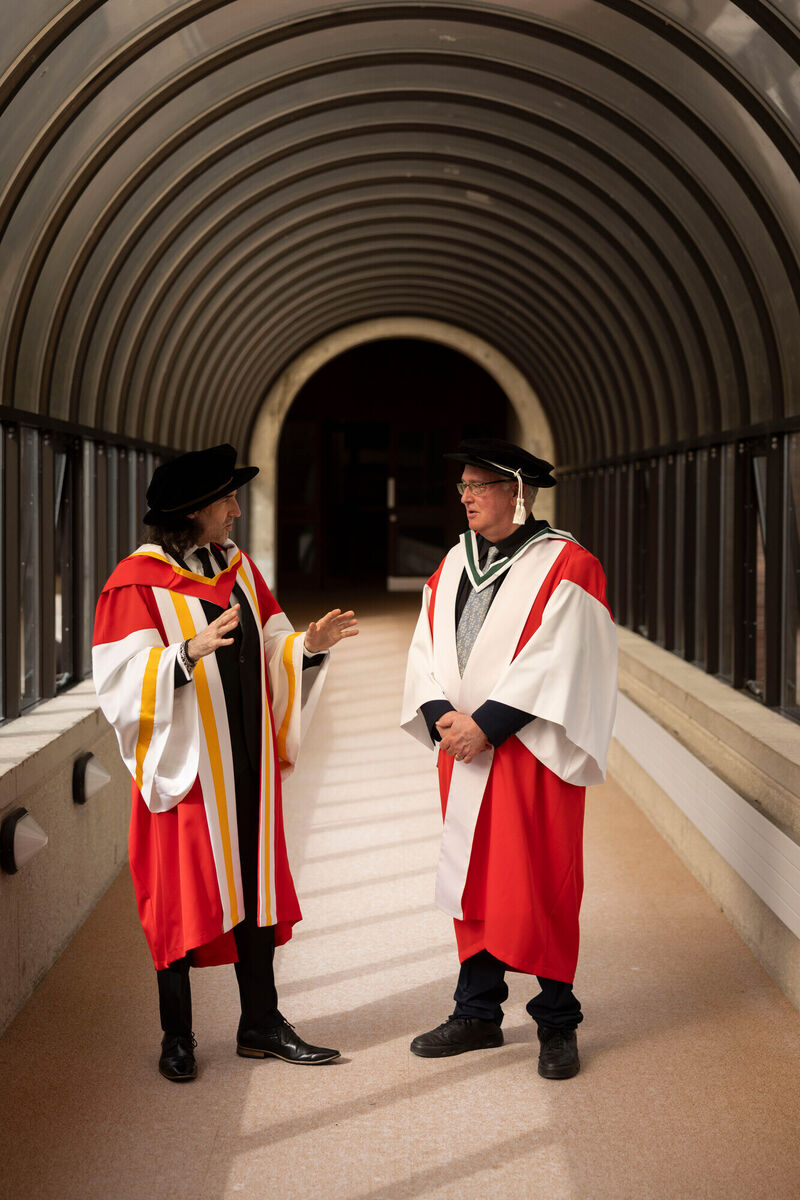
Professor of Creative Writing, Joseph O’Connor, who read the citation at the ceremony, said: “From a promising beginning, Paul Lynch has evolved into one of the great novelists of his generation.
“Paul Lynch is a young artist to have already achieved so much – and so much of solid worth - that we may speak, without the slightest risk of hyperbole, of a legacy that will last and will influence many younger and newer writers and become part of the consciousness of readers not yet born.
"We are honoured to confer on him this degree as a token of the profoundest respect in which he and his work are held.”

CONNECT WITH US TODAY



Be the first to know the latest news and updates