'These pets are family members': Cork's new 'Supervet' surgery helping animals live their best lives
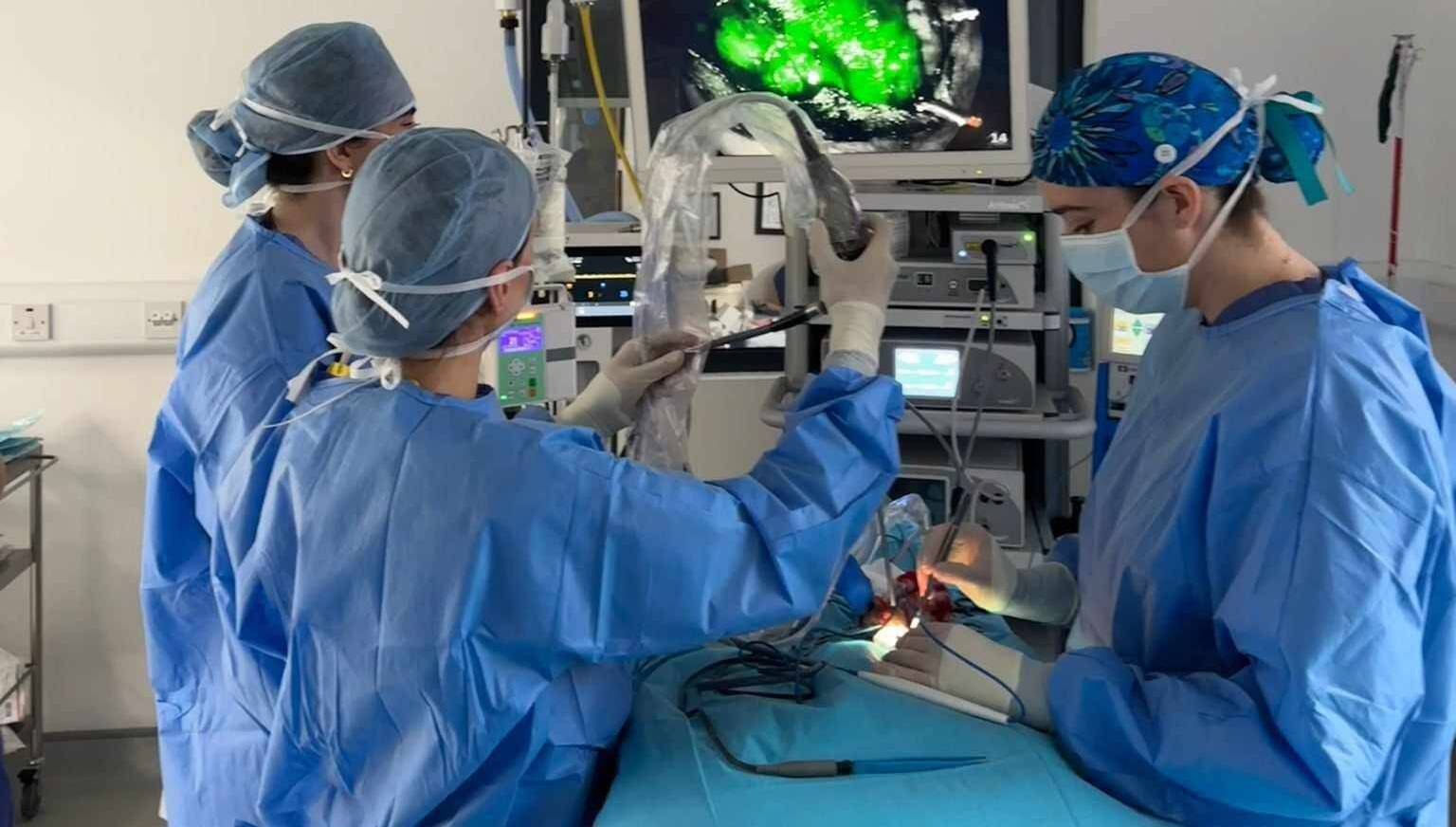
Veterinary surgeons, from left, Anastasia Rapti, Laura Cuddy and Bronach McClean perform cancer surgery on a patient at the recently opened Veterinary Specialists Cork in Little Island.
With MRI scans available to lions, tigers, and domestic house cats, Veterinary Specialists Cork is not your typical hospital.
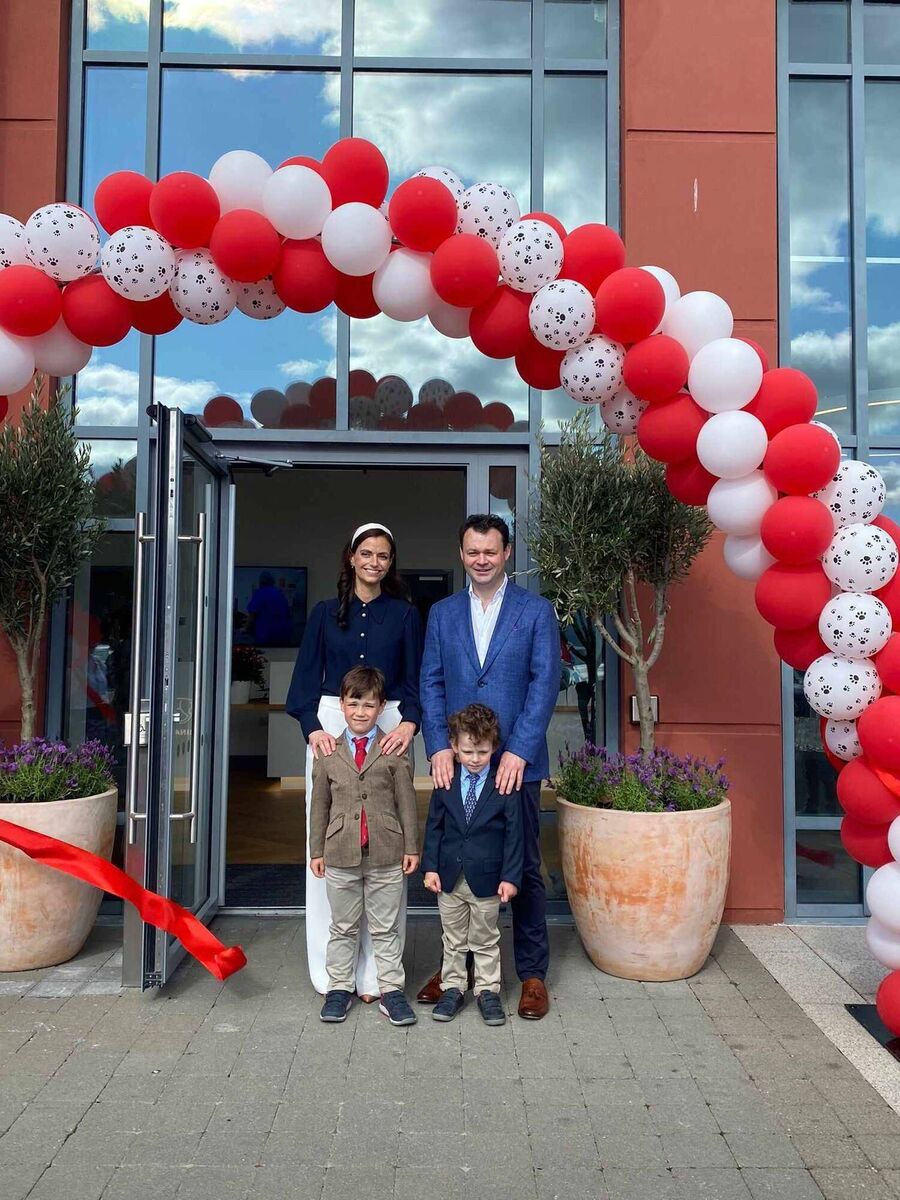
Based in Eastgate, Little Island, the clinic is just the second of its kind in Ireland, made possible by pioneering partners Laura Cuddy and Turlough McNally.
After years of honing their skills in the US, the duo are now using rare veterinary technology, including MRI and CT scans for exotic animals and cancer-detecting equipment to carry out non-invasive examinations for abnormalities and diseases.
During their five-year training period in the US to become specialists, the couple performed high-stake operations, including a monkey’s Caesarean section, and fracture repairs on emus.
Their new venture in Little Island comes five years after they opened their first animal hospital in Meath, which started with just two veterinary nurses but now has 60 staff.
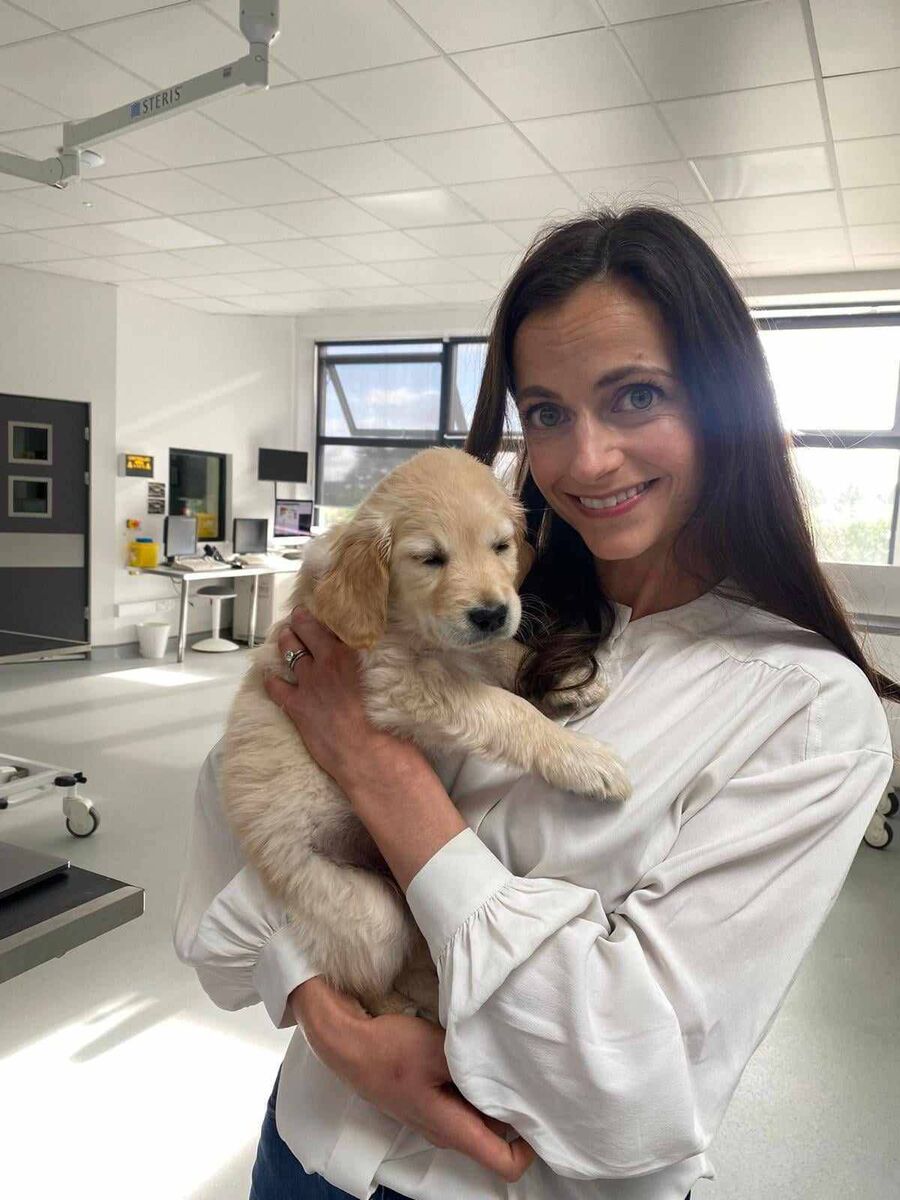
Laura, who hails from Cork, said while their services cater for cats and dogs, their CT and MRI technology will help identify issues in exotic animals.
“There are only two scanners in private practices across Ireland. The only facility outside of these to offer the service is University College Dublin.
"The hope is that animals can be brought up from Fota. These machines are static and also massive, which means the 'patients' have to come to us. There are limitations to what you can do. For example, the machine could be used on a tiger but not a rhino.
"Fota has an excellent vet who would decide if they need help with imaging, in which case we can facilitate that.
"These technologies would not have been open to them before so that’s something they can avail of.”
She spoke of how treatments like this benefit their own research and learning.
“A lot of the time we’ll help with the costs of these imaging, partially out of interest, because we love to see what is going on inside.
"Exotic animals have very specific needs. They are not like you or me. Generally, there are specific people who look after them who we are happy to support.”
Laura said avoiding delays for cats and dogs undergoing surgery at their facility is paramount.
“It’s essentially private healthcare for pets so we try not to have waiting lists. For example, if a patient blows out a cruciate ligament and needs knee surgery, it’s very likely they will be seen and have an operation in a week with us. That beats most of the human systems in Ireland."
She reflected on their decision to open a facility in Cork.
“We happened across some really great people and decided 18 months ago to open in Cork.
"We’ve been working on making this happen for the last year. It was to fill and provide services that a lot of vets might not be able to offer.
"They may need a hip replacement, or spinal surgery, and we offer that level of care. We also offer internal medicines such as colonoscopies to investigate the more difficult cases. Clients in Ireland are embracing these advancements because they want more for their pets.”
Laura acknowledged the role technology is playing in improving outcomes for pets with cancer.
“We have a specific machine that looks for cancer cells. It shows them up in bright green on the screen, which helps us improve cancer outcomes.
"This technology is not even available in human hospitals. We are quite keen on embracing technology to improve the outcomes of any patient who comes to us.
The expert outlined how their MRI machines have saved many pets from a life of paralysis.
"Paralysis is something that is very common in dogs. Dachshunds and French bulldogs are prone to disc problems in the back. We can see these guys in an emergency because they have slipped a disc in their back and this has caused them to be paralysed.
"The spinal surgeries are very rewarding for us because it gives them a 90% chance of walking again. You are taking in very frightened dogs. Its owners are also frightened. Then you see them for their rechecks after six weeks as if nothing happened. That’s very rewarding.
“We deal with animals that have been run over by a vehicle and are suffering what can only be described as a polytrauma. They have effectively been crushed, which means they need to be in hospital for weeks on end.
"As their pain goes away, we begin to see their personalities coming out. They start to warm to people and make friends, in contrast to the beginning, when they are scared and dealing with significant trauma in a new place.
"We always have to stress the importance of aftercare to owners. If we have a dog coming in with a broken bone they are minding themselves but when the broken bone is fixed they feel fabulous and start overdoing it.
"That is a very risky period so part of the aftercare can involve some medication to take the edge off. What happens at home is half the battle so this period is crucial.”
People visiting their pets in hospital often make for touching scenes.
"Lots of people have overnight bags with specific toys for their pets or details of dietary requirements.
"If they are in for a long period their owner will come and visit them every day and spend time with them. We facilitate that because it’s good for the patients as well. They feel like their family is supporting them.
"They will often get pictures from us along with updates about the client.
"We want pets to feel as fear free as possible during the time they are with us. What’s amazing is a lot of them understand that we are trying to help them.”
The team tries their best to limit the number of interventions for animals in their care.
"They can be done in the case of a traumatic amputation but they are all judged on an individual basis. For example, if a patient loses part of the lower part of the limb they can have a little prosthetic foot. It’s not something that’s performed very commonly as there can be some complications.
“One of our surgeons, Susan, trained with Noel Fitzpatrick from the on Channel 4 television. She has great experiences with these type of cases but not every dog is a candidate for such technologies even though they are all available.
"We are always looking at quality of life and trying to ensure that this is the right thing for that specific patient. The idea is to minimise the number of interventions and complications the animal has.
"With a person, a medical team might do surgery after surgery. That’s informed because the human can make their own decisions. With the pet, it’s about deciding what the right thing for them is instead of putting them through multiple surgeries.
She said even the most experienced veterinary surgeons experience heartbreak.
“It’s not a job that is glamorous. Sometimes there is a lot of discussion about resilience.
You are not only dealing with the pain of losing a patient. You are seeing the owner in pain as well.
"We recently had a patient who was high risk but at the same time, we weren’t expecting them to pass away.
"I did major surgery on him and he was doing really well until he had a cardiac arrest. The team worked on him for almost an hour to try and bring him back.
"He was his owner’s life. Even though he was high-risk it is still very sad to lose a patient like that.
"It takes its toll on the team. We are not God and we can’t save everyone. Sometimes these things happen and it’s hard for the team to pick themselves up.
"However, there is always someone waiting or another patient who needs to be seen after you’ve taken a break to gather yourself or had a cup of coffee. That can be quite challenging.”
CONNECT WITH US TODAY



Be the first to know the latest news and updates