Limerick bat rehabber catches the eye of world-renowned expert
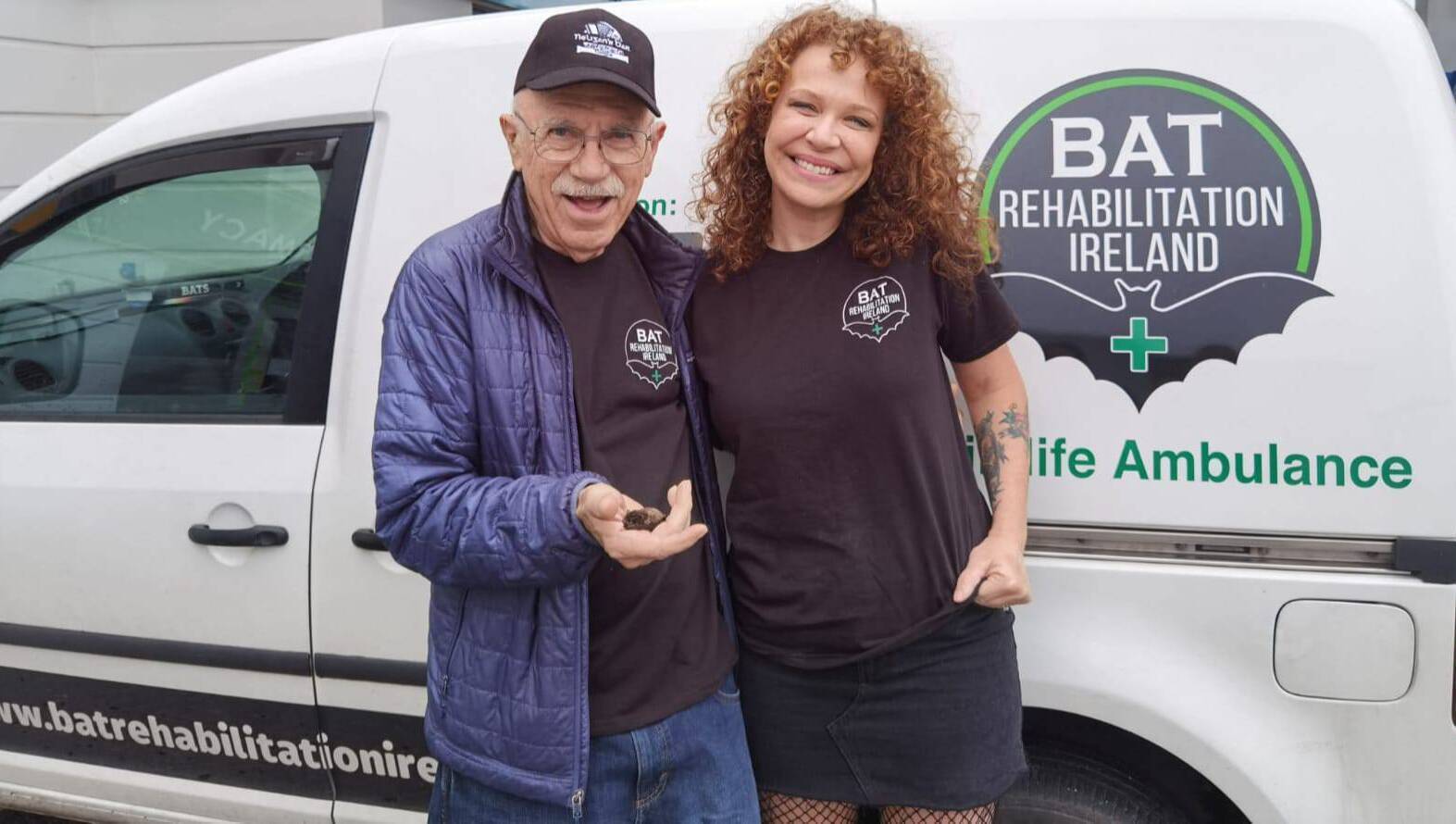
World renowned bat expert Merlin Tuttle with Susan Kerwin of Bat Rehabilitation Ireland.
The founder of Ireland’s first dedicated bat hospital has said she was “blown away” by a visit from a world-renowned bat expert.
Bat Rehabilitation Ireland founder Susan Kerwin in Bruree in Limerick was contacted by Merlin Tuttle’s team ahead of his trip to Ireland in July informing her that he would like to meet after seeing her work online.
Described by National Geographic as “the world's most famous bat biologist”, Merlin Tuttle has dedicated his life to studying and conserving bats for more than 60 years.
“You could not be a bat lover and not admire the work that Merlin Tuttle has done. It was just amazing to know that he was coming to Ireland and wanted to meet me,” she said.
Ms Kerwin who has cared for bats for almost 20 years said she has followed the 82-year-old’s career and work in the same amount of time.
“The fact that I’m here in a small village in Ireland and to know that there are people like Merlin Tuttle admiring your work, it inspires you to keep going and to want to do more,” she said.
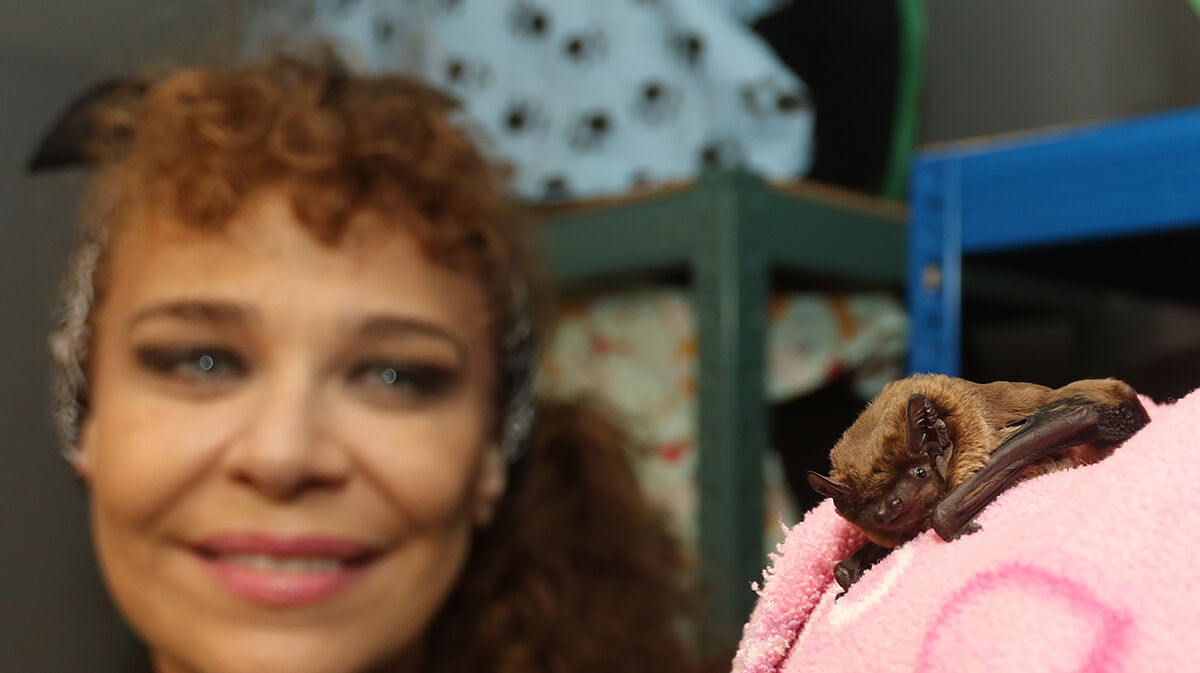
The meeting allowed for Ms Kerwin to bring bats that were in her care at the time while the two discussed their work.
It also allowed for the two to draft plans for Ms Kerwin to visit Austin in Texas next summer where she will see Mr Tuttle’s work first hand while also visiting Bracken Cave, the largest bat colony in the world.
“Bracken Cave has 15 million bats, and then Congress Avenue Bridge has 1.5 million free-tail bats every year,” she said before adding: “It’s going to be phenomenal to see 15 million bats emerging from a cave.” Mr Tuttle campaigned for these bats after a string of bad publicity in the 1980s spread myths that they were “rabid pests” which would attack locals, she said.
“He started his journey from there, raising awareness and protecting them,” she said.
Ms Kerwin who also works to raise awareness at home in Ireland said since receiving charity status, the support the hospital receives from the public and online followers in Ireland and from across the globe has been “incredible”.
The dedicated facility which opened in 2019 was self-funded until recently which was becoming “impossible” to maintain.
She has now been able to raise funds for a badly needed bat ambulance which she described as a “lifesaver”.
The ambulance has since racked up 16,700km in just 10 weeks due to the constant influx of calls.
“And that’s just from my side of the driving, we have volunteers across Ireland that help so that I don’t have to drive across the country,” she said.
Throughout her work, she has seen a gradual change in attitudes towards the species which play a vital role in Ireland's ecosystems.
She uses social media to inform followers from across the globe of the species' importance while over the past year, Bat Rehabilitation Ireland has partnered with University College Dublin’s Bat Lab to conduct research on bat genetics while also partnering with Dublin Zoo on conservation efforts.
“It’s really important to me that we’re constantly helping the progression of understanding the species and once we understand them better, we can protect them better,” she said.
The hospital has passed the 200 mark in terms of bats cared for this year so far and is expecting the next wave of patients in the coming months with younger bats beginning to struggle as they try to make it on their own.
Coming into October and November, the charity regularly receives calls about larger roosts where up to 40 bats have been discovered on some occasions.
“I would presume that this year will be no different to any other and we’ll be looking at between 350 to 400 bats that will have come in over the year,” she said.

CONNECT WITH US TODAY



Be the first to know the latest news and updates