The UCC graduate helping Ukraine to investigate war crimes
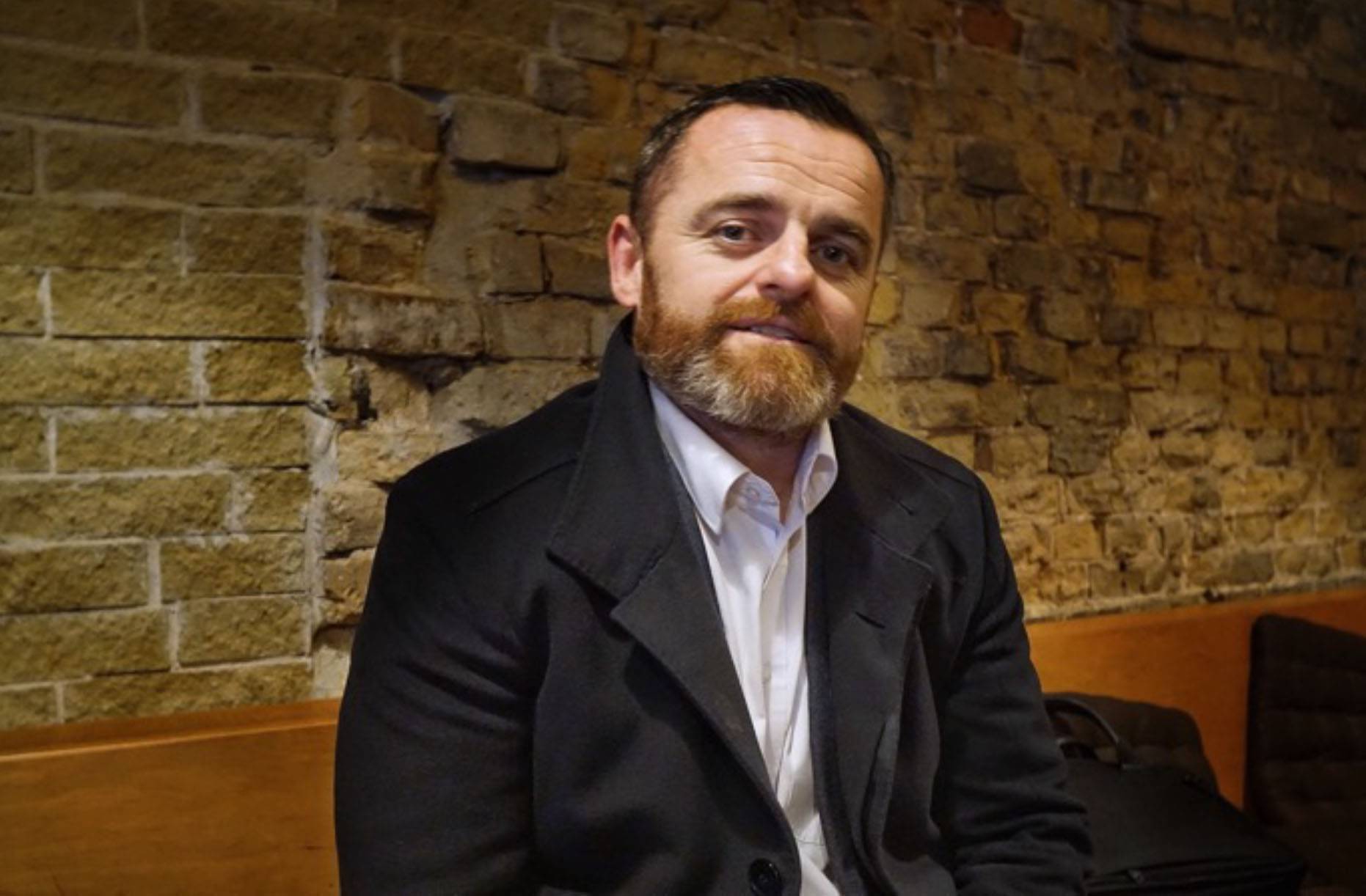
Aonghus Kelly: "No country in the world could deal with the level of crimes that have happened." Photo: Hannah McCarthy
The pavements in Kyiv’s Podil district are icy, and the power is gone in the cafe where human rights lawyer Aonghus Kelly has agreed to speak with the
Nearby are the offices of the EU Advisory Mission to Ukraine, known as EUAM, where Kelly (42) has been working since September. The mission’s premises in central Kyiv were damaged in a missile attack two months ago, prompting all staff to relocate to the EUAM offices in Podil.

For the past three months, Kelly has been assisting the Ukrainian authorities with improving their capacity to investigate and prosecute crimes allegedly committed by Russian soldiers.
From Bucha to Kherson, reports of executions, torture, rape, and indiscriminate shelling of civilian areas have mounted. To date, more than 50,000 crimes have been lodged with the Office of the State Prosecutor in Ukraine.Â
According to Mr Kelly: "No country in the world could deal with the level of crimes that have happened."
Since graduating from University College Cork, Kelly has worked around the world in the field of human rights and war crimes. While based in the UK, Kelly represented a group of Iraqis who had been tortured by the British Army during the Iraq War.Â
This was followed by stints investigating war crimes and organised crime in the Balkans and then Cambodia, where he worked as a defence lawyer at the Khmer Rouge Court.
In 2019, Kelly returned to Ireland to take up the role of executive director of Irish Rule of Law International, a charitable organisation established by the Law Society of Ireland to promote the rule of law in international development.
Earlier this year, EU member states were asked to send personnel to EUAM. In total, six Irish people with legal and investigative expertise have been seconded to EUAM by the Department of Foreign Affairs including Kelly and former Garda Maureen O’Sullivan. A Limerick native, O’Sullivan is currently the chief of staff for EUAM.
EUAM has been operating in the country at the request of Kyiv since the pro-EU Maidan revolution almost 10 years ago. After international staff withdrew from the Ukrainian capital in the initial phase of the war, the mission re-opened in Kyiv in May with a renewed mandate to help the Ukrainian authorities to investigate war crimes, and deliver emergency support to security services in the country.
Kelly has been helping to train Ukrainian lawyers around the country in the investigation and prosecution of war crimes.
“They’re very capable, very able and very engaged,” he says.
The Ukrainian courts have already begun to prosecute cases involving Russian soldiers. In May, a 21-year-old Russian soldier was sentenced to life for killing a 62-year-old civilian in Chupakhivka. The soldier’s sentence was subsequently reduced to 15 years by an appeal court in July.
Kelly expects most cases to be prosecuted domestically in Ukrainian courts, but some high-level cases may be prosecuted in international courts.
Neither Ukraine nor Russia are signatories to the Rome Statute, which established the International Criminal Court (ICC) in 2002.Â
This means that the international court in the Hague does not automatically have jurisdiction over international crimes committed in Ukraine. Rather since 2014, when Crimea was annexed by Russia, Ukraine accepted the jurisdiction of the ICC to investigate and prosecute acts of genocide, war crimes and crimes against humanity, that have allegedly taken place within Ukrainian territory.
Under this jurisdiction, the ICC began an investigation in March into possible Russian crimes in Ukraine and in April, Ireland announced €3m in funding for the international court’s work.
The EU is particularly keen for Russia to be prosecuted for the crime of aggression, i.e. invading the territory of another country.
To prosecute the crime of aggression at the ICC, the invading country must be a signatory of the Rome Statue and as Russia is not, it cannot currently be prosecuted for invading Ukraine at the Hague.
"Russia must pay for its horrific crimes, including for its crime of aggression against a sovereign state,” said European Commission President Ursula von der Leyen earlier this month in Dublin.Â
She laid out plans for a special UN-backed international tribunal which would be able to prosecute Russia for crimes of aggression.
In-person prosecutions of senior figures within the Russian military and government in Ukraine or elsewhere will be a challenge for Ukrainian and international courts while the individuals remain inside Russia.
“You never know when someone will do something silly in the future and take a holiday to Europe,” says Kelly, “but you need to do the case properly now.”Â

Since refugees began arriving in Ireland after the outbreak of the war, the Ukraine Ireland Legal Alliance has been interviewing Ukrainians who may have witnessed potential war crimes and crimes against humanity, with a view to providing evidence to the Ukrainian authorities or the ICC in the Hague.
Countries accommodating Ukrainian refugees could, in theory, begin proceedings in their own courts under “universal jurisdiction” legislation.Â
This jurisdiction has its roots in the prosecution of Nazi-era atrocities and allows national courts to prosecute genocide, war crimes, and crimes against humanity that are committed outside of the country due to the gravity and nature of the crimes.
Under the Criminal Justice (United Nations Convention Against Torture) Act, 2000, Irish courts are vested with universal jurisdiction over acts of torture and grave breaches of the international law of armed conflict.Â
This jurisdiction does not however currently extend to genocide or crimes against humanity.