Clare MS sufferer forced to spend 60% of disability allowance on private care
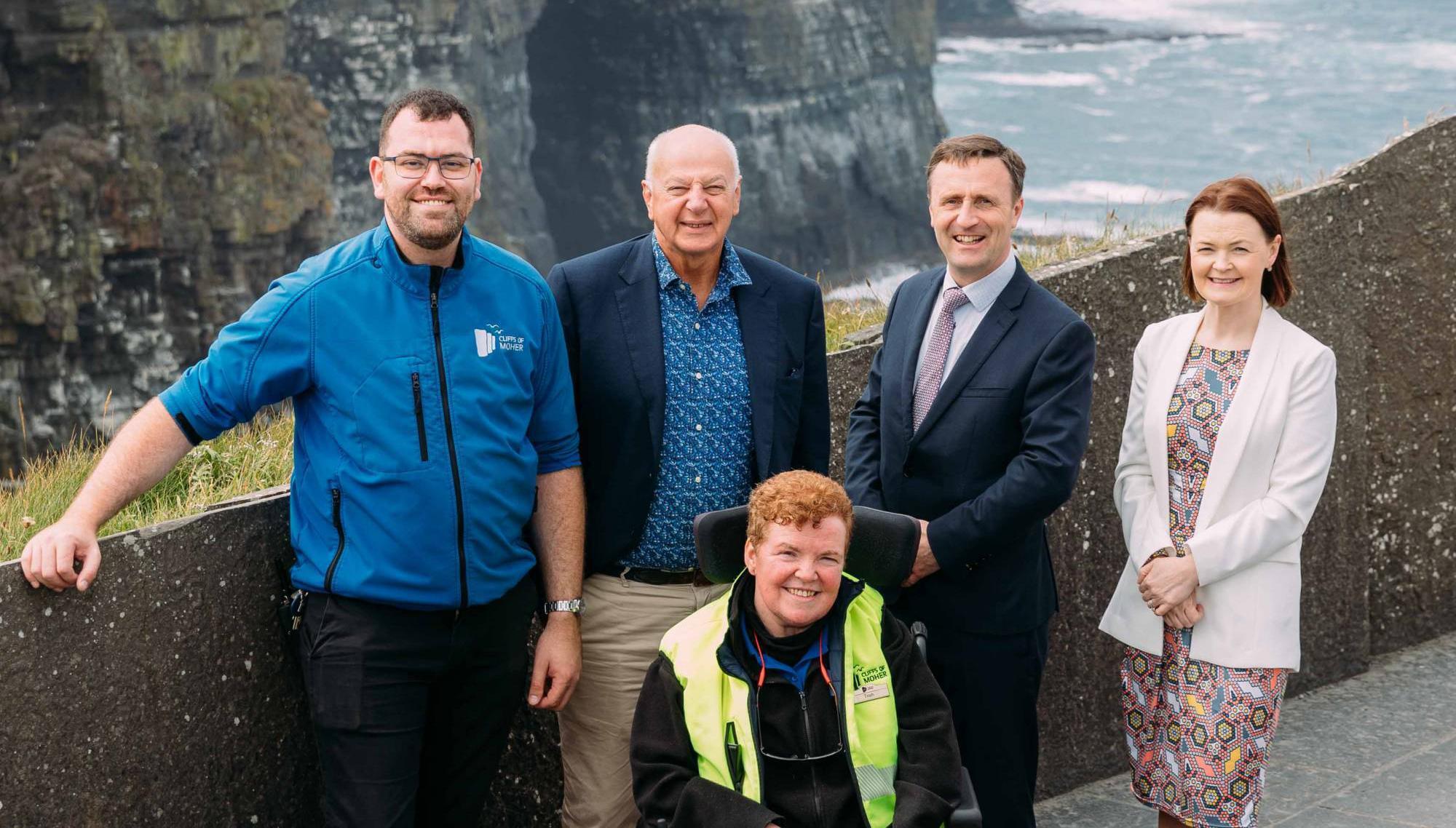
Trish McNamara with head of operations at the Cliffs of Moher, Mark O'Shaughnessy, Cliffs of Moher Centre DAC board chair Bobby Kerr, director of rural development and West Clare Municipal District Leonard Cleary, and Cliffs of Moher Experience director, Geraldine Enright. Picture: Eamon Ward
A Clare wheelchair user, who has Multiple Sclerosis (MS), has been forced to spend almost 60% of her weekly disability allowance on private care so she can go to bed at night, due to the chronic lack of public carers in the north of the county.
Trish McNamara (52) from Ennistymon, was recently informed by the HSE that it does not have anyone available to put her to bed for six out of seven nights in the near future.
While the HSE pledged to advertise to fill the required hours, it noted there is a huge lack of personal assistants and carers in the north Clare area.
This leaves the disability activist with two choices: sleep in her wheelchair, running the risk of sores on her skin, leading to ill health and hospitalisation, or pay €102 out of her weekly €175 disability allowance for a private person to assist her, which she is currently forced to do.
For five years, Trish received about 46 HSE personal assistance hours a week. However, she says this was cut to 26.25 hours due to a lack of resources about three years ago.
Trish noticed a big difference when she first starting using her motorised wheelchair.
“I didn’t exist. I was no longer seen. I found it hard. We have the change the mindset to a social model by including people with disabilities in what they need to lead a more independent life.”
As a full-time wheelchair user, she finds management and her colleagues at the Cliffs of Moher very supportive and helpful when the need arises. Management altered her workspace to assist her to carry out her duties with ease.
HSE Mid-West Community Healthcare said it could not comment on individual cases.
It explained its range of assisted living services are accessed by evaluating individuals’ needs against a prioritisation criteria, while resource allocation is determined by their needs and the level of available resources.
“There is not a limitless resource available for the provision of assisted living services, and while the resources available are substantial, they are finite," it said.
The majority of specialised disability provision (80%) is delivered through non-statutory sector service providers.
“Each year, the HSE provides 4.8 million hours of assisted living services to almost 10,000 people, and is committed to protecting the level of personal assistant (PA) and home support Services available to persons with disabilities.”
CONNECT WITH US TODAY



Be the first to know the latest news and updates