Access restricted to iconic Cork beach during peak summer season
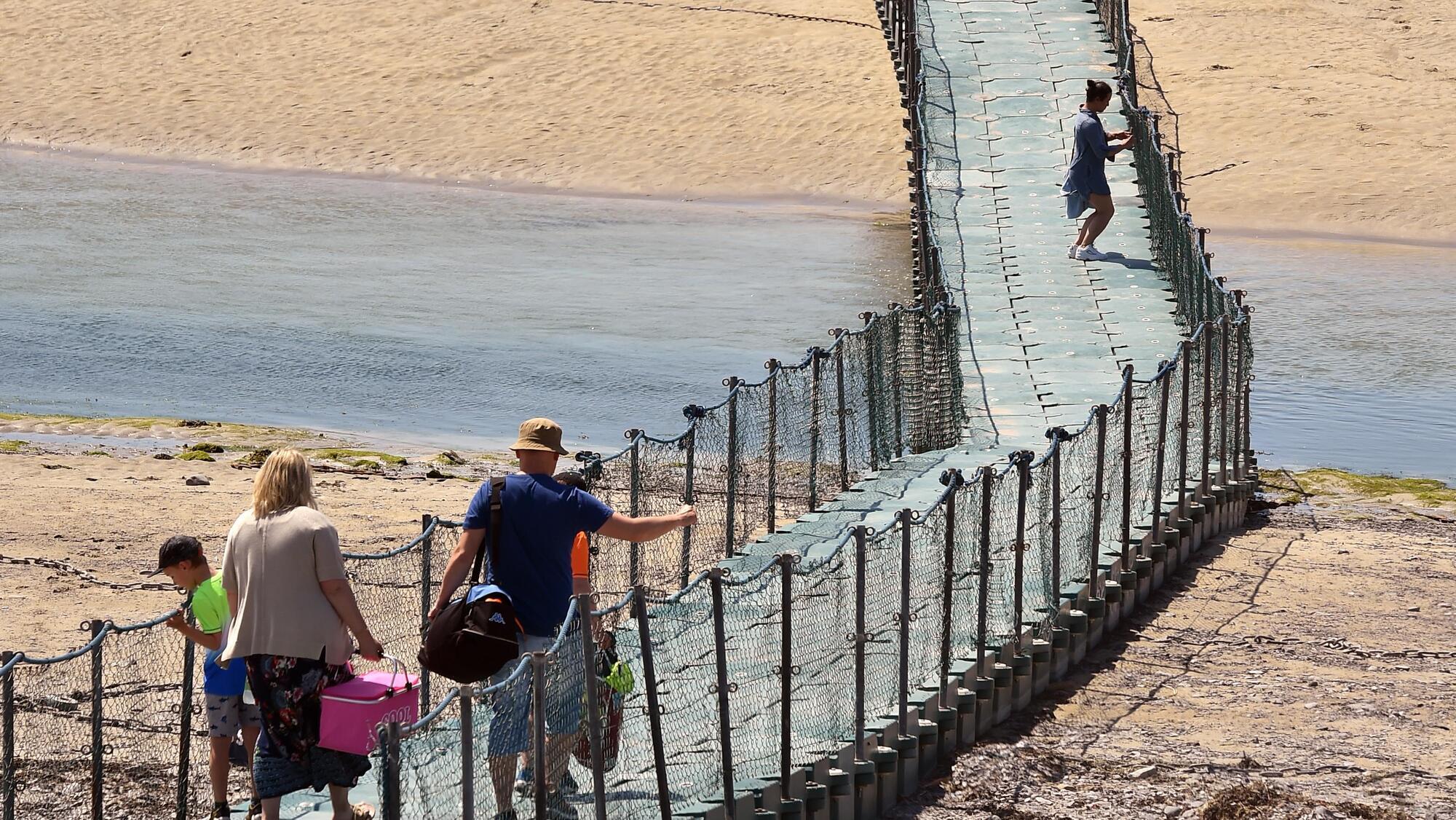
The bridge that links the beach with the public car park across the channel that feeds Lissagriffin Lake was partly overturned during the freak tidal surge while members of the public were walking across it and has been closed ever since. Picture: Dan Linehan
Access to one of the country’s most scenic beaches will be restricted in the peak summer season following severe damage caused to a floating pontoon in May.
The beach at Barleycove on West Cork’s Mizen Peninsula is often ranked among Ireland’s most scenic, but following a tidal surge on May 17, the floating pontoon used to access the beach has been closed to the public.
The bridge that links the beach with the public car park across the channel that feeds Lissagriffin Lake was partly overturned during the freak tidal surge while members of the public were walking across it and has been closed ever since.
Currently, the only safe public access to the beach is through the private car park of the Barleycove Beach Hotel at the western side of the beach, more than half an hour’s walk from the public car park.
Social Democrats councillor Ross O’Connell raised the issue at the recent meeting of Cork County Council’s West Cork Municipal District.
Mr O’Connell said: “It’s been a month now since the pontoon was damaged and taken away. Summer is here and there is no way for people to access what is regarded as one of the top beaches in Ireland, apart from using a private hotel car park.”

He added: “If we are serious about promoting tourism in the area on the Mizen Peninsula, this is something we have to urgently get back in place.”
MacDara O’Hici, senior executive officer with Cork County Council, said there had been issues with the pontoon for years.
“When it was upturned recently, there were people on it and it was close call,” he said.
He said that currently he could not give a date for the pontoon’s reinstatement as consultants were assessing the best options available.
“One assurance that we will be giving is that we won’t be putting it in until we are absolutely and positively confident that what we are putting in will be safe and we won’t have a reoccurrence of the incidents where people were on it and it was upturned,” he said.
He said finding a long-term solution would be challenging as it is adjacent to a Special Area of Conservation (SAC) as well as being a major tourist location.
“We have to deal with changeable weather conditions, tidal conditions and swell conditions.
We are exploring the options of either upgrading what’s there to make it a more permanent, safer solution that would meet all the requirements.
“We are also exploring the possibility of moving it upstream where it would be safer but we’d have to go through a planning process and have discussions with the National Parks and Wildlife Service who have the role of protecting the SAC there,” he said.

CONNECT WITH US TODAY



Be the first to know the latest news and updates