Cork couple call for legislation after baby girl's organs 'were disposed of like rubbish'

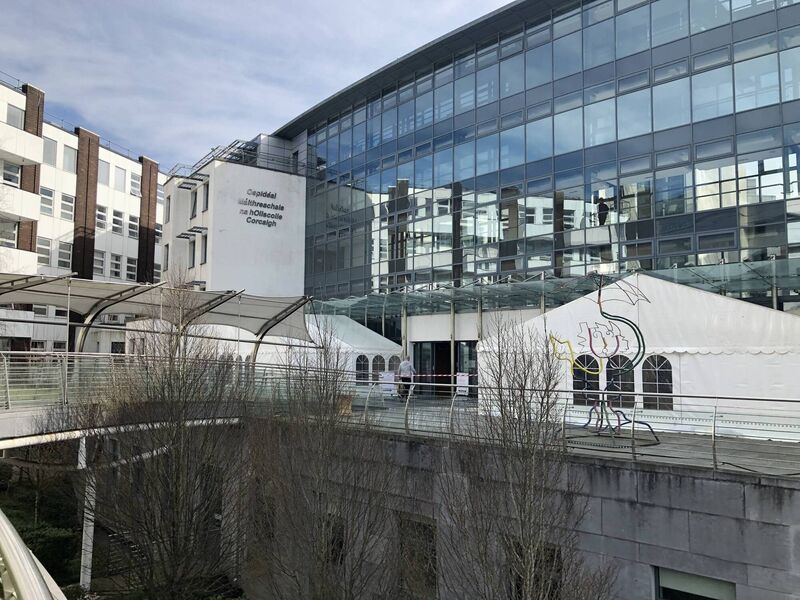
Laura and Fintan Kelleher, who live in Australia, are among 18 families whose babies’s organs were sent to Belgium from Cork University Maternity Hospital for incineration in 2020, without their permission or knowledge.
A Cork couple whose baby girl’s organs were incinerated without their knowledge wants legislation changed to prevent other families from going through the same trauma.
Laura and Fintan Kelleher, who live in Australia, are among 18 families whose babies’ organs were sent to Belgium from Cork University Maternity Hospital for incineration in 2020, without their permission or knowledge. Their stillborn baby girl, Hope, was delivered at the hospital on November 3, 2019.
Laura will join other grieving families at CUMH on June 11.
The Kellehers want legislation introduced to ensure organ retention is done appropriately, in a streamlined manner, across the country’s hospitals.
Laura said: “We want answers, and we want to ensure that nobody has to endure unnecessary suffering again, like we have endured inhumanely.”
Laura travelled home from Australia in August 2019 to her family. She spent several months in CUMH hospital ahead of Hope’s birth, after complications arose.
After the baby's birth, Laura and Fintan filled out forms consenting to a postmortem and further tests on Hope’s organs after which a burial of those organs was to take place in the hospital graveyard, said Fintan. Two months later, the couple returned to Perth.
According to internal correspondence, mortuary staff at CUH became aware early in 2020 that its burial plot in Curraghkippane’s St Mary’s Cemetery was full. The organs were sent for incineration in late March and early April 2020.
The Kellehers say they received a call from a staff member from the hospital the day an RTÉ documentary was due to be aired, which highlighted the issue.
They recall a brief mention of featuring families and that space had to be freed up in the morgue, due to Covid, through incineration.
However, the couple is adamant they were not told there was any connection to their family, or that “our little Hope’s organs had been incinerated and inhumanly disposed of like rubbish”.
Fintan said: “Laura googled later that day, and with a massive shock we read a report on how 18 families’ baby organs had been inhumanely and without consent incinerated in Belgium as medical waste. This was the first we ever heard of what truly had happened.”
They only became aware that Hope was one of the babies when they viewed the documentary the next day, and spotted the date of Hope’s postmortem on a document shown on the programme.
The couple then contacted the hospital to ask if Hope’s organs had been incinerated.
“We were deeply traumatised by what happened and being in a foreign country, in lockdown at the time, without the support of family and friends, made it extremely hard to receive this news through social media," said Fintan.
The couple wanted to fly home to be with their extended families in Cork but could not because Western Australia was in strict Covid lockdown. They say they sought a letter on September 30 from CUMH to help them seek an exemption to fly home but did not receive any until October 20 — the day after a second documentary on the issue.
A spokesman for the South/Southwest Hospital Group said: “The independent review is still ongoing. It is not possible to discuss individual cases in the public domain.”
A spokeswoman for the HSE said the Human Tissue (Transplant, Post-Mortem, Anatomical Examination and Public Display) Bill “is intended to provide for the regulation of hospital post-mortems”.
“It is not possible to give a definitive timeline, but the bill is at an advanced stage and will be published as soon as possible.”


CONNECT WITH US TODAY



Be the first to know the latest news and updates