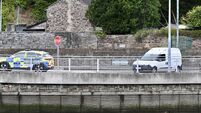
Cork GAA to review traffic management after residents complain
Stewards engaged by the GAA to monitor traffic flows and parking on local roads and estates do not have the right or power to instruct people not to park in a particular location, the Cork GAA chief executive has said.
Cork GAA has committed to a full review of traffic management issues around Páirc Uí Chaoimh before the stadium hosts club championships next month.
But a senior official said while the sporting body acknowledges certain traffic and parking challenges associated with big game days, they are part of a bigger problem that has yet to be addressed.
Cork GAA chief executive, Kevin O’Donovan, made his comments in response to renewed calls from residents living near the stadium for greater efforts to tackle widespread transport, traffic, and parking problems linked to the operation of the stadium.
The Ballintemple Area Residents Association (BARA), which is tracking the issue during every game at the venue, compiled another detailed dossier after last weekend’s Munster club hurling final between Kilmallock of Limerick and Ballygunner of Waterford, attended by an estimated 2,500 fans. The stadium has a capacity for 45,000 fans.
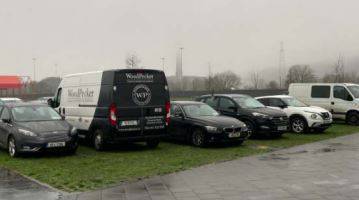
Despite the low attendance, BARA recorded dozens of examples of widespread, indiscriminate, and in some places, dangerous parking where footpaths were blocked, bus stops were obstructed, bus movements were disrupted, and green areas were damaged.
Parking was also allowed on some parts of the stadium campus in contravention of planning conditions.
The Live at the Marquee parking site — a short walk from the stadium — was half empty.
BARA sent the document, including photographic evidence, to Cork GAA and asked for more action to address the issue.
Mr O’Donovan said he was aware of the document, and that the issue is being handled by the stadium’s event manager and community liaison officer.
But he said last weekend’s game was organised jointly by the Munster Council and Cork GAA, and that the Munster Council effectively takes over the running of the stadium for the match.
He said not as much event planning would have gone into the game, which was organised at short notice, as would go into a big event.
He said stewards engaged by the GAA to monitor traffic flows and parking on local roads and estates do not have the right or power to instruct people not to park in a particular location.
He said they can ask, they can encourage, and for the most part, people listen to the stewards’ requests, but he said some people just ignore such requests, and there is little that can be done.
He said that is why Cork GAA has recently written to gardaí requesting a meeting ahead of the start of the club championship which starts the first week of February.
“That meeting will involve a full review of all operations of the stadium,” he said.
“The Live at the Marquee site is available to us [for parking] in the short-term, and we are entirely grateful to the developer for giving us the use of that site.
“It is a lifesaver, but it’s not going to be available to us long-term.”
The site is earmarked for a 1,000-unit apartment development.
Once that site becomes unavailable for parking, Mr O’Donovan said Cork GAA, and the city in general, will face massive challenges around the continued operation of the stadium.
“And until safe access is dealt with, we will continue to face those challenges,” he said.
CONNECT WITH US TODAY



Be the first to know the latest news and updates