Environmentalists horrified over spraying of herbicide along Cork riverbank
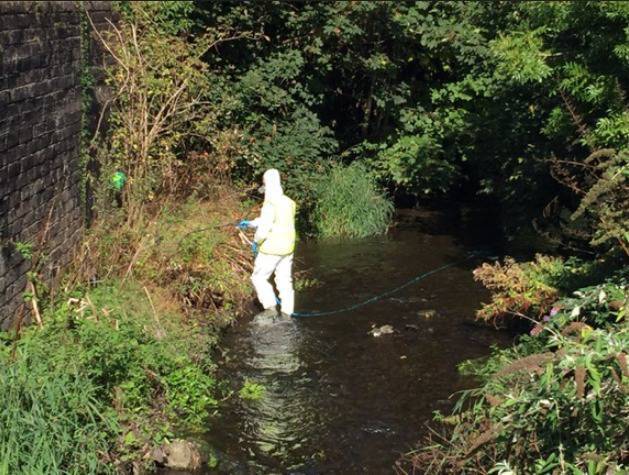
The spraying operation along a stretch of the river Bride, near Blackpool last week. Environmentalists reacted with horror to the sight of a contractor in PPE spraying so close to the watercourse. Photo: Save Our Bride Otters
The Office of Public Works (OPW) has confirmed that it contracted the spraying of herbicide along a riverbank in Cork to treat Japanese knotweed.
The spraying operation along a stretch of the river Bride, near Blackpool last week, sparked fears that the herbicide could leach into the watercourse - an important otter habitat. The OPW also confirmed that the treatment of the invasive Japanese knotweed along this stretch of river, behind the Orchard Court housing estate, is linked to the controversial proposed Blackpool flood relief scheme, which is the subject of a legal challenge.
The OPW did not however respond to questions about what chemicals were used, about the extent of the spraying operation, about whether alternative treatment options were considered, or provide details on what control measures were in place for a spraying operation so close to a watercourse. In a statement, the agency said the work was carried out under an existing contract to the OPW, by specialists in the removal of Japanese Knotweed and other non-native invasive species.
“The contract allows for either spraying or injecting, as deemed appropriate by the specialist contractor,” a spokesperson said.
“This is part of an ongoing, proactive and routine programme of Japanese Knotweed treatment which has been running for a number of years at locations around the Cork City area.
“Such advance treatment is in anticipation of potential flood relief works planned in partnership with Cork City Council for those areas, including Blackpool, and is standard practice where harmful invasive species are present in areas where public projects are planned.”
But environmentalists reacted with horror to the sight of a contractor in PPE spraying so close to the watercourse. Many herbicides are toxic to aquatic plants, invertebrates, amphibians and fish.
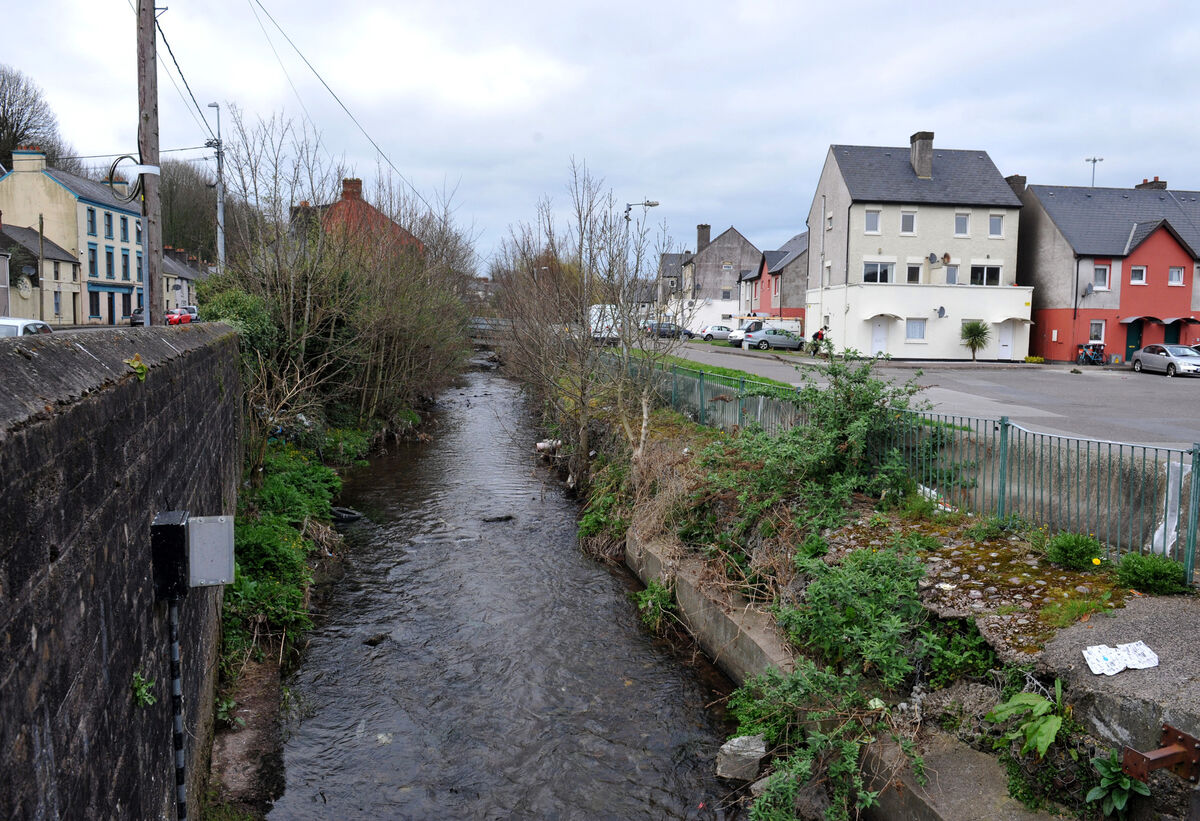
The Bride is home to at least eight of the 11 otters which were identified in the Cork Urban Otter Survey in 2011/12.
While the Bride is not a source of drinking water, the Department of Agriculture’s Pesticide Registration and Control Division does warn that a single drop of pesticide in a water body such as a typical stream - one metre wide, 30cm deep for example - can be enough to breach the legal limit for pesticides in drinking water of 0.1 micrograms/litre along 30kms of its length.
Local Green Party Cllr Oliver Moran said glyphosate use is a significant concern across the city.
“It's very clear that people want to take the least risk approach to its use, and for it to be used only when necessary. Treating knotweed is one of the few exceptions where there's a broad acceptance for its use, but even then it needs to be treated with great care, particularly around water.
"Advice from Teagasc is to choose the lowest risk strategy where water bodies are a risk. Indeed, advice for OPW workers is that it is really important that no pesticide residue or run-off goes into watercourses causing and to not spray near watercourses.
"Glyphosate can be injected into knotweed or applied directly to the leaves in sensitive circumstances. It's difficult to tell from the photograph what technique is being used, but given the concerns people have, I think it's incumbent on the OPW to explain the measures taken to ensure there was no contamination of the water through run-off or spray drift."
CONNECT WITH US TODAY



Be the first to know the latest news and updates