5am starts and skipping her own 18th birthday: how Emily Hegarty prepared for her Olympic heroics
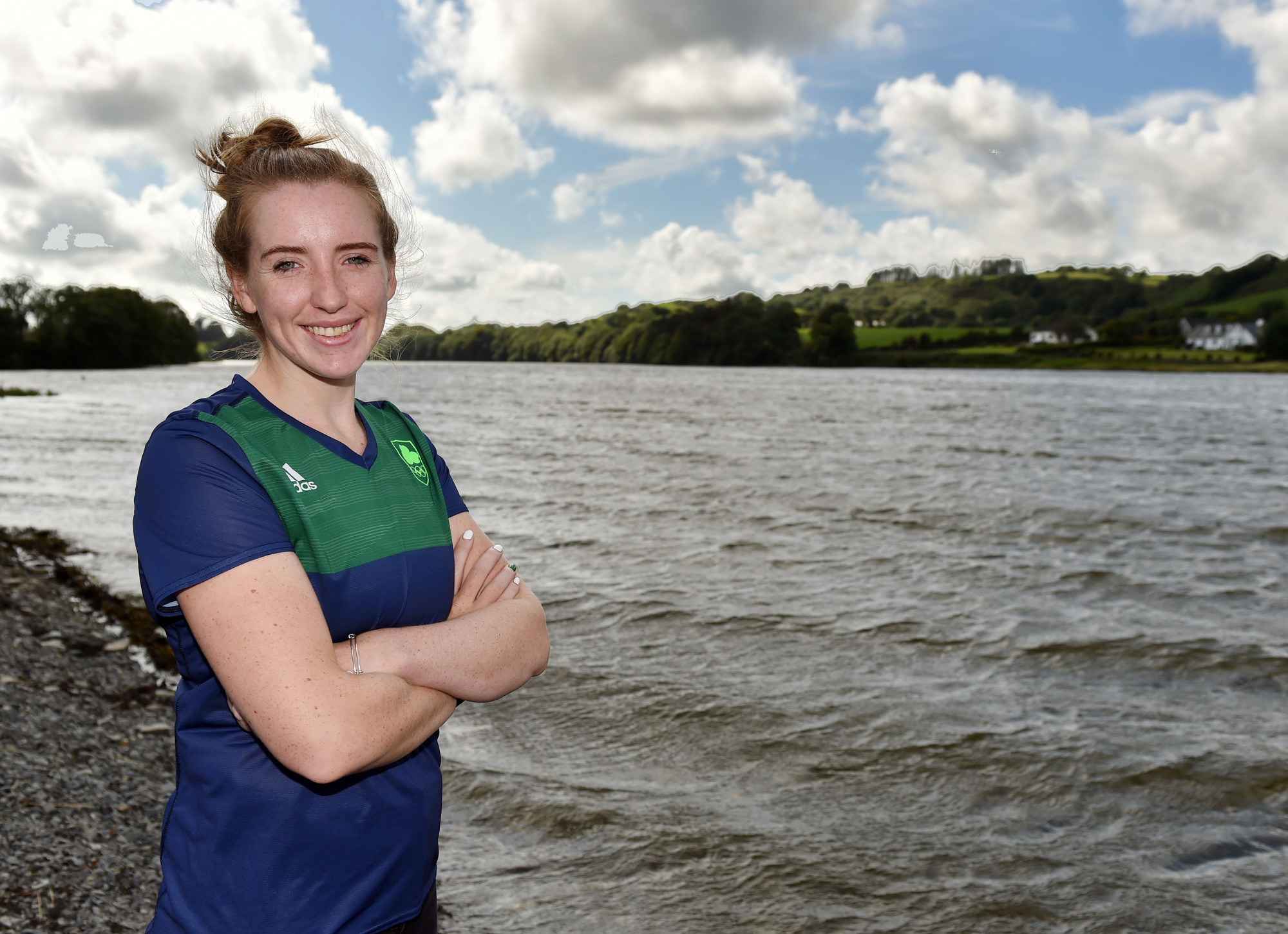
After a rocky start, Hegarty and her teammates secured a bronze, kickstarting a feelgood factor which has surrounded Team Ireland ever since
5am starts and skipping her own 18th birthday: how Emily Hegarty prepared for her Olympic heroics

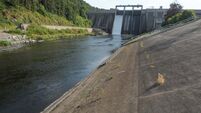
Emily Hegarty on the bank of the River Ilen in Skibbereen: With rowing, you really get out what you put in. It’s not about luck, it’s about putting in the work.' Picture: Eddie O'Hare

Upbeat dance music pumped from the stereo as Cork Olympian Emily Hegarty prepared for her history-making race in Tokyo.

Ms Hegarty and her Olympic teammates Aifric Keogh, Eimear Lambe and Fiona Murtagh had compiled the seven-hour playlist with tracks like Scissor Sisters ‘Let’s have a kiki’ "to keep things enjoyable and lighthearted" before the race.


But when they launched in Tokyo Harbour on July 28, the upbeat mood took a dip as their warmup was “rocky”. And the first half of the race was less than perfect too.

“We started the race pretty poorly,” Ms Hegarty said.

“We were not in contention for a long time. But we didn’t let that get a hold of us. We didn’t panic.

“Then, coming into the second half, Eimear just said ‘OK, we have to go’. We all just switched on.

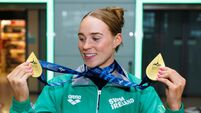
Emily Hegarty shows her bronze medal at Skibbereen Rowing Club. Picture: Eddie O'Hare

“Coming into the last 250, we just emptied ourselves to get across the line.

“It was a massive relief when we won.

“We had to be confident in ourselves and our training. You don’t give up.” 

This tenacity and resolve helped the women bring home Ireland’s first medal of the 2020 Olympic Games. It is Ireland’s 33rd Olympic medal ever.

It is also the first Olympic medal Irish women have won in rowing – this time in the heavyweight women’s coxless four.

The team’s achievement will undoubtedly inspire thousands of young girls across the country to believe they too could one day represent their country in sport.

And their performance on the day reflects that same attitude that has got Ms Hegarty to the top.

She could see the river Ilen from her home on the dairy farm she grew up on outside Skibbereen in West Cork and would wake at about 5am to train before school.

Because she “wasn’t particularly good at GAA”, she wasn’t considered sporty as a child.

And even after she found rowing, although she was good at it, she said she wasn't considered “anything particularly special” growing up.

But hard work and dedication over the years would eventually catapult her to Olympic success.

“In rowing you get out what you put in,” she said.

Emily Hegarty with her proud parents Jerry and Mary Hegarty. Picture: Eddie O'Hare

Now 23, and a Quercas sports scholar in UCC studying biological sciences, Ms Hegarty first started rowing at Skibbereen Rowing Club age 11.

“I tried other sports growing up like football but I wasn’t particularly good at them," she said.

When I was in school, if you weren’t good at GAA then you weren’t considered sporty.

“But there are so many other sports out there. You shouldn’t just be boxed off as ‘not sporty’ if you’re not good at GAA."

And having a sport you love can completely change your life for the better, she said.

“Sport balances you. If you’re not good in school it can give you another outlet and keep you on the straight and narrow.

“And sport connects you with other people. ” 

She said visible role models helped cement her own Olympic ambitions.

Although fellow Cork rower and Olympian Sanita Puspure always seemed “untouchable, an anomaly, in a completely different league” when Ms Hegarty saw her neighbours Paul and Gary O’Donovan win silver at the Rio de Janeiro Olympics in 2016, Olympic glory seemed more attainable.

But becoming an Olympian was not something she ever thought was possible before she started rowing for UCC and joined the Irish team.

A “very competitive” environment and intense input from coaches suddenly catapulted her to elite level.

“You could see that hard work really paid off," she said.

“With rowing, you really get out what you put in. It’s not about luck, it’s about putting in the work.

“It’s good to remember that if you get a bit nervous before a race.” 

Picture: 'When we were there we were in this little Tokyo bubble. I had no idea how much support there was back home for us.' Picture: Eddie O'Hare

She said Sport Ireland psychologist Kate Kirby has taught them how to stay calm under extreme pressure. 

“She reminds us to keep it simple, peel it back. Pressure only comes from yourself.

“I struggled with nerves before but now I remember to just pare it all back. You can only do your best and control the controllable.

Ms Hegarty qualified for the Olympics in May in Lucerne, Switzerland.

“The boat had been selected in February and we were training as a group from March.

“We started a four-week training camp in Italy at the beginning of June. We started heat acclimatisation there and gradually adjusted the time we woke up every day to adjust to conditions in Tokyo.

“Then we went straight from Milan to Tokyo.” 

The pandemic made this year’s games trickier to navigate than usual. 

Pre-Olympic training camps are usually common in the host country but many were cancelled this year due to Covid concerns.

But Team Ireland managed to hold a pre-training camp in Fukoroi city outside Tokyo for a short period before the games, giving athletes some chance to acclimatise to a dramatically different time zone and environment.

During the competition, athletes were ferried straight from the Olympic Village to the events.

But within the Olympic Village, athletes had the freedom to roam once they wore their masks, Ms Hegarty said.

Ms Hegarty and her team found a spot in the giant food hall where they could meet and people-watch, spotting world-famous athletes pick up their daily meals.

“It was surreal," Ms Hegarty said.

“The foodhall was massive, over two floors.

“And there were shops, salons, banks, a post office, gyms. We tried to avoid them before competing because of Covid.

“But we went for walks every evening. There were nice parks there.

“It was unreal. I really enjoyed it all. It was very different because of Covid but it was my first Olympics so I didn't know what it had been like before."

And facing her first Olympics was made less daunting by the presence of her Skibereen neighbours and teammates. Aoife Casey competed in the women’s lightweight double sculls, and Paul O’Donovan and Fintan McCarthy brought home a gold medal for the men's lightweight double sculls.

When Ms Hegarty recently arrived home to Skibbereen, people lined the streets to welcome their hero athlete home.

“When we were there we were in this little Tokyo bubble. I had no idea how much support there was back home for us. It was a big surprise when I got home and saw all the signs and posters and flags. People came and stood out on the streets to welcome us back.

“And people I hadn’t spoken to in years got in touch. My phone is still going with messages. I’ve been blown away by the support.

“I think the medals really gave people a boost which was really cool. But you’re totally unaware of that when you’re in the thick of competition."

x

More in this section

Lunchtime News

Newsletter

Keep up with stories of the day with our lunchtime news wrap and important breaking news alerts.

Cookie Policy Privacy Policy Brand Safety FAQ Help Contact Us Terms and Conditions

© Examiner Echo Group Limited