NPWS commissions survey on fires' devastating impact on Killarney National Park
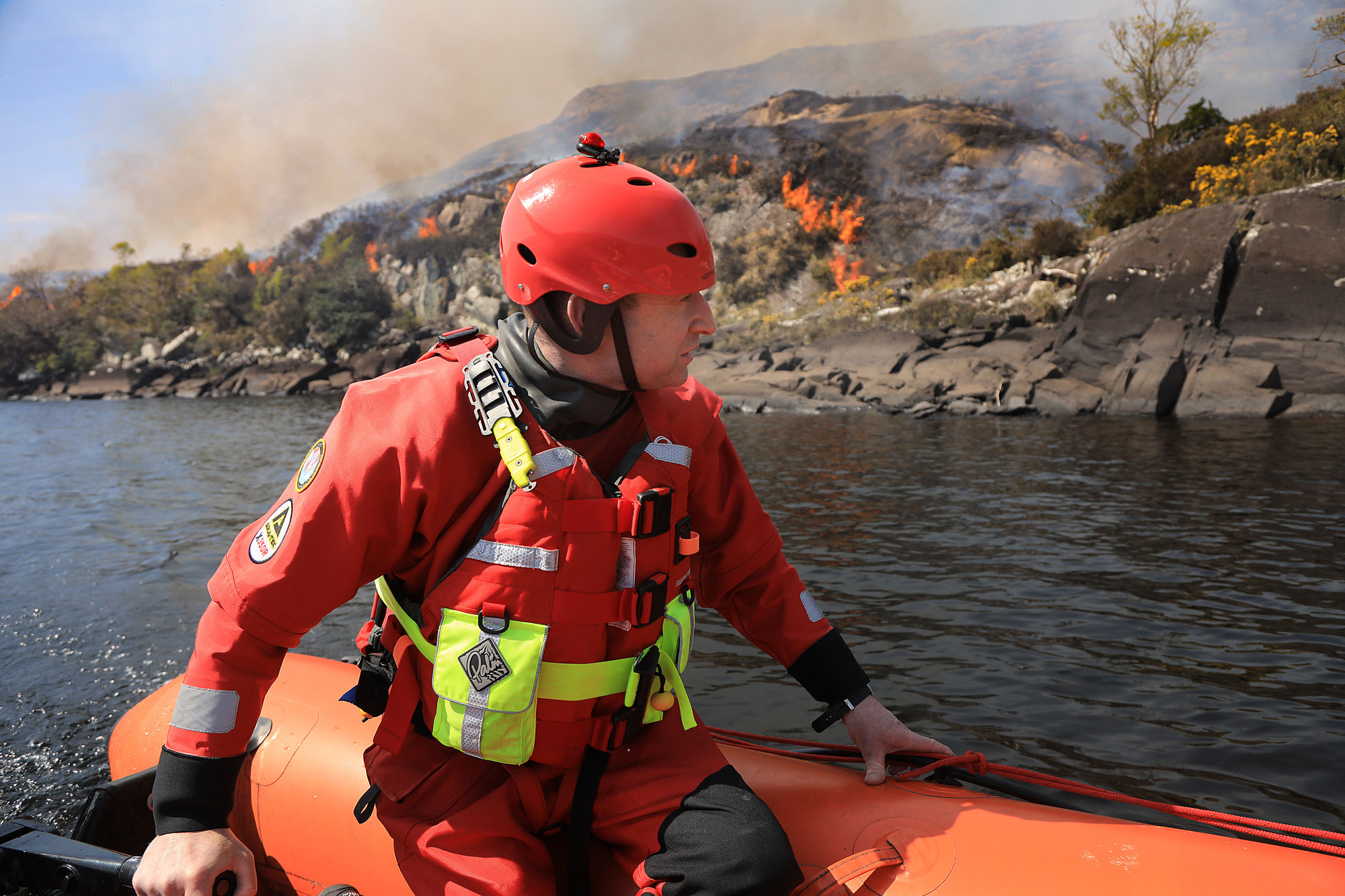
Jimmy Sweetman, Killarney Water Rescue Search and Recover, assessing the fire burning in Killarney National Park in April. Picture: Valerie O'Sullivan
The National Parks and Wildlife Service (NPWS) wants a survey conducted on the impact of fires on biodiversity in Killarney National Park, including the devastating blaze there this April.
The NPWS has issued a tender worth €300,000 for the comprehensive survey of the impacts on lands burned over the past four decades, as well as surveys in unburned areas, in the 26,000 acre park.
The tender includes a preliminary report, finalised last month, by NPWS into the fire, which began during Friday evening on April 23 and was not brought under control until around 12pm the following Monday.
According to the NPWS preliminary report: "Fire appears to have begun in the vicinity of Dinis Bog before burning through Dinis Island and westward through Glaisin na Marbh and Cahnicaun Wood.
"It expanded during the afternoon of the 24th through the northern shore of the upper valley, and reached high on the slopes of Purple Mountain.
"Two lines formed here, one burning west, backed by the easterly wind around the slopes of Purple and into the Gap of Dunloe; the other burnt back eastward against the wind through stands of high heather above Doogary and onto Shehy Mountain."
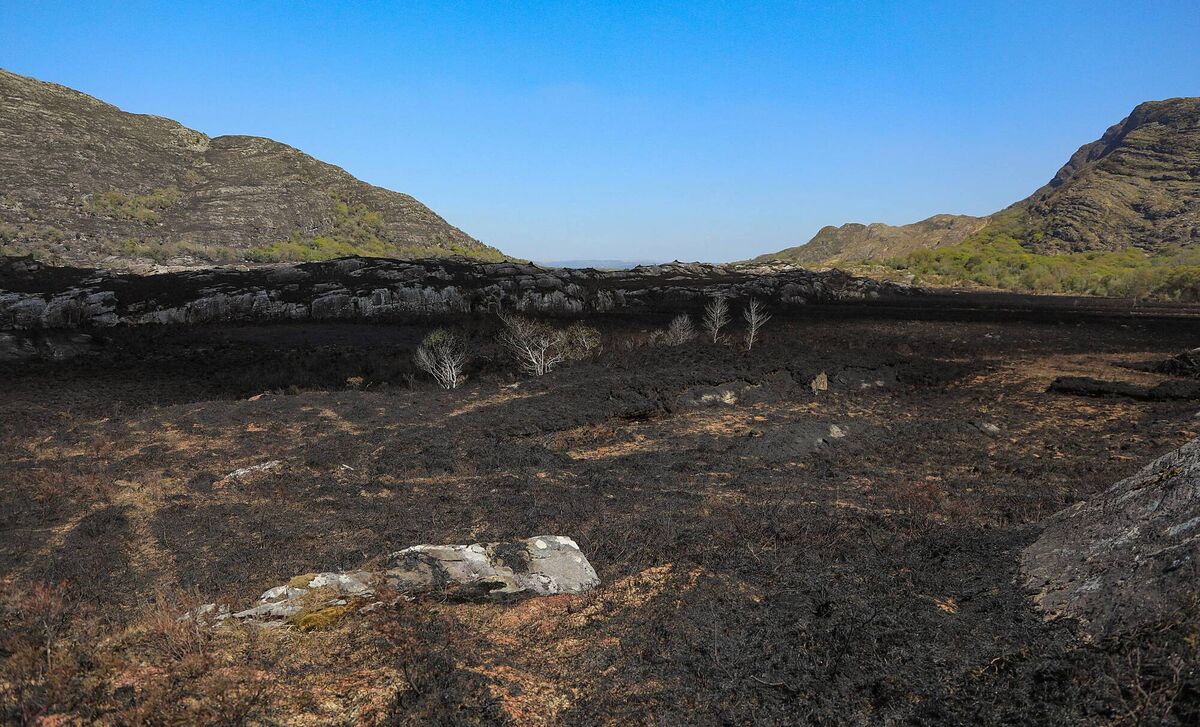
The report refers to the damage caused to woodland, heath, and bog as a result of the fire, with a burn area estimated at more than 2,000 hectares.
"Approximately 51.6 Ha or 4.8% of the oak-birch-holly woodland that is found within Killarney National Park occurs within the boundary of the area burned by the fire on April 23 – 26," it said, adding that 26% of the total combined heath/bog complex was also in the burn area, with approximately 333.8 Ha of this classified with a burn of moderate and above.
According to the new NPWS tender: "In excess of 2,000 hectares were involved, involving a variety of habitats, including wet heath, dry heath, blanket bog, woodlands, exposed rock vegetation, and Molinia wet grassland.
"There have been a number of fires in Killarney National Park in recent years; some were also extensive covering of the order of 1,700ha.
"NPWS wishes to commission a comprehensive survey of the impacts, and the chrono-sequence of fire recovery or otherwise, on lands burned over the past four decades, as well as surveys in unburned areas, in order to assess the biological impacts of the fires, in particular the fire of April 2021, on the biodiversity of KNP."
The deadline for application for the tender is 12pm on August 30.
Killarney National Park was designated as a Biosphere Reserve in 1981 by the United Nations Educational, Scientific and Cultural Organisation (Unesco) and as well as native oakwoods and yew woods, evergreen trees, shrubs, and lichens, the native red deer are unique in Ireland with a presence since the last Ice Age.
Fire investigators from the Garda Technical Bureau also carried out an examination of the area following the fire in late April.
Earlier this month it was reported that the garda probe was pointing towards the cause of the fire having been accidental, with the burning of land for clearance appearing to be ruled out.
CONNECT WITH US TODAY



Be the first to know the latest news and updates