Limerick museum considers return of artefact to Nigeria
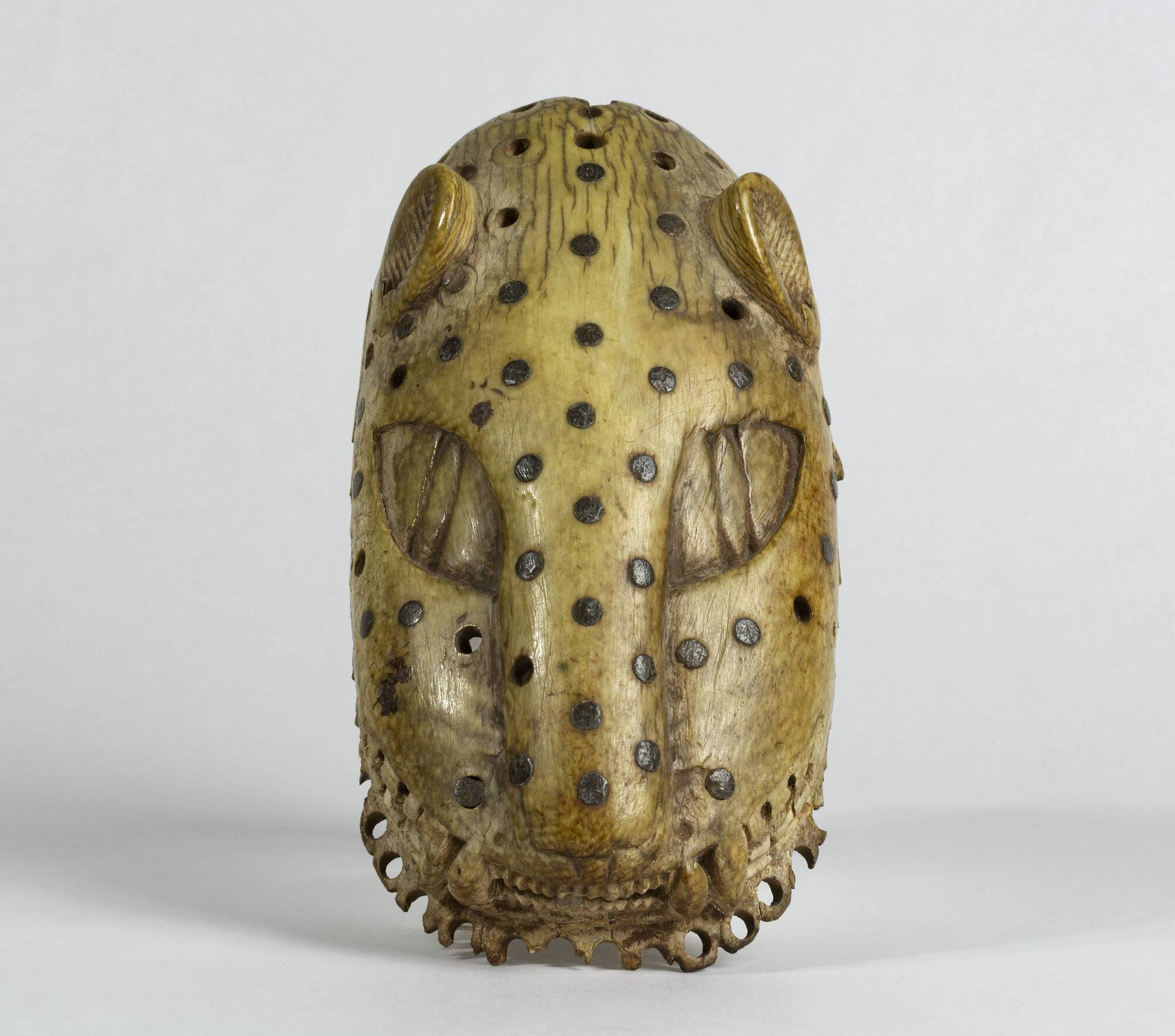
This ivory and lead leopard’s head is an Edo ceremonial costume attachment from the royal court of Benin, now incorporated into the modern republic of Nigeria.
A museum in Limerick is establishing the process of returning a 'looted' sculpture to Nigeria, as a global discussion of restitution grows stronger.
Jill Cousins, CEO and director of the Hunt Museum, said that the museum is in the process of establishing what the steps are for the restitution of the artefact.
However, the situation is made more complex in that the object is not owned by the Hunt, but rather on loan to it from a third party, who the museum was unable to name.
“I think the moral imperative for this one is particularly important. It's become heavier under the Black Lives Matter movement," said Ms Cousins.
The artefact in question is an ivory and lead leopard’s head, which is an Edo ceremonial costume attachment. The Edo or Benin people are an Edoid ethnic group primarily found in Edo state, Nigeria. Benin art became known generally to Europeans in 1897, after the massacre and looting of Benin by the British.
The calls to return these artworks are stronger than ever, as Benin city, the capital of Edo state, will host a new Benin Royal Museum.
The artefact was bought, legally, at an art auction in the 1970s. The owner, prior to that, is not entirely known, said Ms Cousins.
The director of the museum said that the historical significance of the object, as well as the death toll, lend themselves to the argument for returning it to Nigeria.
“We've had conversations in the museum itself and we believe in particular, for this item, we should certainly be looking into it and see what is feasible to do. When you obtain something in this way and the catastrophic loss of life that went with it, it does seem a particularly nasty consequence of it,” she added.
The museum is already working with Digital Benin, a project started by the Museum am Rothenbaumin Hamburg to digitally network the globally dispersed works of art from the former Kingdom of Benin.
Dan Hicks, author of , is familiar with the object. His book makes an attempt to list the locations of all the objects taken during the looting.
The professor of contemporary archaeology at the University of Oxford is an advocate for the restitution of such objects.
“This is about returning stolen goods when asked," he said.
"No matter how it was acquired by the museum. Whether it was bought entirely legally at an auction, that doesn't mean that object is no longer a looted object that should it be subject to return,” he said.
“Looting in this very unique period between the 1880s, the 1930s was a direct military strategy, and the display within museums was part of an ideology of cultural supremacy, of white supremacy, in which anthropology was entirely involved. This is a unique set of circumstances around looting that relates to anti-black violence and anti-black racism.”