Waterford parents stunned at 2024 date for child's MRI scan
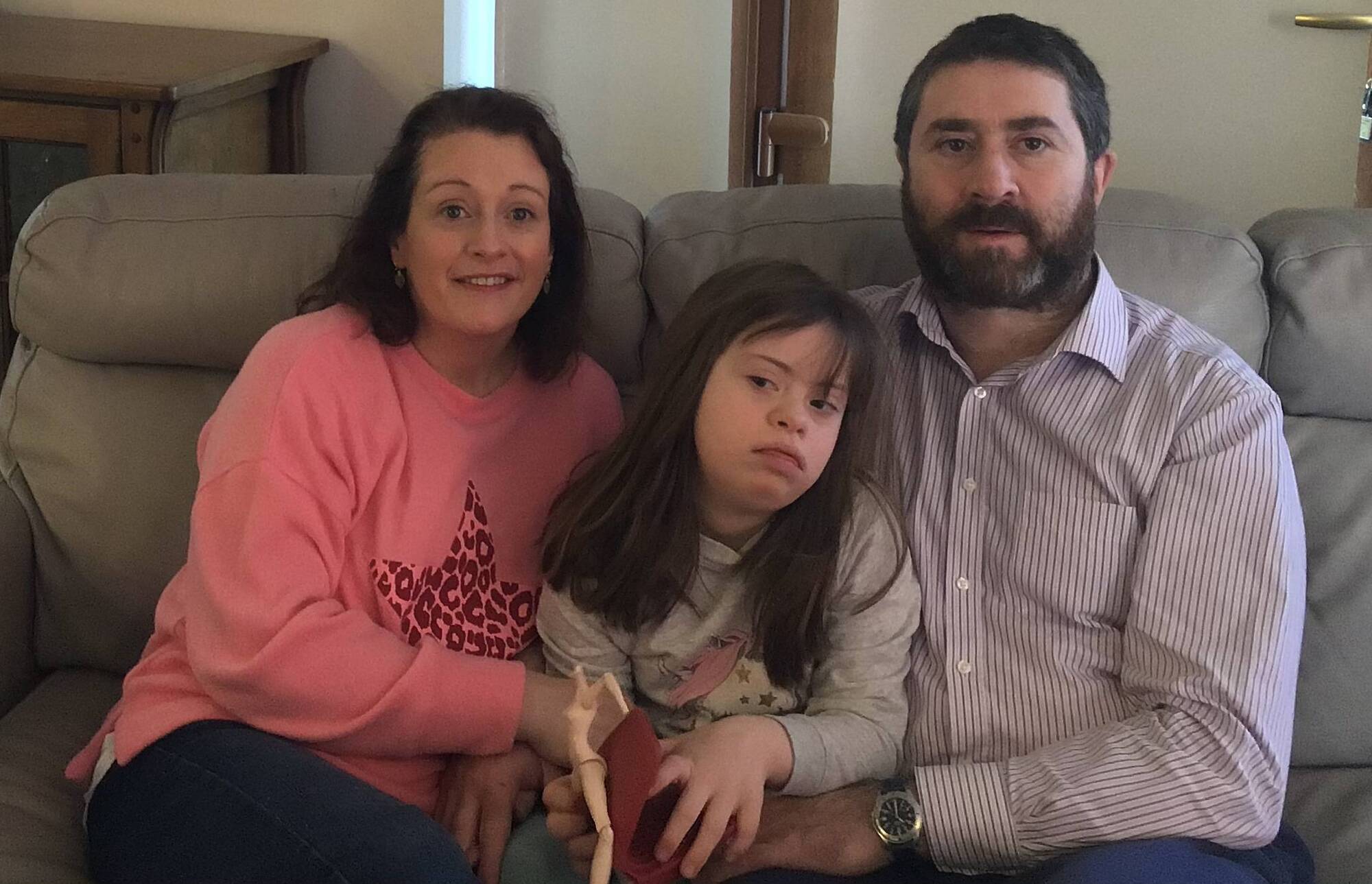
Cáit Uí Bheaglaoí, Aoileann Uí Bheaglaoí and Pádraig Ó Beaglaoí
A Co Waterford couple are shocked to have been given an MRI scan date of July 2024 for their daughter, who has an aggressive form of childhood arthritis.
Aoileann Uí Bheaglaoí, 11, had been on a 23-month waiting list for an initial diagnostic MRI scan in Crumlin Children’s Hospital when her appointment date, in November 2020, was cancelled due to Covid-19 disruptions.
However, Aoileann’s parents, Cáit and Padraig Ó Beaglaoí, were left speechless when they were given a new scan date in July 2024, a wait of a further three years and eight months.
“When she was first diagnosed and given a date for November 2020, I was gobsmacked,” mum Cáit Uí Bheaglaoí said.
Aoileann, who has Down Syndrome and epilepsy, was diagnosed aged nine with painful juvenile arthritis in December 2018, having been referred to Crumlin Children’s Hospital by a neurologist and paediatrician in Cork University Hospital.
Aoileann is non-verbal and can’t describe her discomfort, but Mrs Uí Beaglaoí said her daughter began having crying bouts that the family knew were being caused by pain.
She started treatment in January 2019 and has been waiting for a diagnostic scan ever since.
“An MRI for diagnosis is the gold standard,” Mrs Uí Beaglaoí said.
“Best practice is that they should be followed up every six months, to track and chart how the drugs are performing.”
In the absence of a scan, doctors at Crumlin Children’s Hospital have been assessing Aoileann’s condition by manipulating her joints manually.
Children with Down Syndrome are at elevated risk of juvenile arthritis, a risk highlighted in 2017 when Irish researchers Dr Charlene Foley and Dr Orla Killeen revealed that 1 in 50 children with Down Syndrome has juvenile arthritis.
It was hoped the research would increase awareness of the prevalence of juvenile arthritis amongst children with Down Syndrome and lead to improvements in their care.
Children with learning disabilities need a general anaesthetic for a successful MRI scan and Crumlin Children’s Hospital has the only MRI machine manned by an anaesthetist in the country.
Mrs Uí Bheaglaoí said she knows of many other families whose children with Down Syndrome are also waiting for scans. She said the scan service was “completely substandard".
Mrs Uí Bheaglaoí complained to a patient advocacy service when they were given a date for July 2024 and was told the automated waiting list was calculating dates based on the backlog caused by Covid-19 closures, as well as on procedural changes under current hospital guidelines.
Mr Ó Beaglaoí said: “I’d like the Health Minister to understand that these children are in a lot of pain and distress and that they are unable to express what pain and distress they’re in.
“This diagnosis service is vital to being able to interpret their condition and manage the treatment of their condition, and it’s very unfair that these children without a voice aren’t being given a means of diagnosing their condition.
A representative of Crumlin Children’s Hospital said in a statement: "CHI sincerely regrets that children and their families are experiencing long waiting times for their MRI appointments.
"We recognise that too many children are waiting too long for their appointments and we are making every effort to reduce these waiting times.
"Each request for an MRI scan is carefully examined by Consultant Paediatric Radiologist who prioritises the request based on clinical urgency. Covid-19 restrictions have also impacted on waiting times.”
The representative said CHI was in conversation with the HSE to supply and staff a second MRI scanner, but that no time frame for the provision of the second scanner was currently available.

CONNECT WITH US TODAY



Be the first to know the latest news and updates