Anti-corruption body urges Ireland to include Attorney General under remit of lobbying rules
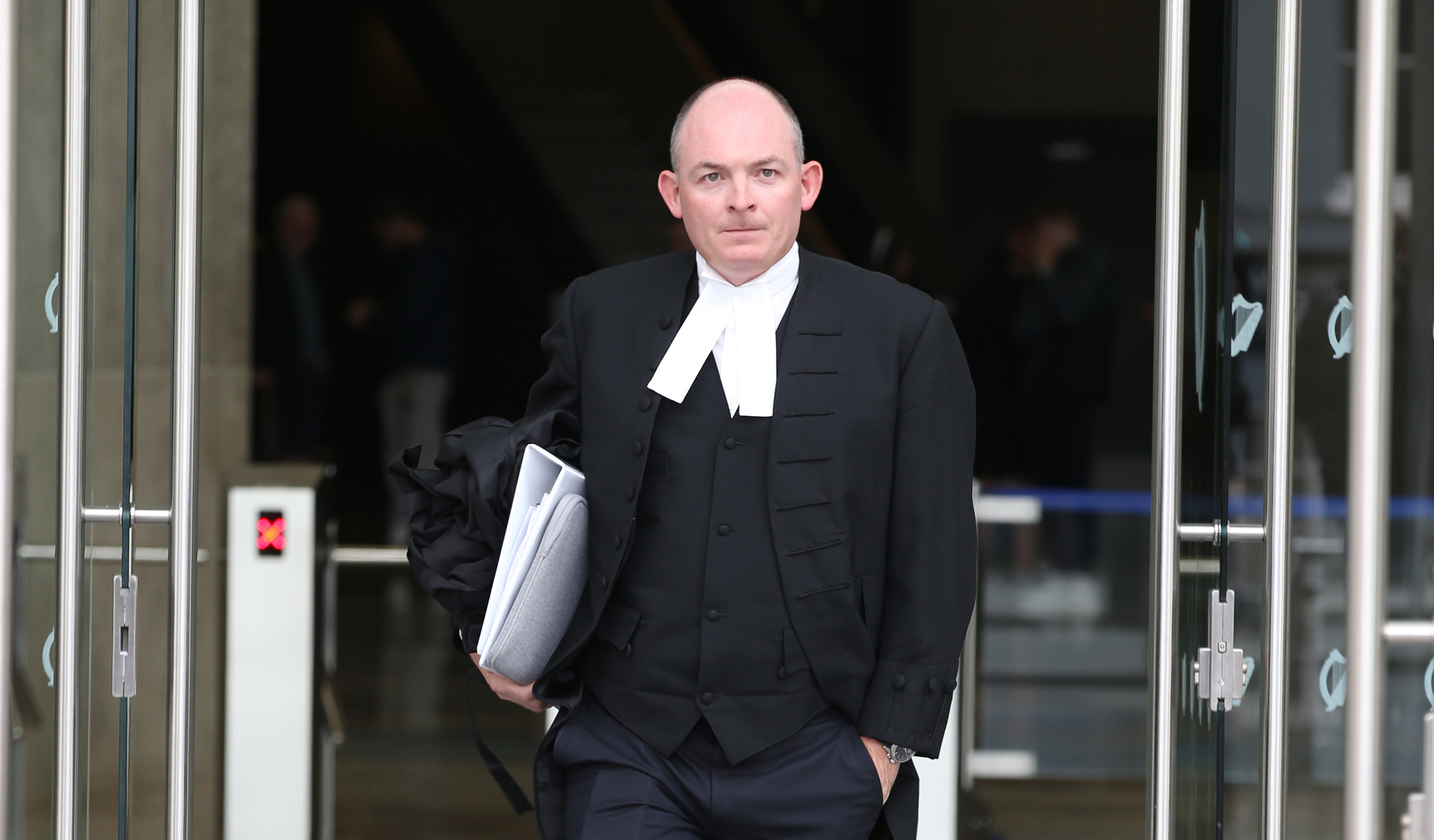
Attorney General Rossa Fanning. The report by the Council of Europe's anti-corruption body, GRECO, said that Irish authorities 'intend to seek legal advice' on the inclusion of the Attorney General as a designated public official that could be 'responsible for policing the activities of lobbyists'. File picture: Collins Courts
Ireland has “regretfully” not implemented reforms on lobbyists seeking to influence the Government’s decision-making process, a European anti-corruption authority has said.
The Council of Europe's anti-corruption body, GRECO, said that the Attorney General was among the senior figures who should be obliged to declare the contacts they have had and the topics they discussed.
A report by GRECO evaluated the effectiveness of a framework in place in Ireland to prevent corruption among ministers, senior civil servants and advisers, as well as members of An Garda Síochána.
It found that Ireland had “satisfactorily” implemented six of the 18 recommendations set out in the Fifth Round Evaluation Report, up from one after its last assessment in 2024.
Of the outstanding 12 recommendations, five recommendations have been partly implemented and seven have not been implemented, up from four and 13 respectively. Ireland has been asked to provide a report on its progress in implementing the outstanding recommendations by June 2027.
Among the measures that have not been implemented are rules to govern contacts between persons with top executive functions (PTEFs) — eg, ministers and secretaries general — and lobbyists, and that the Attorney General should be covered by these rules.
“PTEFs, including the Attorney General, should also be required to publish, at regular intervals, accounts of the lobbyists, and third parties seeking to influence government, that they have met, and the topics discussed,” it said.
The report said Irish authorities said that policy makers had not considered “it possible on a practical level” to impose the responsibility of governing all contacts with lobbyists on public officials.
“The authorities reiterate that it is neither appropriate nor feasible to make designated public officials (DPOs) responsible for policing the activities of lobbyists.”
The report said that Irish authorities “intend to seek legal advice” on the inclusion of the Attorney General as a DPO.
The evaluation report said it noted “regretfully" that its recommendations had not been implemented and noted that the lobbying register "is not equivalent to, and cannot replace, the disclosure of contacts and subject-matters discussed by PTEFs themselves".
“This is a matter of accountability and transparency for public authorities, not of policing lobbyists.”
The anti-corruption body also said Irish authorities should research the risks of the conflict of interest faced by ex-Garda members when taking up new employment, and whether there is "use of insider communication channels or the use of sensitive information acquired during their career in the Garda Síochána”.
“GRECO noted the absence of restrictions on Garda members taking up employment that could give rise to a conflict of interest with their former role in (An Garda Síochána).
“The work on standards of professional behaviour applicable to Garda personnel had started but was still at a very early stage.”
CONNECT WITH US TODAY



Be the first to know the latest news and updates