Riad Bouchaker trial: Doctor says he treated girl who had no pulse after Dublin stabbing
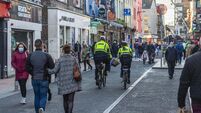
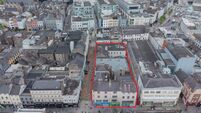
Peter Harper, a consultant anaesthetist at Temple Street Children's Hospital, said he was cycling to a meeting when he noticed ambulances, fire engines, and gardaí at Parnell Square, near the top of O'Connell St. File picture
A doctor who happened to be cycling in Dublin city centre moments after a number of children had suffered knife injuries has described treating one little girl who had a stab wound over her heart and appeared to have no pulse.
Riad Bouchaker, aged 52, of no fixed address, is on trial at the Central Criminal Court charged with the attempted murder of two girls and one boy, and assault causing serious harm to creche worker Leanne Flynn, at Parnell Square East in Dublin City on November 23, 2023.
He is further charged with assaulting two other children and an adult male and with producing a knife in a manner likely to intimidate.
He has pleaded not guilty to all charges and his trial is expected to last up to five weeks.
Peter Harper, a consultant anaesthetist at Temple Street Children's Hospital, said he was cycling to a meeting when he noticed ambulances, fire engines, and gardaí at Parnell Square, near the top of O'Connell St.
When he made himself known, a member of Dublin Fire Brigade directed him to the five-year-old girl, saying she had been stabbed in the chest.
He said paramedics were already doing chest compressions and he inserted a breathing tube into her neck.
Dr Harper said it was clear the child needed to be brought to an operating theatre immediately because, he said, chest compressions are not going to achieve anything unless you stop the blood loss. He said the child had no pulse, looked pale, and due to the position of the stab wound, it was likely her heart had been perforated, causing cardiac arrest.
Dr Harper phoned his colleagues at Temple St and told them to get the theatre ready and to find a cardiothoracic surgeon "as soon as possible".
Dr Lisa Corley, a paediatric registrar at the Rotunda Hospital, had already ordered blood which Dr Harper used to perform a transfusion in the ambulance on the way.
When they arrived at Temple St, he said the largest theatre was available, "luckily", and he continued to work on the child until she went into intensive care.
Conor Garvey told Karl Finnegan, prosecuting, that he was driving an ambulance to the Rotunda Hospital when someone on the road began "frantically" waving his arms at him. He immediately saw the little girl, who looked like she was in a life-threatening condition.
Someone was carrying out CPR and Mr Garvey took a defibrillator from the ambulance and attached the pads to the child.
The child had a laceration on her chest with blood oozing out rather than spurting, indicating there was very little pressure in the heart or that an artery had been nicked. She had no pulse and didn't appear to be breathing, he said. The defibrillator indicated that there was no electrical activity from her heart and advised against carrying out a shock.
When advanced paramedics arrived, Mr Garvey let them continue the treatment.
Dr Corley told Carol Doherty, prosecuting, that she was working in the Rotunda when she became aware of an incident on Parnell Square and went to offer her help. Paramedics directed her to the little girl who, she said, was "clearly critically injured".
She said a paramedic had inserted a tube into the bone marrow in one of her legs to administer medicine and had begun to drain her chest. Dr Corley called Temple St to activate protocols for major trauma and blood loss and arranged for blood to be brought from the Rotunda.
The court also heard from a man who, it is alleged, suffered harm having been assaulted by Mr Bouchaker.
He told Mr Finnegan that he came to Dublin aged 17 in October 2023 to work in a city centre restaurant. He recalled walking along Parnell Square East at 1.30 when he heard a woman scream from across the street. The woman appeared to be trying to fight off a man who was assaulting her, he said.
The now-20-year-old saw a knife in the man's hand and crossed the road because he wanted to disarm him. When he got close enough, he said he "grabbed the knife from his hand", using his wrist with force to remove it.
Once he had control of it, he threw it away.
At the moment he was grabbing the knife, he said another man struck Mr Bouchaker on the head with a motorcycle helmet.
The alleged injured party said he suffered a "simple scratch" on the middle finger of one hand and another on his cheek. He described the injuries as "nothing important". He said he thought the injury to his cheek happened when he removed the knife from Mr Bouchaker's hand and "the blade just scratched me".
At the conclusion of his evidence, trial judge Mr Justice Tony Hunt thanked him and said: "You are not only very brave, but modest as well."
Eder Nascimento dos Santos told Mr Finnegan that he was cycling from O'Connell St onto Parnell Square when he saw a tall man stabbing a child "three or four times".
He jumped off his bike and went across the road where he saw the knife on the ground. He said he took the knife away to prevent people from getting hurt. He crossed the street and threw the knife into a green area over a railing at the Garden of Remembrance.
Catherine Carbery told Mr Finnegan that she was walking near Parnell Square in Dublin city centre when she saw a man who "appeared to be attacking" a child with a knife.
Ms Carbery gave evidence via videolink from Melbourne in Australia.
She told Mr Finnegan that she and her sister, Alison, were visiting Ireland and were walking along O'Connell St on their way to the Hugh Lane Gallery for an Andy Warhol exhibition.
She noticed what appeared to be a "heated discussion" between a man and woman but then heard the woman screaming and thought she was trying to get away while the man had hold of her. She said the man then put his attention on a group of children that were lined up on the footpath and appeared to attack a child with a large knife.
She said she couldn't tell if the knife made contact with the child but it appeared to because of the actions of the man.
Under cross-examination, defence counsel asked if it was an "assumption" on Ms Carbery's part that the man was trying to stab the child. She said she "can't tell you for sure" but she saw a man with a very large knife and a small child. The actions that she saw made her think that it was 'highly unlikely that the child wouldn't be injured'.
"My thought was that the child was stabbed," she added.
Mr Bouchaker's defence lawyer suggested to Ms Carbery that from what she saw, she could not exclude the possibility that the defendant's intention was, in fact, to "terrify and intimidate", but not to stab, when he waved the knife.
Ms Carbery replied: "I can only state what I believe was happening, and I believe he was injuring the child."
Alison Carbery said she heard screaming and saw a woman trying to protect children from a man she was tussling with. She saw the woman being spun around and immediately noticed the man had a knife. She shouted to her sister: "He's got a knife, he's stabbing the children."
She said she could clearly remember seeing the man stabbing one of the children.
Gardaí first on the scene
Former garda Adam Kealy told Mr Finnegan that he and a colleague were the first two gardaí on the scene at Parnell Square. He said his colleague went across the road to where members of the public said a knife had been moved while Mr Kealy went to where Mr Bouchaker was lying prone on the ground.
He said he noticed a member of Dublin Fire Brigade holding Mr Bouchaker's wrists as though he were restraining him. He said the fire officer told him that the man was alleged to have been involved in stabbing people. Mr Kealy said he told Mr Bouchaker he was going to search him under the Firearms and Offensive Weapons Act and that he would handcuff him.
He placed the handcuffs on Mr Bouchaker and carried out a pat-down search but did not find any weapons. He found a mobile phone under Mr Bouchaker's leg and a wallet in his pocket with a social services card in his name. He said Mr Bouchaker was conscious during this time, with his eyes open, but he did not respond to anything that he said.
At the Mater Hospital that afternoon, Mr Kealy said doctors took a urine sample from Mr Bouchaker and tests showed it was negative for toxins. At 3.30pm, he learned that Mr Bouchaker had been sedated and was unconscious.
Carlos Antonio Lopes dos Santos told Mr Finnegan that he was walking along Parnell Square East when he heard a lot of screaming and saw "hustle and bustle" with people looking afraid and desperate. He said he saw a man with a knife and a lot of children in a queue.
He said he was just a few steps away when he saw the man holding a child by the arm and quickly moving the knife with his other hand, in a "kind of a rush". He said the man got a second child who was close by and then a third, who was a girl.
He said: "I remember the third child was the one that really got my attention because he dug the knife in very profoundly, very deeply."
He said he appeared to strike the girl in the stomach or chest area.
He recalled seeing a man with a motorbike helmet striking Mr Bouchaker on the head as other people got involved. Mr dos Santos called 999 and went across the road. From there, he said he saw a girl covered in blood with paramedics trying to help her. He said he believed this was the same girl he had seen being stabbed earlier.
Under cross-examination, Mr Bouchaker's defence lawyer put it to Mr dos Santos that he did not see the man sticking a knife into the "belly or torso" area of a child. Mr dos Santos disagreed and said he would expect that the medical evidence would confirm what he saw.
The trial continues before Mr Justice Tony Hunt and a jury of nine men and three women.


CONNECT WITH US TODAY



Be the first to know the latest news and updates