Police ‘pursued the child, not the evidence’ in Noah Donohoe case, inquest hears
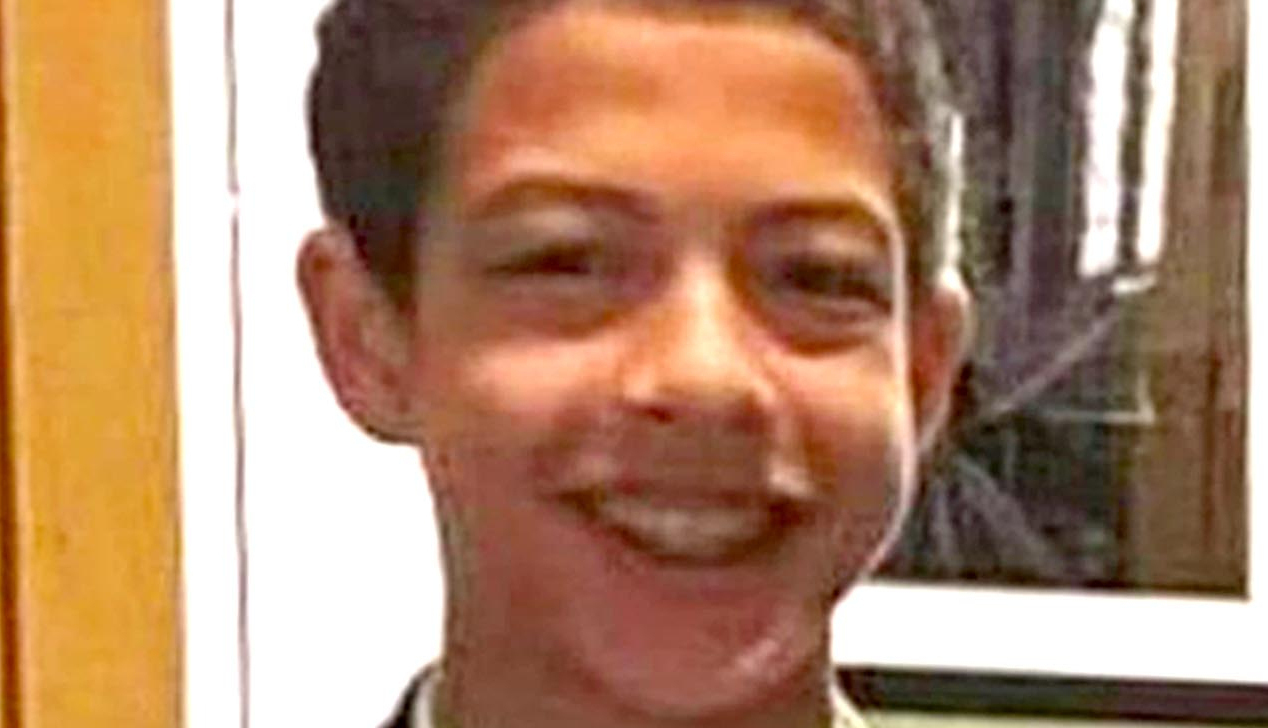
Police ‘pursued the child and not the evidence’ in their investigation into the death and disappearance of Noah Donohoe, an inquest has heard (Family Handout/PA)
Police “pursued the child and not the evidence” in their investigation into the death and disappearance of Noah Donohoe, an inquest has heard.
The lead detective in the case admitted to committing “an investigative failure” and apologised to the 14-year-old’s mother agreeing that he had “failed to find” answers about what happened to Noah.
Noah, a pupil at St Malachy’s College, was found dead in a culvert, having set off on his bicycle from his home in south Belfast on the evening of Sunday June 21 2020, planning to meet two friends in the Cavehill area in the north of the city.
PSNI Detective Chief Inspector Phillips became the senior investigating officer (SIO) in relation to Noah’s case on Wednesday 24 June 2020, when the teenager had been missing for three days.
He is the 76th witness to give evidence to the inquest which is sitting before a jury at Belfast Coroners Court and is now in its 20th week.
On Tuesday, Brenda Campbell KC, representing Fiona Donohoe, had quizzed Mr Phillips about police logs from 25 June 2020 where he outlined his then “hypothesis” that “Noah has disappeared of his own accord and he is either on his own or with a third party”.
Ms Campbell posited that over the summer of 2020 when Noah’s body had been found this hypothesis “became the only one”.
She put it to the senior officer on Wednesday: “The reality is that your investigation pursued the child and not the evidence and in adopting your hypothesis that Noah did this by choice, you failed to find the answer.”
Mr Phillips said it was “not a question I can respond to”.

Ms Campbell continued: “You’ve met Fiona Donohoe and you’ve learned a lot about her son in the course of the last six years in this inquest.
“And you understand the enormous privilege and the enormous responsibility it has been to ask so many questions on her behalf in the course of this inquest.
“But no matter how many questions I ask, at the end of this process she still has no answer and she has to listen to you say over 30 times ‘I don’t know’.”
Mr Phillips said the number was so high because he was asked a number of questions “in succession” that he “can never have an answer to”, adding that he had admitted to failings, for example in relation to the CCTV footage from the Northwood Drive property.
Ms Campbell said Ms Donohoe and the inquest would be left without answers “not because there isn’t an answer”.
“There is an answer but you failed to look for it,” she said.

Mr Phillips said: “Yes I did and I apologise for that.”
“And you failed to find it,” she said.
The lead investigator replied: “Yes.”
Earlier in her examination, Ms Campbell contested that Mr Phillips “pursued a hypothesis that blamed a child, that he did this by choice”.
“I disagree with the phrase I blamed him,” he said.
Ms Campbell then clarified that he “pursued a hypothesis that Noah did this by choice”.
He replied: “Yes, that is where I felt the evidence and information took us.”
The inquest has previously heard Noah was captured on CCTV leaving his home in Belfast at about 3.30am on the day he disappeared, returning just over half an hour later, without his headphones and flip flops.
The footage was seized by officers in June 2020 but was not watched until January 2022.
Ms Campbell referred to “all the evidential opportunities that flowed from” that footage and put it to Mr Phillips: “Your position is ‘we should have (viewed it) but it was a note about Fiona Donohoe’s ‘squeaky doors’ that give us the assurance we didn’t need it’.”
Mr Phillips said: “Yes, and I’m not putting any blame on Fiona at all, it was an investigative failure on my part”, adding “I took the account that he didn’t leave the house because of his obedience to rules and time”.
The jurors also heard as Ms Campbell listed a number of areas that the next of kin contest were “failings that we say contributed to Noah’s death or failure to find him alive”.

She said this included the failure to use telelocation data to get to the Northwood Road area where the culvert is located on Sunday night or Monday, “failure to identify the culvert” as a place Noah might be, “serious delay in commencing and the conducting the search of that culvert”, as well as “failure to deploy appropriate resources in light of that danger”.
She put it to Mr Phillips “you challenged and you changed nothing” about the search, to which he said “no”, and then “you didn’t challenge and you didn’t change the deployment of specialist resource”.
Mr Phillips said: “No, I asked the question but I didn’t suggest they were going too slowly.”
When being asked about further failings to recover CCTV footage, Mr Phillips defended PSNI colleagues.
He said it was his job as SIO to “drive the investigation to, yes, ensure the information they had was correct and in some cases that didn’t work” and “there were some failings and I’ve apologised for that” but added that is “not to say people involved in this were incompetent, they were good detectives for many years”.
He said detectives and officers involved in Noah’s investigation have worked on “many many instances, many crimes, other cases that have all worked out very well so, yes we made mistakes but they’re not incompetent individuals”.
“None of this was done deliberately; it was just human error,” he said.


CONNECT WITH US TODAY



Be the first to know the latest news and updates