Lawyers for convicted murderer argue crucial fabric fibres should be re-examined
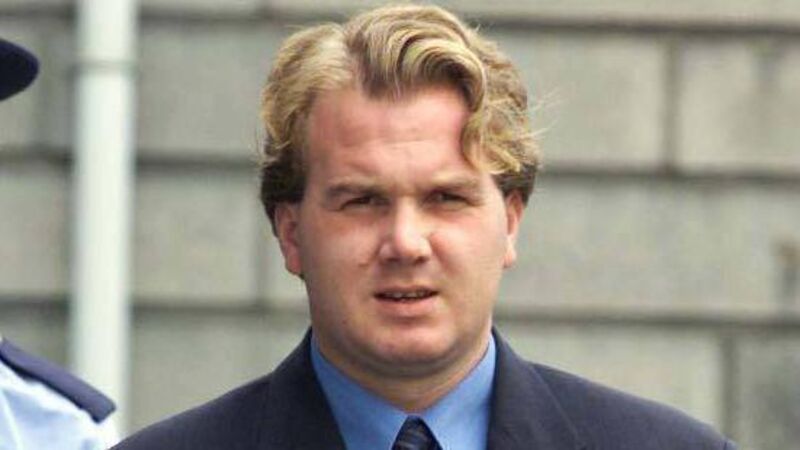
John McDonagh is now seeking to utilise advances in technology and developments in expert knowledge to try to establish that his conviction was unsafe and demonstrate that there has been a miscarriage of justice in his case. File Picture: Courtpix
Lawyers for a 51-year-old man who has spent 24 years in prison for the rape and murder of a Connemara schoolgirl have told the Court of Appeal that clothing fibres that helped to convict him should be re-examined using recent advances in technology.
They also told the court that their application to have certain trial exhibits undergo forensic testing and examination, in light of technological advancements in the intervening years, is ground that hasn’t been “traversed before”.
John McDonagh has claimed that his conviction was a miscarriage of justice and says he should have the right to retest forensic evidence.
McDonagh was 27 when he was found guilty in 2001 by a Central Criminal Court jury of the rape and murder of Siobhan Hynes, aged 17, of Sconse, Lettermore, Connemara, at Tismeain beach in the townland of Keeraunbeg in the early hours of December 6, 1998.
The 51-year-old, with a former address at The Demesne, Keeraunbeg, Carraroe, had pleaded not guilty but was convicted after three days of jury deliberations and sentenced to life in prison.
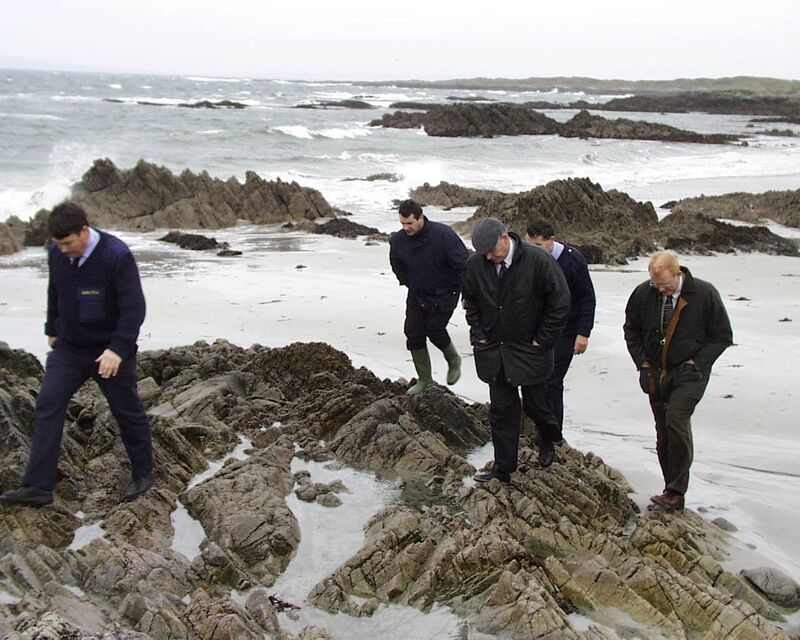
Louise McKenna of the State Forensic Science Laboratory found "numerous" fibres on the jumper McDonagh wore that night which matched Ms Hynes's petrol-blue polyester fleece jacket and wine acrylic jumper. She also found fibres on the front and back of his jumper which matched fibres from Ms Hynes's black socks.
Fibres from the fleece and the wine jumper were also found in the front passenger seat of McDonagh's car, and fibres from his red fluffy car-seat cover matched two red fibres found on Ms Hynes's clothes.
Dr McKenna said the fibres lent "very strong support to the proposition that Siobhan Hynes was in contact with John McDonagh's jumper and strong support for her being in his car".
McDonagh is now seeking to utilise advances in technology and developments in expert knowledge to try to establish that his conviction was unsafe and demonstrate that there has been a miscarriage of justice in his case.
Michael O’Higgins, counsel for McDonagh, concluded his opening submissions on Tuesday and the three-judge court adjourned matters to next February when expert witnesses will give evidence.
In opening the appeal on Monday, Mr O’Higgins said the “meat and veg of the case is in the affidavits of the experts”.
Counsel told the court that some forensic samples “haven’t been tested at all” and argued there was no reasonable basis to refuse new tests. He told the court that the potential of new testing methods had come to light, and that no DNA experts were obtained for the trial.
He said a defence expert, Dr Clare Jarman, disagreed with some of the findings of an expert witness for the State, Dr Dorothy Ramsbottom. Mr O’Higgins said the defence’s expert asserted that the method for determining usable DNA from fingernails has improved rapidly since the trial.
Addressing the issue of fabric fibres today, Mr O’Higgins acknowledged the circumstances surrounding the analysis of fibres in the case was significantly different to the issue of DNA. He noted that all of the fibres in question were tested.
However, counsel said Tiernan Coyle, a very experienced forensic scientist with an international reputation, having read the file, felt what was provided was “an incomplete picture” and recommended further testing.
Counsel said the expert also contended that the microscopy in use at the time was “limited in capabilities” compared to modern day standards and he recommended “retesting with new equipment”.
He said the expert had noted that a small number of fibres were not analysed, perhaps because they were too small. He went on to say later that advances in technology and equipment meant “that would not be permitted today”.
He said Mr Coyle had also suggested there had been a “significant element of contamination” prior to the laboratory receiving the exhibits.
Mr O’Higgins said within hours of handling the deceased’s clothes, a member of the gardaí went to McDonagh’s car to take receipts out of it. The scientist also highlighted possible contamination when an exhibit was being photographed at Carraroe Garda Station, he said.
Mr Coyle also raised questions, counsel said, about the possible contamination of a blanket used at the scene; potential contamination within the laboratory; the use of bin bags to package the car seats; and the scope of the fibres that were examined.
He said in determining if the new testing should be done, the court should take into account how the records of testing was done at the time.
Mr O’Higgins said retesting the fibres would give three possible results; they could be the same as the previous tests, they might strengthen the prosecution case or “they might undermine it”.
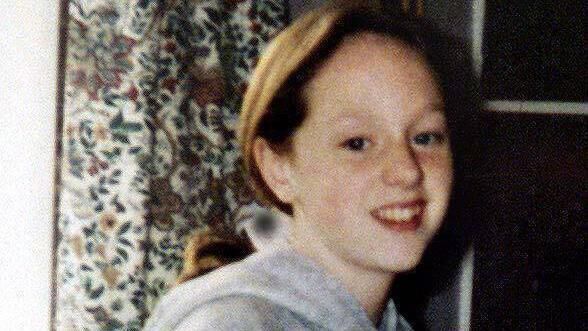
“He’s not going out on a limb and saying this is something that can only improve the defence position; he acknowledges the three possibilities, and they are set out in some detail,” he said.
Counsel said the forensic scientist also said new technology used to analyse fabric fibres is “far superior” to that which would have been used in 1998.
He drew an analogy between watching a programme on a black and white television versus a modern screen. He said that while both perform “the same task,” a modern TV reveals details that would not be visible “on a grainy black-and-white” model.
Mr O’Higgins said the expert concluded his report by stating that the focus in analysing fibres had been on McDonagh and his car and that fibres on Ms Hyne’s person had “not received adequate attention”.
After concluding his submissions, Mr O’Higgin’s said this case is a “novel application” and this was not a “ground that has been traversed before”.
He asked the court not to lose sight of the fact that “we are here because of an order of the high court” and that “all parties ultimately need this matter determined”.
Mr Justice McCarthy said the court would provisionally set February 10 and 11 to hear evidence from expert witnesses.
The trial in 2001 heard that Ms Hynes had celebrated her 17th birthday a week before she was murdered. She was raped by McDonagh, who then tried to choke her. After leaving her for dead, he drove his car back to Carraroe village and became involved in a fight.
Ms Hynes disappeared from Carraroe village at around 12.50am. She left a car parked outside a local hotel to go to the toilet in a local chip shop, but she never came back. Earlier, when she tried to go to the toilet in a local pub, a doorman refused her entry because she was underage.
CONNECT WITH US TODAY



Be the first to know the latest news and updates